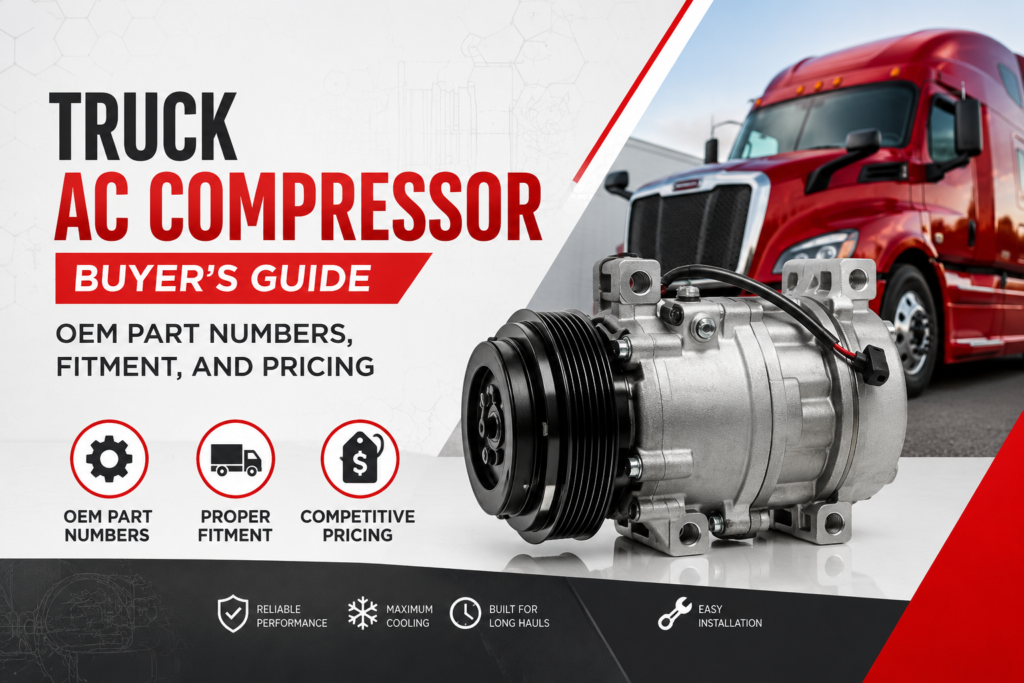
One of the first things to verify is the AC compressor if your truck’s AC system is not cooling your cab as it should be. Not only is a broken compressor an inconvenience to the driver, but it also means increased vehicle downtime, expensive repairs, and lower overall productivity for commercial fleets working in difficult conditions throughout India. Unfortunately, simply purchasing a new one because it looks the same isn’t good enough.
Buyers should look up OEM part numbers, make sure the product will fit their vehicle, compare product quality, and understand the pricing before buying. In this truck AC compressor buyer guide, we’ll cover everything truck owners and fleet managers need to know to make an informed purchase decision without making expensive compatibility mistakes.
With the right approach, you can improve system performance, extend component life, and protect your maintenance budget.
Why Choosing The Right Truck AC Compressor Matters
The AC compressor is the heart of a truck’s air conditioning system. The refrigerant is compressed and moved through the cooling system. The best compressor won’t do you any good if it’s not compatible with your truck.
Selecting the correct replacement helps you:
- Restore efficient cabin cooling
- Reduce unnecessary repairs
- Improve compressor lifespan
- Minimize vehicle downtime
- Lower long-term maintenance costs
Whether you own one truck or manage a fleet, choosing the right compressor saves time and money. If you’re still deciding, check out our guide on diesel AC compressors vs. standard AC compressor.
Understand OEM Part Numbers Before You Buy.
One of the most reliable methods of finding a compatible AC compressor is to use the OEM (Original Equipment Manufacturer) part numbers.
Each compressor is built to order for specific vehicle requirements, including:
- Mounting configuration
- Pulley size
- Refrigerant compatibility
- Electrical connections
- Compressor displacement
Do not order based solely on truck make and model number. ALWAYS match the OEM part number from your current compressor or vehicle records. There could be many instances.
Where the exact same truck model from the exact same manufacturer requires different compressor models depending on the truck year or engine. Matching the OEM number virtually eliminates the risk of ordering an incompatible compressor.
Verify Fitment Before Ordering
Fitment is just as important as part number matching. Before purchasing, confirm:
- Truck manufacturer
- Model
- Production year
- Engine specification
- Compressor mounting type
- Belt and pulley configuration
- Refrigerant system type
Installing the wrong compressor can create alignment issues, reduce cooling efficiency, or even damage other AC components.
Common Truck Brands That Require Accurate Fitment
Different truck manufacturers often use unique compressor designs and mounting systems.
Some commonly serviced commercial truck brands include:
- Tata
- Ashok Leyland
- BharatBenz
- Eicher
- Mahindra Commercial Vehicles
- Volvo Trucks
- Scania
Even the same brand of truck can have different models with different compressors. To make sure you get the right part and avoid fitment issues, you can check AC compressor fitment by truck brand before ordering.
OEM Vs. Aftermarket AC Compressors
One of the biggest buying decisions is choosing between OEM and aftermarket compressors.
OEM Compressors
OEM compressors are manufactured according to the original vehicle specifications.
Advantages include:
- Precise fitment
- Consistent performance
- Reliable durability
- Easier installation
OEM units may cost more up front, but can help reduce maintenance costs over the life of the unit.
High-Quality Aftermarket Compressors
Reliable performance can also be found in premium aftermarket compressors from reputable suppliers.
Look for products that offer:
- OEM-equivalent specifications
- Quality-tested components
- Durable seals and bearings
- Reliable manufacturing standards
Avoid choosing solely based on the lowest price, as inferior compressors often result in repeated failures.
Factors That Influence Truck AC Compressor Pricing
Truck AC compressor prices vary depending on several factors.
1. OEM or Aftermarket
OEM compressors usually command higher prices due to strict manufacturing standards.
2. Truck Make and Model
Heavy-duty commercial trucks often require specialized compressors that cost more than light commercial vehicle components.
3. Build Quality
Compressors built with premium bearings, pistons, and seals generally offer better reliability and longer service life.
4. Access
Imported compressors or less common models may cost more due to lower availability.
5. Guarantee
Products with manufacturer warranties may be slightly more expensive but come with added peace of mind.
“Don’t just think about purchase cost, but total ownership cost, including reliability, installation, and expected service life.
Signs It’s Time To Replace Your Truck AC Compressor
Here are some signs that you need to replace your truck’s AC compressor:
- Weak or warm airflow
- Loud grinding or squeaking noises
- Compressor clutch fails
- Refrigerant leakage
- AC cycling irregularly
- Increased engine load while operating the AC
Replacing the compressor before it fails completely can help prevent contamination of other AC system components. Whether you’re replacing a standard unit or a Diesel AC compressor, timely replacement can save you from more expensive repairs down the road.
Questions To Ask Before Buying
Before you make your purchase, ask the supplier:
- Is this the same compressor as my OEM part #?
- Will it work with my truck’s engine variant?
- Is it rebuilt or brand new?
- Is it still under warranty?
- Are installation accessories included?
- Has the compressor been quality tested?
These questions help avoid compatibility issues and unexpected installation costs.
Buying Tips For Fleet Managers
Think about these best practices:
- Standardize and approve compressor vendors.
- Keep a log of OEM part numbers for each vehicle.
- Keep fast-moving compressor models in stock.
- Before the height of summer, get your AC checked preventively.
- Select suppliers who can consistently deliver products and offer technical support.
A proactive purchasing strategy helps reduce unplanned downtime, keeps your fleet running efficiently, and makes it easier to choose the right OEM AC compressor whenever a replacement is needed.
FAQs
- How do I identify the correct OEM number for the part?
On the current AC compressor, in the vehicle’s service manual, or from your parts distributor by inputting your truck’s VIN or model information.
- Are aftermarket truck AC compressors of good quality?
Yes. Premium aftermarket compressors that perform at OEM standards can deliver dependable service when sourced through a trusted dealer.
- Is an expensive compressor always of better quality?
No. The factors to compare include specification, warranty, the quality of materials used to produce the component, and the dealer’s reputation, as opposed to merely price.
- Am I capable of replacing a truck AC compressor on my own?
It is recommended that the replacement of the AC compressor be conducted by certified professionals to ensure correct evacuation of the old refrigerant, proper evacuation of the AC system, and efficient lubrication.
Final Thoughts
When selecting an AC compressor, price is not the only thing to take into account. Choosing the right OEM part number, checking fitment, quality of the product, and buying from a trusted vendor will provide you with reliable cooling performance and reduced maintenance costs. This truck AC compressor buyer’s guide helps truck owners and fleet managers make an informed purchase that improves vehicle uptime and long-term value.
Find Reliable Truck AC Compressors With Trusted Industry Support Today.
Explore quality truck AC compressors, Diesel AC compressors, and OEM AC compressor solutions from JJ Engine Parts. Choose dependable components designed for commercial vehicles, and make your next replacement with confidence to keep your fleet operating efficiently year-round.