
In industries where threaded pipe connections are critical, precision is non-negotiable. Whether in oil and gas, plumbing, hydraulics, pneumatics, or manufacturing, ensuring that pipe threads meet required specifications is essential for leak-free and reliable performance. This is where NPT Thread Gauges play a vital role.
NPT (National Pipe Taper) thread gauges are specialized inspection tools designed to verify the accuracy of tapered pipe threads used in North America and many industrial applications worldwide. By ensuring compliance with recognized standards, these gauges help manufacturers maintain product quality, reduce assembly failures, and meet regulatory requirements.
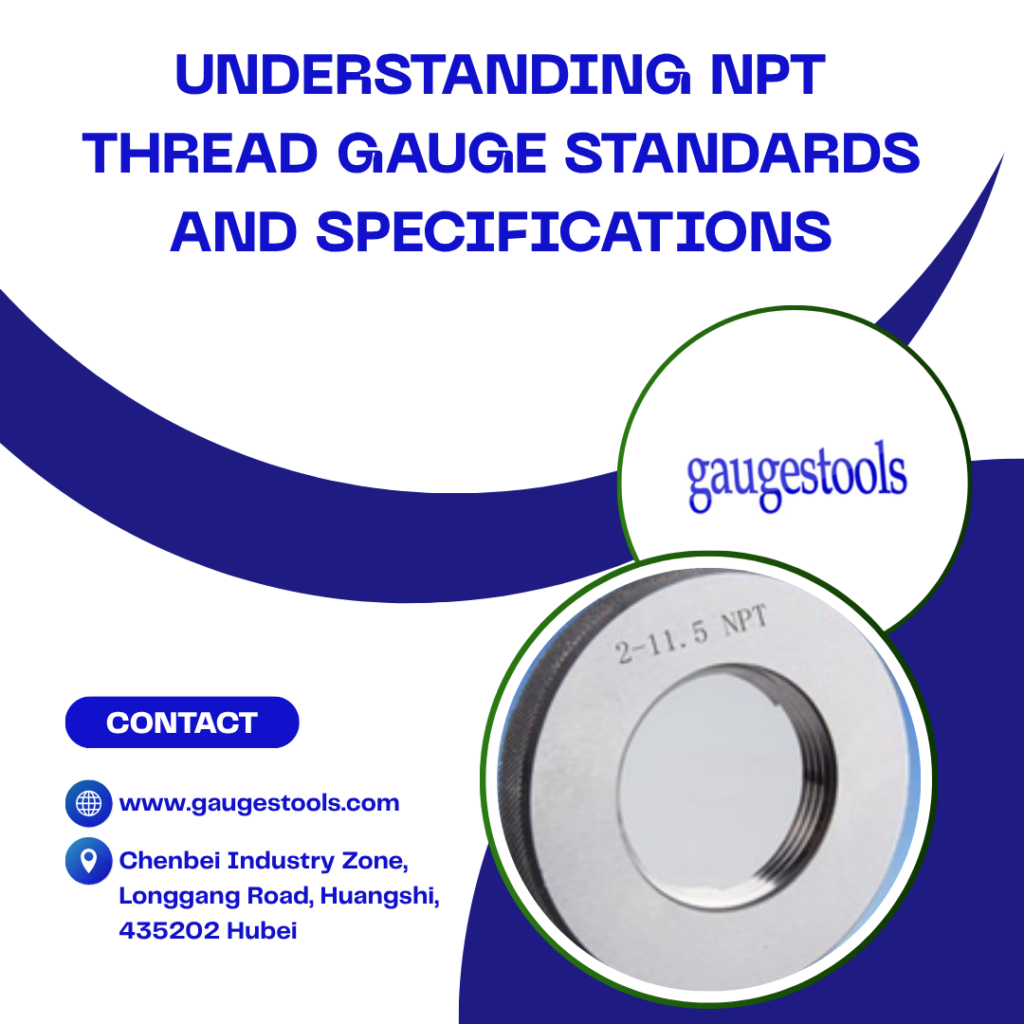
This guide explores NPT thread gauge standards, specifications, key features, applications, and frequently asked questions to help engineers, machinists, and quality inspectors better understand their importance.
What Are NPT Thread Gauges?
NPT thread gauges are precision measuring instruments used to inspect National Pipe Taper (NPT) threads. These gauges verify whether internal and external pipe threads conform to specified dimensions and tolerances.
There are two primary types:
NPT Thread Plug Gauges
Thread plug gauges are used to inspect internal threads. They are inserted into threaded holes or fittings to verify compliance with NPT standards.
NPT Thread Ring Gauges
Thread ring gauges are used to inspect external threads on pipes, nipples, and fittings. They determine whether the thread dimensions fall within acceptable tolerance limits.
NPT threads are tapered rather than straight, allowing them to create a mechanical seal as the threads engage. This tapered design is one of the reasons NPT threads are widely used in fluid and gas systems.
Understanding NPT Thread Standards
The primary standard governing NPT threads is ANSI/ASME B1.20.1, which defines dimensions, tolerances, and gauging requirements for tapered pipe threads. According to the standard, NPT threads feature a 60-degree thread angle and a taper rate of 1 in 16, ensuring proper sealing characteristics.
The taper corresponds to approximately 0.75 inches per foot along the thread axis. This taper enables mating components to tighten progressively and create a pressure-resistant connection.
Why Standards Matter
Adherence to NPT standards ensures:
- Interchangeability between components from different manufacturers
- Reliable sealing performance
- Reduced leakage risks
- Improved product quality
- Compliance with industry regulations
Without proper gauging and inspection, thread defects may go undetected, leading to costly failures and safety concerns.
Important NPT Thread Specifications
1. Thread Angle
NPT threads use a standard 60° thread angle. This geometry provides strength and compatibility across a wide range of pipe fittings and threaded components.
2. Taper Ratio
The taper rate is 1:16, meaning the thread diameter changes by one unit for every sixteen units of length. This gradual taper is essential for achieving a secure seal.
3. Go/No-Go Inspection
Most NPT thread gauges function as fixed-limit gauges. They determine whether a thread passes or fails specified dimensional requirements rather than providing exact measurements.
4. Gauge Engagement
Industry standards generally evaluate thread acceptability based on the gauge’s position relative to the reference notch or gauge face. Proper engagement indicates the thread falls within acceptable tolerance limits.
5. Available Sizes
NPT thread gauges are manufactured in a wide range of sizes, typically from 1/16″ to 6″ and beyond depending on application requirements. Common sizes include 1/8″-27 NPT, 1/4″-18 NPT, 1/2″-14 NPT, and 1″-11.5 NPT.
Key Features of Gaugestools NPT Thread Gauges
Gaugestools manufactures and supplies precision NPT thread gauges designed for reliable inspection and quality assurance.
High-Precision Manufacturing
Each gauge is manufactured with strict dimensional control to ensure accurate thread inspection and repeatable results. Gauges are calibrated and quality-checked before shipment.
Durable Tool Steel Construction
The gauges are produced using oil-hardened tool steel (GCr15), providing excellent wear resistance and long service life in demanding industrial environments.
High Hardness Rating
With a hardness range of 58–62 HRC, these gauges offer exceptional durability and resistance to deformation during repeated use.
Calibration Support
Calibration certificates can be provided through accredited laboratories, helping organizations maintain compliance with quality management systems and inspection requirements.
Comprehensive Size Availability
Gaugestools offers NPT thread gauges across a broad range of standard sizes, supporting diverse manufacturing and inspection needs.
Custom Marking Options
Laser marking services are available for customer logos, identification numbers, and traceability requirements.
Applications of NPT Thread Gauges
NPT thread gauges are widely used in:
Oil and Gas Industry
Ensuring leak-proof threaded connections in pipelines, valves, and pressure systems.
Plumbing Systems
Verifying thread quality in water supply and drainage fittings.
Hydraulic and Pneumatic Equipment
Maintaining sealing performance in fluid and air transfer systems.
Manufacturing and Machining
Inspecting threaded components before assembly and shipment.
Quality Control Laboratories
Supporting dimensional verification and compliance testing.
By using NPT thread gauges, manufacturers can detect thread defects early, reducing rework costs and improving customer satisfaction.
Best Practices for Using NPT Thread Gauges
To achieve accurate inspection results:
- Keep gauges clean and free from debris.
- Avoid forcing gauges into threads.
- Store gauges in protective cases.
- Perform regular calibration checks.
- Follow ANSI/ASME B1.20.1 inspection procedures.
- Replace worn gauges to maintain measurement accuracy.
Proper gauge maintenance significantly extends service life and ensures consistent inspection performance.
Conclusion
NPT thread gauges are essential tools for verifying the accuracy and compliance of tapered pipe threads. Governed by ANSI/ASME B1.20.1 standards, these gauges help manufacturers maintain quality, ensure thread compatibility, and prevent costly leaks or system failures. Gaugestools NPT thread gauges combine precision manufacturing, durable materials, and strict quality control to deliver dependable inspection solutions for a wide range of industries. Whether you are inspecting internal or external pipe threads, investing in high-quality NPT gauges is critical for achieving reliable and consistent results. As industries continue to demand higher levels of quality assurance and process reliability, accurate thread gauging remains a cornerstone of successful manufacturing and assembly operations.
Frequently Asked Questions (FAQs)
1. What does NPT stand for?
NPT stands for National Pipe Taper, a standardized tapered thread used for joining pipes and fittings.
2. What standard governs NPT threads?
NPT threads are governed by ANSI/ASME B1.20.1 standards.
3. What is the taper ratio of an NPT thread?
NPT threads have a taper ratio of 1:16.
4. What is the difference between a plug gauge and a ring gauge?
A plug gauge checks internal threads, while a ring gauge checks external threads.
5. Why are NPT thread gauges important?
They ensure thread accuracy, prevent leakage, maintain quality standards, and improve product reliability.
6. How often should NPT thread gauges be calibrated?
Calibration frequency depends on usage, quality requirements, and industry standards. Many organizations perform annual calibration.
7. What material are Gaugestools NPT gauges made from?
They are manufactured from oil-hardened GCr15 tool steel with high wear resistance.
8. Can NPT thread gauges measure exact dimensions?
No. Most NPT gauges are fixed-limit Go/No-Go gauges used to determine thread acceptability rather than precise dimensional measurements.