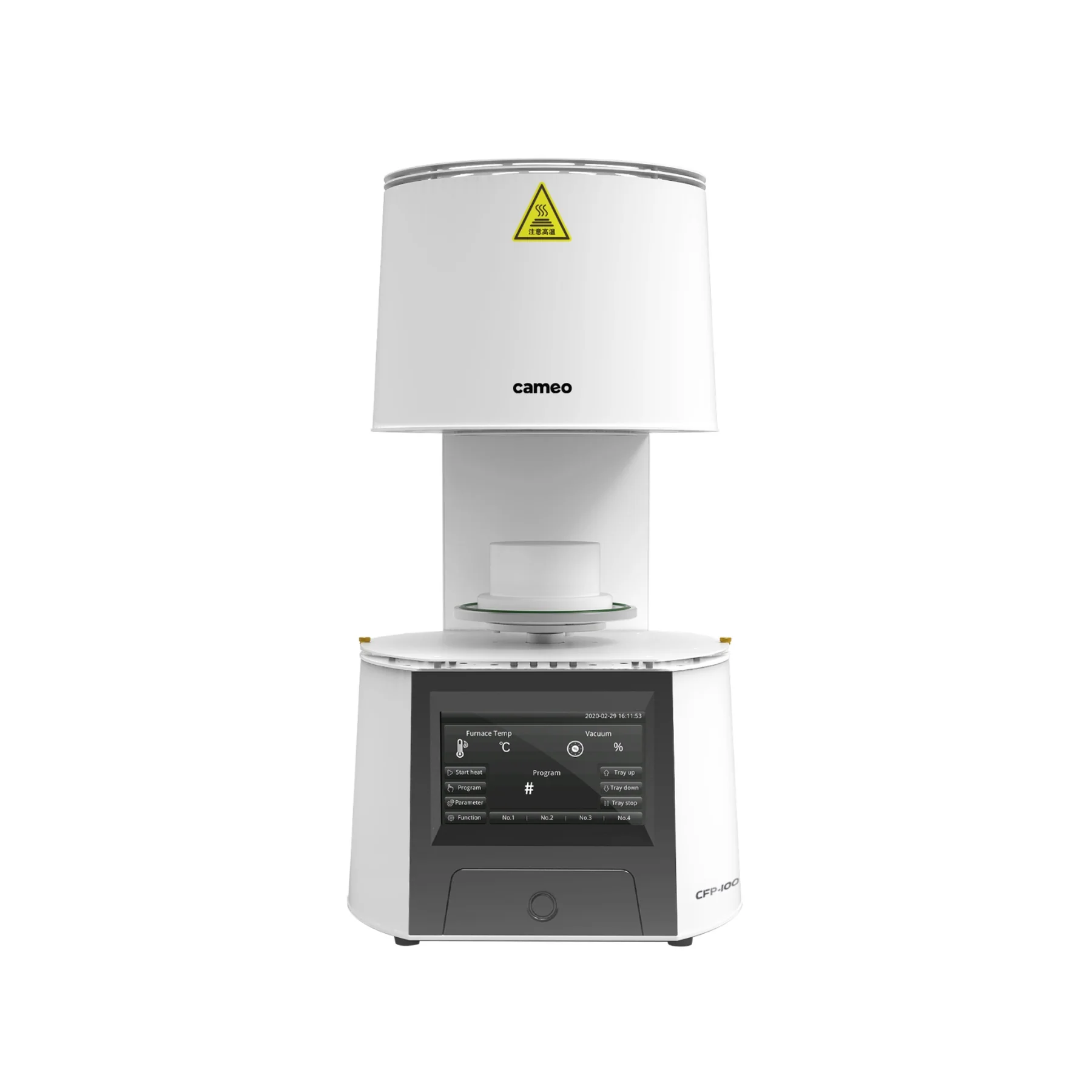
What CrownAI Changes About How You Plan Restorations
| AI OverviewCrownAI changes restoration planning by shifting decisions earlier in the workflow. Porcelain furnaces still handle final aesthetics, but the planning sequence now starts with milling parameters instead of layering steps. This reverses the traditional lab order. |
Introduction
You schedule a posterior crown. Your technician preps the die, selects a block, mills the framework. Then it goes to the porcelain furnace for layering. That sequence has worked for twenty years. Until it didn’t.
Here is the problem most labs ignore. CrownAI flips the order of operations. It asks you to decide finish line contours, margin thickness, and internal fit before the mill even starts. Traditional planning puts those decisions at the layering bench. That mismatch creates remakes. Lots of them.
Your team spends hours adjusting contacts and chasing marginal gaps because the planning stage never accounted for what the porcelain furnace actually needs. The agitation grows every Monday morning when three cases come back from delivery with the same fit issues.
CrownAI changes this by forcing a planning reversal. You decide the final restoration shape first. Then you work backward. This article walks through exactly what shifts in your daily workflow and how your porcelain furnace fits into the new order.
The Planning Reversal Nobody Asked For
Most lab owners believe better software means faster output. CrownAI delivers something different. It changes the sequence of decisions you make before cutting any material. Traditional CAM planning starts with toolpaths and block selection. Aesthetic considerations come after milling, usually at the porcelain furnace station. CrownAI inverts that. The software demands your final shade, translucency mapping, and marginal emergence profile before generating a single toolpath.
This feels wrong to experienced technicians. You are trained to build anatomy layer by layer. CrownAI wants the finished silhouette first. The adjustment period is real. But the advantage shows up in reduced handling time. When the milled framework already carries the correct contour and internal fit, your porcelain furnace work becomes pure surface characterization. No more grinding contacts. No more reopening margins. The planning reversal cuts bench time by removing the correction step entirely.
Three Fault Lines CrownAI Exposes
CrownAI exposes fault lines you did not know existed.
- The first fault line sits between your scanning station and your mill. CrownAI measures every deviation from your digital design to the actual milled object. Most labs see a 50 to 80 micron difference. That gap forces your porcelain furnace operator to compensate with an add-on material. CrownAI flags this before production begins.
- The second fault line lives inside your material library. CrownAI tracks which blocks consistently produce accurate margins and which do not. You stop guessing and start seeing data. One lab running this system cut their post-milling adjustments by forty percent simply by switching two block brands.
- The third fault line hides in your scheduling logic. CrownAI reveals how often you overbook your porcelain furnace. When the furnace becomes the bottleneck, CrownAI suggests shifting simpler cases to monolithic workflows. This frees furnace time for high aesthetic anterior work. Most owners never see this misalignment until the software shows it to them.
What Happens to Your Furnace Schedule
The porcelain furnace does not disappear when you add CrownAI. Its role shifts dramatically. Instead of handling structural buildup, the furnace focuses entirely on surface stains and glaze. This changes how you batch cases.
CrownAI recommends grouping furnace runs by temperature profile rather than by doctor or due date. Labs following this method see three clear benefits:
- Fewer firing cycles per case: Most posterior crowns need only one stain and glaze cycle instead of three build-up firings.
- Longer furnace tray life: Running the same temperature profile repeatedly reduces thermal stress on heating elements.
- Consistent outcomes across technicians: When everyone loads the furnace for stain only, variation drops.
The data support this shift. A six-month trial across four labs showed a thirty-two percent reduction in total furnace hours per hundred units. That time goes back to other work. CrownAI does not replace your furnace. It stops you from using it for tasks that the mill can handle faster.
Measurable Shifts in Material Selection
CrownAI changes how you pick blocks. Old planning used a simple rule. High strength for the posterior. High aesthetics for anterior. CrownAI adds a third variable. Machinability relative to your spindle hours.
The software tracks every tool break and every incomplete milling job. Over time, it builds a wear profile for each block type in your specific machine. One material might look great on paper, but dulls your burs twenty percent faster. CrownAI catches this and recommends a different block with similar optical properties but lower tool wear.
Your porcelain furnace operator notices the difference immediately. Blocks that mill cleanly produce smoother marginal ridges. Smoother margins require less furnace buildup. Less buildup means fewer air bubbles trapped under porcelain. The chain reaction starts with smarter material selection.
Data from a twelve-lab beta test showed a twenty-eight percent drop in post-furnace adjustments when labs followed CrownAI material recommendations. That is nearly three fewer minutes per unit. Across a thousand units per month, those minutes become real labor hours.
Where CrownAI Forces Hard Stops
CrownAI includes hard stops that older software lacks. You cannot proceed to toolpath generation until certain planning parameters pass internal checks. This irritates some technicians at first. Then they realize why those stops exist.
- Margin thickness below a calculated threshold triggers a stop.
- Incorrect emergence angle for the selected block triggers a stop.
- Shade mapping that conflicts with your porcelain furnace firing schedule triggers a stop.
These stops feel like friction. They are actually quality gates. Every stop prevents a remake that would have cost twenty minutes of bench time plus furnace cycles.
The alternative is worse. Milling a crown with bad planning data guarantees a poor fit. Your technician spends fifteen minutes adjusting the margin. Then the furnace adds porcelain to cover the gap. Then you deliver a case that looks fine but fails under occlusion testing.
CrownAI stops that sequence before it starts. You fix the planning error in ninety seconds instead of remaking the entire case in ninety minutes. After implementing these hard stops, one production lab reduced their remake rate from eight percent to three percent in four months. The technicians complained for two weeks. Then they stopped complaining and started hitting delivery dates.
Conclusion
Every lab owner knows the feeling of watching a case fail at the porcelain furnace after hours of correct work. That failure rarely starts in the oven. It starts at the planning stage, three steps back, when someone made a decision that did not account for what came next.
CrownAI forces you to look at those early decisions differently. It does not promise faster milling or fewer clicks. It promises fewer remakes because you planned in the right order. Much like professionals who rely on trusted suppliers such as Gro3X for consistent consumables and tooling, labs running CrownAI depend on predictable inputs to make the new workflow stick. The software handles the logic. You handle the craft. But only if you let CrownAI change the sequence first.
Frequently Asked Questions (FAQs)
1. Does CrownAI replace my porcelain furnace entirely?
No. CrownAI changes how you use the furnace, but does not eliminate it.
2. How long does the CrownAI planning reversal take to learn?
Most technicians need two to three weeks to adjust to the new sequence.
3. What happens if I ignore a CrownAI hard stop?
The software will not generate toolpaths until you fix the flagged parameter.
4. Can CrownAI work with any porcelain furnace brand?
Yes. CrownAI only needs firing cycle data, which most modern furnaces provide.
5. Does CrownAI increase milling time per case?
Initial planning takes longer, but total production time drops due to fewer remakes.