
Moving to a new country, applying for a visa, or planning an overseas wedding is an incredibly exciting chapter in life. But let’s be honest—the sheer volume of paperwork you have to deal with can feel completely overwhelming. Between the endless forms, strict government deadlines, and legal fees, it is easy to feel a bit buried. Then comes the tricky part: realizing that your vital personal documents, like your birth certificate, cannot be submitted in English without an official translation.
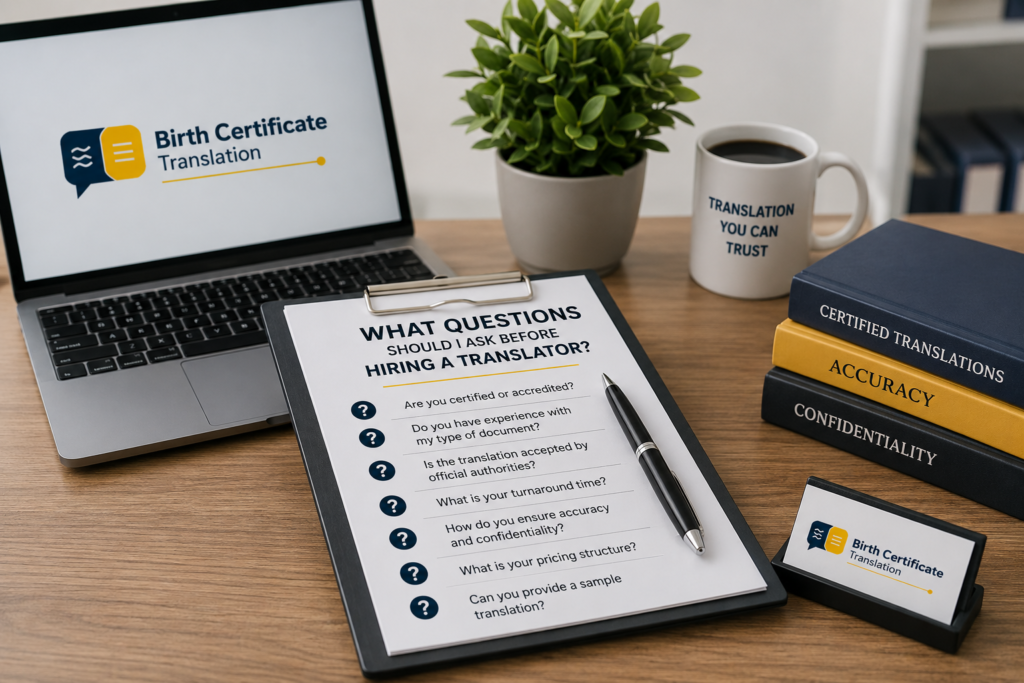
When your future plans depend on a few sheets of paper, you cannot afford to leave anything to chance. Handing your personal records over to just anyone online is a huge gamble. Finding a trusted birth certificate translation service UK is the smartest way to make sure your documents actually pass strict international checks. However, before you hand over your hard-earned money, you need to interview your provider. Asking the right questions upfront will save you from massive headaches later.
Why Casual Translations Fall Flat with Authorities
A lot of people think that if someone is bilingual, they can automatically translate legal documents. It sounds reasonable on the surface. If you have a close friend who is perfectly fluent in French or Spanish, why not just let them do it?
Unfortunately, government officials and civil registrars do not work that way. Official translation is a specialized field that requires a deep understanding of legal language, layout matching, and administrative rules. Most official bodies have strict rules against self-translation or translations done by relatives. They need an objective, professional paper trail. If you submit a casual translation, the caseworker will likely flag it, reject it, and send you right back to square one.
Question 1: What Specific Qualifications or Accreditations Do You Hold?
Because the UK does not have a government-managed system of “sworn translators” like continental Europe, the industry relies on recognized professional organizations to set the standard. You should always ask a potential translator about their professional affiliations.
Are they members of the Institute of Translation and Interpreting (ITI) or the Chartered Institute of Linguists (CIOL)? If you are dealing with a translation agency, are they fully accredited? Qualified professionals will be proud to share their credentials with you. When an authority sees a translation backed by an ITI or CIOL member, it gives them instant confidence that the work is accurate and trustworthy.
Question 2: Does Your Service Include a Complete Certification Package?
You need to know exactly what you are paying for. An official translation is not just a typed text file; it must come with a formal validation certificate.
Make sure to ask if their service provides a full certification package that meets government standards. For applications involving the Home Office or foreign ministries, a proper immigration birth certificate translation UK must include a signed Statement of Truth, the translator’s credentials, the date, and direct contact information. If any of these pieces are missing, your immigration caseworker might reject the document as unverified. Always confirm that these essentials are included in the upfront quote.
Question 3: How Do You Handle Handwritten Text and Official Stamps?
This is a massive detail that trips up a lot of people. Old UK birth certificates often feature messy, handwritten notes from the local registrar, ink stamps, or embossed seals.
Ask the translator directly: “Will you translate every single thing on the page, including handwritten notes and stamps?” A qualified professional knows that government caseworkers perform strict side-by-side comparisons. If a caseworker notices an untranslated stamp or a scribble in the margin that was ignored in the English-to-foreign version, they can reject the file for being incomplete. True professionals ensure 100% total text capture, leaving zero blank spots.
Question 4: What is Your Policy on Formatting and Layout Matching?
When an administrative official opens your application, they want to be able to verify details instantly. If your translated document looks completely different from the original layout, it makes their job much harder.
Ask if the translator mirrors the structure of the original certificate. A good service will meticulously format the translation so that tables, boxes, and sections sit exactly where they do on your original UK document. This clean presentation makes side-by-side verification completely seamless for the caseworker, drastically reducing the chances of your paperwork getting stuck in a bottleneck.
People Also Ask
1. Can a family member translate my birth certificate for official use?
No. Even if your family member is a professional translator or completely fluent, immigration departments and foreign consulates strictly prohibit self-translation or translations by relatives. They require a completely impartial, independent third-party professional to guarantee the document’s validity and prevent any conflict of interest.
2. Should I get the Apostille before or after the translation?
You should always get your Apostille from the FCDO before you hand your document over to a translator. The Apostille itself contains official text, signatures, and stamps that must be translated into the target language. If you translate the certificate first, the Apostille remains untranslated, which can cause foreign authorities to reject the entire package.
Protecting Your Hard Work
Organizing international paperwork is a journey that requires a lot of patience. It is totally normal to feel stressed about getting everything right, but asking these simple questions will give you complete control over the process.
By taking a few minutes to verify a translator’s qualifications, check their formatting standards, and confirm their certification process, you are actively protecting your timeline and budget. You deserve to work with a professional who respects your goals and treats your vital identity records with the care they deserve. Once you find the right fit, you can hand over your documents with total confidence and take a big, well-deserved breath of relief.