
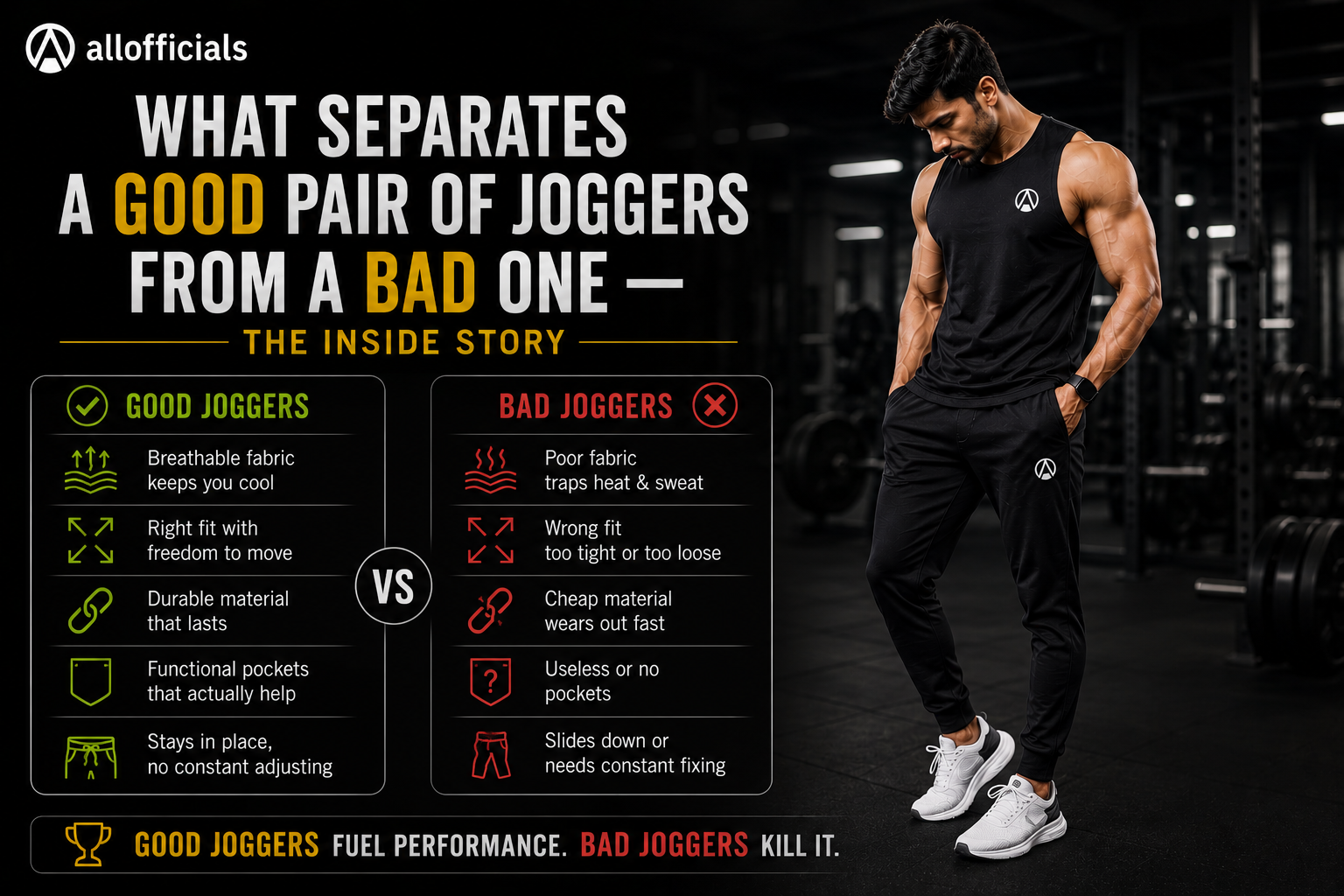
Most People Buy Joggers Based on How They Look
A new pair of joggers usually gets judged in the first thirty seconds. People check the colour, the fit around the legs, maybe the logo, and whether it looks good in a mirror selfie. That first impression matters, but it does not reveal much about how the garment will behave after weeks of squats, treadmill sessions, washes, and everyday movement.
A pair can look premium on a website and still have weak stitching, a loose waistband, or fabric that loses shape after a few washes. Many buyers in India have experienced this: a fresh-looking pair bought online feels great for the first few gym sessions, then small issues appear. The waist starts sitting differently, the ankle area stretches, or the inner thigh begins showing signs of friction.
Fabric choice gets plenty of attention, but construction decides how long that fabric survives. A polyester blend, for example, might dry quickly after a sweaty session in Mumbai humidity, but if the seams are poorly finished, the material advantage disappears. The small parts people rarely inspect often decide whether joggers last six months or become home wear after a few weeks.
Budget options are not always bad either. A basic pair can work perfectly for occasional workouts, walking, or light training. The difference appears when a person uses joggers repeatedly, especially in Indian gym routines where the same pair may handle strength training, travel, and daily errands.
The Waistband: More Complex Than It Looks
The waistband looks simple from outside, but it handles constant pressure. Every squat, stretch, and movement pulls against it. A weak waistband does not always fail dramatically; sometimes it slowly loses its original hold, which makes the fit feel different over time.
Single elastic designs are common in entry-level joggers. They can be comfortable when new and usually keep costs lower. The issue comes after repeated washing. If the elastic quality is average, it may lose recovery and stop returning to its original shape. For someone training once or twice a week, this might not matter much. Daily gym users notice it sooner.
Double-elastic construction adds more stability because the load is spread across a wider area. It helps the waistband sit flatter and reduces the feeling of pressure around the waist. Some training joggers also combine elastic with a drawstring, which gives more control during movement.
That drawstring is not just a style feature. A thicker cord usually lasts longer than a thin one because it handles repeated pulling better. The eyelets where the string passes through also matter. A poorly finished opening can slowly damage the cord every time it gets tightened.
The Stitching Details Most People Never Think to Check
Most durability problems appear where fabric meets fabric. The inner thigh area is a perfect example. During walking, lunges, and leg exercises, this section experiences repeated rubbing. A jogger may have good material but still fail if the seam cannot handle constant friction.
Flatlock stitching creates a flatter seam that sits closer to the fabric surface. It is often preferred for activewear because it reduces irritation and handles movement better. Overlocked seams are also common and useful, especially when properly reinforced. The problem is not the stitching type alone; it is whether the manufacturer used the right construction for the stress area.
The full range of mens gym joggers from AllOfficials is worth looking at if you want something built specifically for Indian gym conditions.
Another area people ignore is ankle cuff stitching. A cuff needs enough stretch to move with the leg but enough recovery to return to shape. If the stitching around the cuff is shallow or loose, the bottom opening can become wider over time. That changes how the joggers sit and can affect comfort during training.
Pocket areas also deserve attention. A pocket is a small section of fabric carrying unexpected weight from keys, phones, or wallets. Weak pocket seams can start pulling away long before the rest of the joggers show wear.
Quick Inspection Checklist
| What to Check | What Good Looks Like | What’s a Red Flag |
|---|---|---|
| Waistband elastic stitching | Even stitching with strong elastic recovery | Loose threads or uneven stitching around the waist |
| Inner thigh seam | Reinforced seam that handles stretching | Thin single seam with visible stress points |
| Ankle cuff finish | Secure stitching with flexible stretch | Cuff that feels loose after a few wears |
| Pocket entry seam | Clean finishing that supports weight | Pocket edges pulling away from fabric |
| Drawstring eyelet quality | Smooth opening that protects the cord | Rough edges that catch or damage the string |
A quick inspection before buying can reveal a lot. Pull the waistband gently, check the inside seams, and look at areas where different fabrics connect. These small checks take less than a minute but help avoid replacing joggers too often. In many Indian cities where people rotate gymwear frequently because of heat and sweat, construction quality becomes more noticeable.
Putting It Together for a Full Gym Wardrobe
A practical gym wardrobe does not need dozens of pieces. Most people need a few reliable items that work across strength sessions, cardio, travel, and regular days outside the gym. Joggers are one part of that system, but their value depends on how they fit into the rest of your routine.
Some prefer lightweight workout joggers for morning training, while others choose slightly heavier options for cooler months or travel. Climate changes the choice. A person training in Bengaluru may have different needs from someone working out in Jaipur summers. The same design will not feel identical everywhere.
The Gym Bottoms range from AllOfficials covers most of what a practical gym wardrobe needs beyond the top half.
Looking at construction also helps decide where to spend money. Paying extra only makes sense if the details improve: stronger seams, better fabric recovery, cleaner finishing, or more useful features. A higher price alone does not guarantee better performance.
Frequently Asked Questions
Q: What stitching type should I look for in quality gym joggers?
A: Flatlock stitching — where the seam lies flat against the fabric rather than creating a ridge — is more durable at high-friction points like the inner thigh and also more comfortable against skin during long sessions.
Q: Why do some gym joggers rip at the inner thigh so quickly?
A: The inner thigh seam takes constant friction from walking and squatting movements. Single-stitch construction at that point fails quickly under regular gym use. Reinforced or chain-stitched inner thigh seams last significantly longer.
Q: Does the drawstring eyelet quality actually matter?
A: More than people expect — cheap metal eyelets corrode with repeated washing and start catching the drawstring, making it difficult to adjust. Fabric-reinforced or corrosion-resistant eyelets stay smooth much longer.
Final Thoughts
Good joggers are rarely defined by one feature. The fabric matters, but so do the hidden parts that hold everything together. A waistband that stays firm, seams that survive repeated movement, and pockets that do not loosen after carrying essentials all contribute to long-term comfort.
For Indian gym users, buying once and using often is usually a better approach than constantly replacing cheaper pairs. A simple pair of men’s joggers with thoughtful construction can handle regular training without needing to look brand new every month. The details are easy to miss, but they are exactly where the difference shows.