
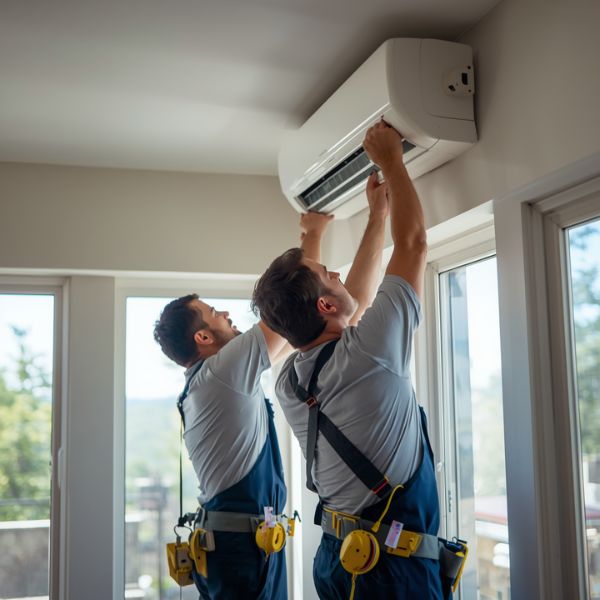
Living in New England is a challenge when it comes to the weather. We have to deal with cold winters and super hot summers. This means that the systems that heat and cool our homes get used a lot. For people who live in Cambridge, having a heating and cooling system is not just nice to have; it is really important for our health and safety and to protect our homes.
These systems are complicated. They usually stop working at the worst times. They might break down on a hot day or in the middle of the night. When this happens, we are left wondering if it is an emergency or if it can wait until the day.
If we ignore a problem with our heating and cooling system, it can cause a lot of damage to our homes, make the air inside our homes bad to breathe, and cost a lot of money to fix. Here are the signs that we need to call a professional to fix our HVAC system.

1. Inexplicable Burnt Odors or Electrical Malfunctions
This will be an indication of something very wrong if, upon turning on the system, you start getting strong, pungent smoke or burning odors from your vents.
- What It Means: A burning smell usually means one of two things: an overheating electric blower motor, a wire that has burned its insulating cover, or a short-circuited circuit board.
- The Action: Do not wait to see if the smell dissipates. Turn off your HVAC system at the thermostat immediately, locate your home’s main electrical panel, trip the dedicated breaker for the HVAC unit, and call for emergency assistance. Running an overheating electrical system poses a direct and immediate residential fire hazard.
2. The Sound of Hissing, Screeching, or Metal Clanging
While every climate control system makes a baseline level of operational noise, sudden and loud auditory changes should never be ignored.
- Hissing: A loud, continuous hissing sound near an indoor evaporator coil or outdoor condenser usually points to a high-pressure refrigerant leak. Refrigerant is a hazardous chemical compound that must be handled exclusively by EPA-certified technicians.
- Screeching or Grinding: A piercing screech or squeal often indicates that a fan belt has slipped or a motor bearing is failing completely. If a bearing disintegrates while the motor is spinning at high speeds, it can throw components out of alignment, destroying the entire housing.
- Metal Clanging: This typically means a fan blade has detached or bent and is hitting internal structural barriers. Continuing to run the system in this state will cause compounding physical destruction to neighboring parts.
3. Rapid Pooling of Water Around Indoor Units
While a modern air conditioning unit naturally produces moisture via condensation during a hot Cambridge summer, that liquid is supposed to be safely routed outside your home.
If you notice active pooling or flowing water surrounding your furnace or indoor air handler, you are facing a severe drainage breakdown. This is frequently caused by a totally blocked condensate drain line or a broken condensate pump. If your system is located in an attic or upper level, a clogged drain line can quickly overflow the pan, seeping through your ceilings and destroying drywall, historical plaster, and electrical fixtures below. Quick intervention stops structural rot and prevents toxic mold growth from taking root in your subfloors.
4. Frequent and Persistent System Short-Cycling
A short cycle happens whenever your heater/air conditioning unit switches on, runs for just one or two minutes, then switches off, and then starts again over and over again.
It shows that the appliance is experiencing overload, meaning that the unit is hitting its safety limits. Examples include when a furnace is overheated as a result of heat exchanger failure, or when an air conditioning unit is switching off due to a critically low charge of refrigerant or faulty compressor relays. Such an occurrence subjects the start capacitors and compressor motor to immense strain. It can take only 24 hours to burn up your compressor, making your simple part replacement into a very costly affair.
5. Signs of Carbon Monoxide or Gas Leaks (Heating Systems)
If you heat your Cambridge home using a natural gas or oil furnace, a system failure can carry invisible, lethal risks.
- The Smell of Fuel: Natural gas companies infuse gas with an artificial sulfur or “rotten egg” smell so leaks can be detected. If you smell this near your heating unit, evacuate your home immediately, call 911 or your gas company from outside, and then call an HVAC professional.
- Carbon Monoxide Warning: Carbon Monoxide (CO) has no smell, no taste, and no visibility at all. When a heat exchanger has cracks, the CO gas leaks right into the air of your house. If the carbon monoxide detector gives out a signal, or if the members of your family are suddenly dizzy and confused, get out of there right away.
Reliable, Round-the-Clock Restoration
Should the severe weather conditions outside cause any threat to your family or property, ensuring that you have Emergency HVAC Repair Cambridge will guarantee that the technician reaches your home with all the necessary tools and components to address the problem.
Emergencies call for immediate action from people who are trained in such matters, know how serious the situation is, and have a lot of experience with the buildings in the area. With our help from Minuteman Plumbing, Heating & Cooling, your HVAC system will be fixed, and you will breathe easier once again.