
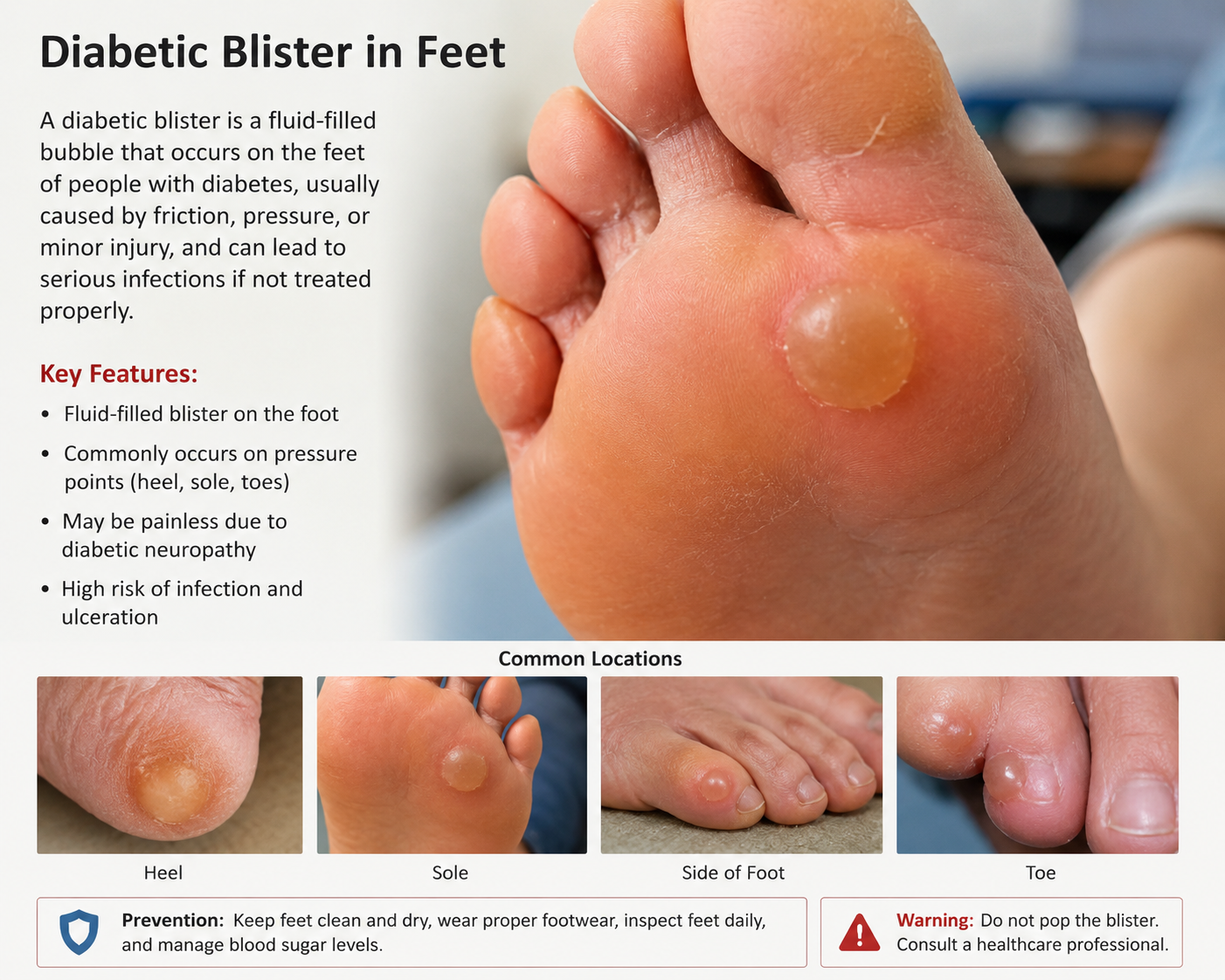
People living with diabetes often pay close attention to their blood sugar levels, but many overlook changes in their feet until a problem becomes painful. One such condition is diabetes blisters on feet, which can appear unexpectedly without any obvious injury. Because these blisters are usually painless in the beginning, they are often ignored, increasing the risk of infection and more serious foot complications.
Understanding why these blisters develop and knowing when to seek medical care can help prevent long-term damage. In this article, doctors explain the common causes, warning signs, treatment options, and ways to protect your feet.
What Are Diabetes Blisters on Feet?
Diabetes blisters on feet (also known as diabetic bullae) are fluid-filled sacs that develop on the feet or toes of people with diabetes. Unlike ordinary blisters caused by friction or burns, diabetic blisters may appear suddenly without any noticeable injury.
They are usually:
- Filled with clear fluid
- Round or oval in shape
- Painless in many cases
- Found on the toes, soles, heels, or sides of the feet
Although these blisters may heal on their own within a few weeks, they should never be ignored because damaged skin can easily become infected.
Why Do Diabetes Blisters on Feet Appear Suddenly?
Many patients are surprised when they notice a blister despite not hurting their foot. Doctors believe several factors contribute to this condition.
Poor Blood Sugar Control
High blood glucose affects the body’s ability to repair tissues and maintain healthy skin. Over time, it weakens the skin, making it easier for blisters to develop.
Keeping blood sugar within the recommended range is one of the best ways to reduce the risk.
Diabetic Neuropathy
Nerve damage caused by diabetes reduces sensation in the feet. Because of this, patients may not notice repeated pressure, friction, or minor injuries that eventually cause blister formation.
This is one of the earliest reasons many diabetic foot problems begin.
Reduced Blood Circulation
Poor circulation means less oxygen and fewer nutrients reach the skin. As a result, even small areas of pressure may trigger blister formation and delay healing.
Patients with vascular disease are particularly vulnerable.
Fragile Skin
Diabetes changes the structure of the skin, making it thinner and more delicate. Even everyday activities such as walking or wearing tight shoes may result in blister formation.
Minor Trauma That Goes Unnoticed
Something as simple as:
- Walking barefoot
- Wearing new shoes
- Small cuts
- Heat exposure
can lead to blisters, especially when nerve damage prevents the person from feeling discomfort.
Are Diabetes Blisters Dangerous?
While the blister itself may not be dangerous, complications can become serious if bacteria enter through broken skin.
Possible complications include:
- Skin infection
- Cellulitis
- Delayed wound healing
- Tissue damage
- Increased risk of amputation in severe untreated cases
Early diagnosis greatly reduces these risks.
Early Signs You Should Never Ignore
Many patients first notice early signs of diabetic foot ulcer before an actual ulcer develops.
Watch for:
- Persistent redness
- Swelling
- Warm skin
- Fluid-filled blisters
- Dry or cracked skin
- Skin discoloration
- Calluses with redness underneath
These symptoms should never be ignored, particularly if blood sugar remains uncontrolled.
When Does a Blister Become a Diabetic Foot Ulcer?
A blister may develop into a diabetic foot wound if:
- It bursts on its own.
- It becomes infected.
- Healing is delayed.
- Pressure continues on the affected area.
Once the skin opens, bacteria can easily enter, increasing the risk of infection.
Learning to recognize diabetic foot ulcer symptoms early allows doctors to begin treatment before complications become severe.
What Should You Do If You Notice a Diabetic Blister?
Doctors recommend the following:
Never Pop the Blister
The skin covering the blister acts as a natural protective barrier.
Keep the Area Clean
Wash gently with mild soap and water and keep the foot dry.
Protect It From Pressure
Wear comfortable footwear and avoid walking barefoot.
Monitor Daily
Watch for:
- Redness
- Pus
- Increased swelling
- Fever
- Bad odor
Seek medical care immediately if any of these occur.
Maintain Good Blood Sugar Control
Better glucose management helps wounds heal faster and lowers infection risk.
How Doctors Treat Diabetes Blisters on Feet
Treatment depends on the size of the blister and whether infection is present.
Doctors may recommend:
- Protective dressings
- Specialized wound care
- Off-loading footwear
- Blood sugar management
- Antibiotics (if infected)
- Vascular assessment when circulation is poor
Early treatment usually leads to better outcomes and prevents progression to ulcers.
Tips to Prevent Diabetes Blisters on Feet
Preventive foot care plays a major role in avoiding future complications.
Follow these simple habits:
- Inspect your feet every day.
- Wear properly fitted shoes.
- Avoid walking barefoot.
- Moisturize dry skin (avoid applying lotion between the toes).
- Trim nails carefully.
- Control blood sugar levels.
- Attend regular diabetic foot examinations.
Small daily habits can significantly reduce the risk of foot problems.
When Should You Consult a Specialist?
Do not delay medical care if you notice:
- A blister that is getting larger
- Drainage or pus
- Fever
- Black or discolored skin
- Severe swelling
- A wound that does not improve within a few days
Prompt evaluation can help prevent serious complications and preserve foot health.
Expert Care for Diabetic Foot Problems in Gurgaon
If you have diabetes blisters on feet, recurring foot wounds, or signs of poor circulation, early evaluation by a vascular specialist is important.
Dr. Himanshu Verma, a leading Vascular and Endovascular Surgeon at Fortis Hospital, Gurgaon, specializes in the diagnosis and treatment of diabetic foot conditions, vascular diseases, and non-healing wounds. With a patient-focused approach, he provides comprehensive evaluation, advanced wound management, circulation assessment, and personalized treatment plans to help patients reduce the risk of complications and support faster recovery.
Seeking expert care at the right time can make a significant difference in preserving foot health and improving quality of life.
Conclusion
Although diabetes blisters on feet may appear harmless at first, they can be an early indication of underlying diabetic foot complications. Recognizing the warning signs, maintaining proper foot care, and seeking timely medical attention are essential steps in preventing infection and more serious problems.
If you notice unusual blisters, persistent wounds, or any early signs of diabetic foot ulcer, don’t wait for the condition to worsen. Early diagnosis and expert treatment offer the best chance for successful healing and long-term foot health.