
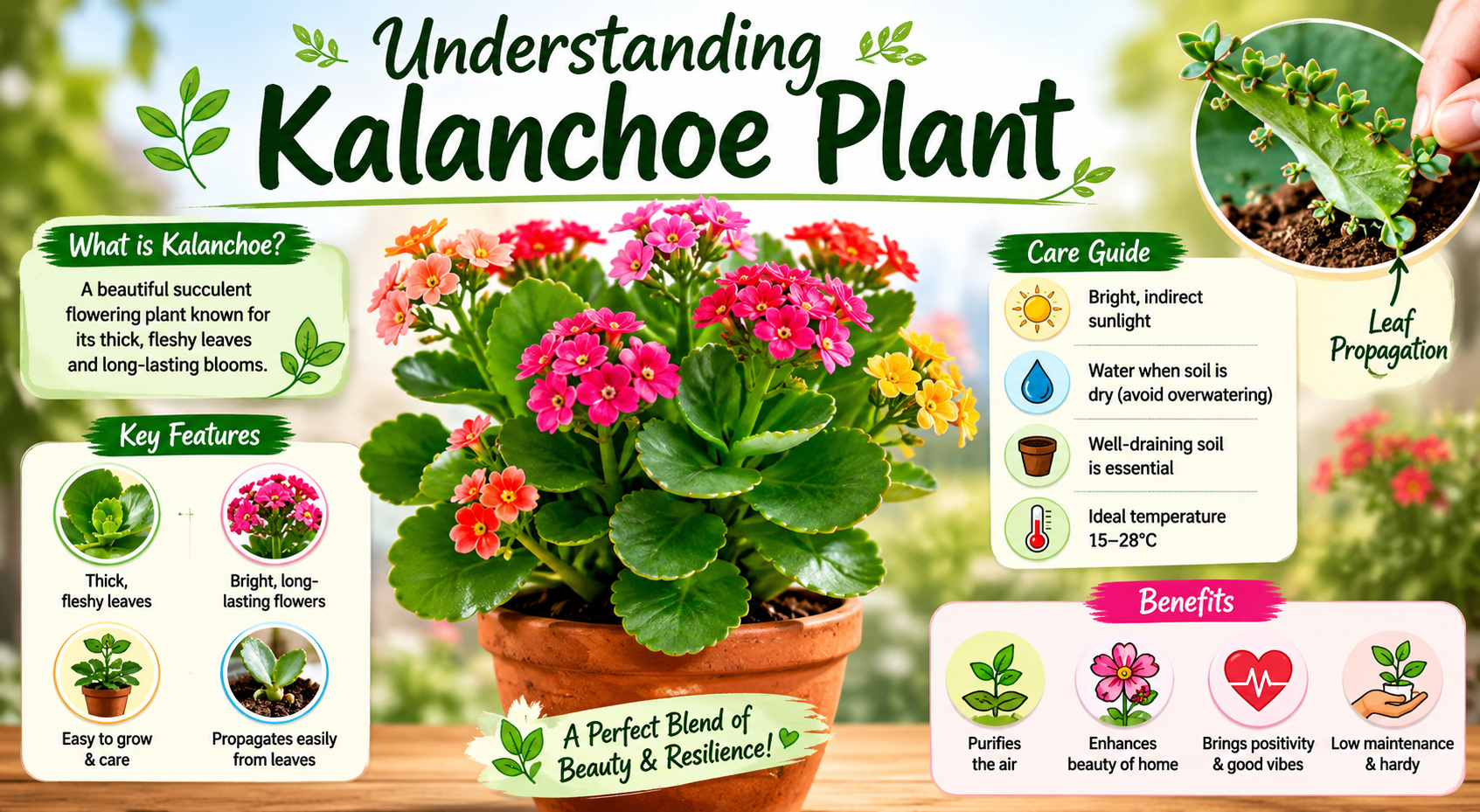
Kalanchoe plants are known among avid gardeners for their tiny flowers that can easily attract people and enhance the appearance of your home and environment. There are more than 100 species of the plant; however, the most famous variety loved by people is the Kalanchoe blossfeldiana, also known as the window’s thrill. This wonderful plant grows clusters of tiny flowers in different colours, such as pink, red, yellow, white, and orange. This guide tells you about proper Kalanchoe care, so that you can also care for this plant easily.
Caring for a Kalanchoe Plant
Looking after kalanchoe is kinda easy, really, you just need a few basics and pretty right conditions. The main growing needs for kalanchoe are usually pretty simple:
- Plant kalanchoe in loose, loamy, sandy, well-drained potting soil, like cactus mix or soil made for succulents.
- Put your kalanchoe in a warm indoor spot with bright indirect light, or keep it outside in full sun but with some protection from late afternoon sun.
- Let kalanchoe plants dry all the way out between waterings, like fully dry, not just “mostly” dry.
- Fertilize indoor kalanchoe about once a month during spring and summer.
Now, you can use the detailed care instructions that we are providing you here.
- Light
Indoors, kalanchoe does best with bright, indirect light. Outdoors, it can handle partial shade to full sun. If it’s in full sun, it’s best for the plant to get a bit of afternoon shade, so it doesn’t get scorched. If you see leggy stems, that’s a hint the plant is craving more light, and you probably should adjust it.
- Soil
For indoor kalanchoe, use a well-draining porous mix, something like 50% potting soil plus 50% cactus mix, or 60% potting soil and 40% perlite. Outdoors, kalanchoe grows best in soil that drains fast, like loamy or sandy ground.
- Water
Kalanchoe likes minimal water. It usually only needs watering every few weeks. Between waterings, the soil should dry out completely, because that helps prevent root rot, which is pretty important.
- Temperature and Humidity
Most of the time, kalanchoe stays happy in temperatures around 55°F to 80°F. Unless you’re dealing with frost, you don’t have to fuss too much about the indoor setting. Also, humidity doesn’t seem to bother kalanchoe much; it’s not picky.
- Fertilizer
Feed indoor kalanchoe with a well-balanced fertilizer blend once a month during spring and summer, but don’t fertilize in winter. If flowering is kind of sparse, switch to a formula with more phosphorus, or in other words, a bloom-leaning fertilizer.
Source: Abodelook