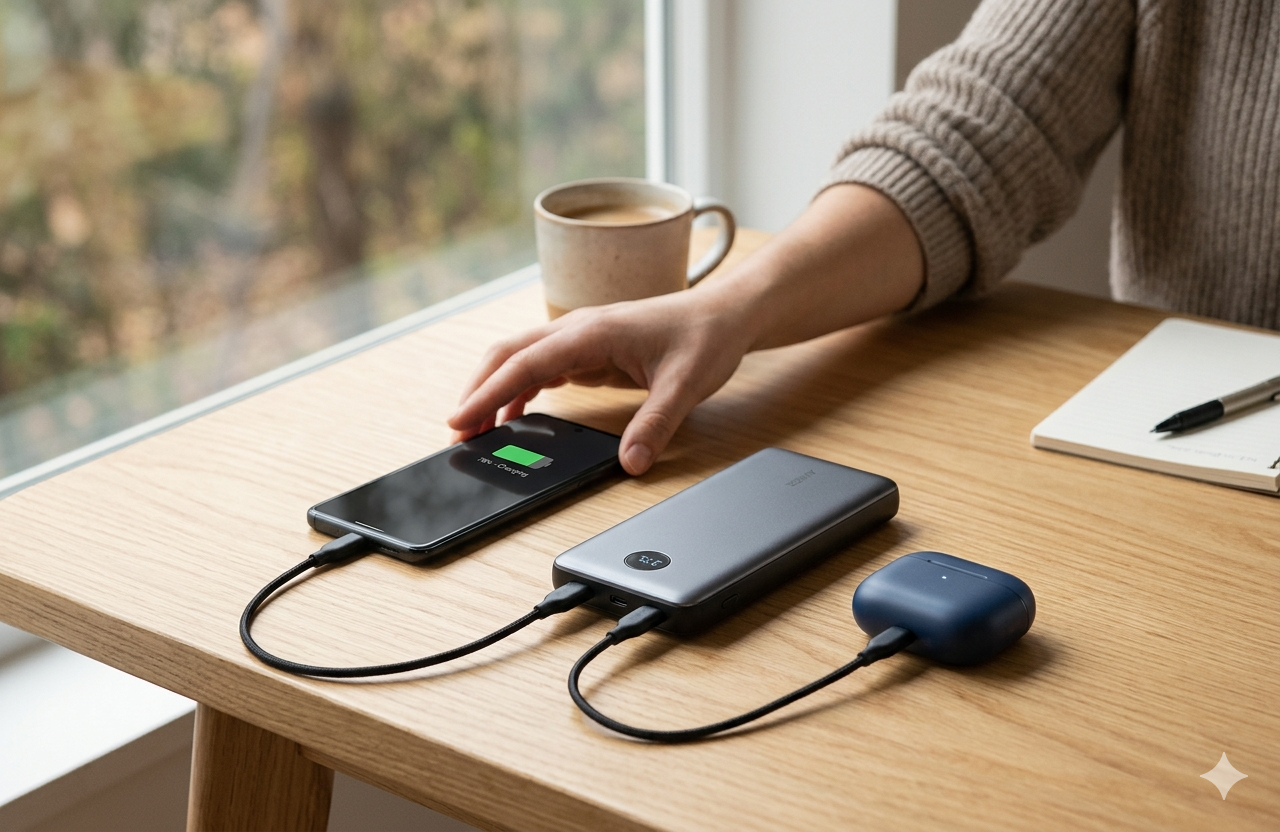
In today’s digital world, staying connected is more important than ever. Smartphones, tablets, wireless earbuds, and smartwatches have become essential parts of daily life. However, all these devices depend on one thing: battery power. Running out of battery while traveling, working, or studying can be frustrating and inconvenient.
This is where a power bank comes in. A power bank is a portable charging device that stores electrical energy and allows you to recharge your devices anytime, anywhere. It has become one of the most essential mobile accessories for modern users.
This article explains what a power bank is, how it works, its types, benefits, and how to choose the right one for your needs.
What Is a Power Bank?
A power bank is a compact, rechargeable battery pack designed to charge electronic devices without needing a wall socket. It stores energy in advance and then transfers it to your device when needed.
Think of it as a backup battery that you can carry in your bag or pocket. Whether you are traveling, attending meetings, or spending time outdoors, a power bank ensures your devices never run out of charge.
How Does a Power Bank Work?
A power bank works on a simple charging and discharging process:
1. Charging the Power Bank
You first charge the power bank using a wall charger, laptop, or car charger. The internal lithium-ion or lithium-polymer battery stores this energy.
2. Storing Energy
The energy remains stored in the power bank until you connect a device. Higher capacity power banks store more energy and can charge devices multiple times.
3. Charging Your Device
When you connect your phone or tablet using a USB cable, the power bank transfers stored energy to your device’s battery.
This simple process makes it extremely convenient for users who are always on the move.
Types of Power Banks
There are several types of power banks available in the market, each designed for different needs.
1. Standard Power Banks
These are the most common types used for everyday charging. They are suitable for smartphones and small devices.
2. High-Capacity Power Banks
These power banks come with large battery capacities (10,000mAh to 30,000mAh or more). They are ideal for travelers or people who use multiple devices.
3. Fast Charging Power Banks
These support quick charging technology, allowing your devices to charge in less time. They are perfect for users with busy schedules.
4. Solar Power Banks
Solar power banks can be charged using sunlight. They are useful for outdoor activities like hiking and camping.
5. Wireless Power Banks
These allow charging without cables. You simply place your device on the power bank for charging.
Benefits of Using a Power Bank
A power bank offers several advantages that make it an essential gadget in daily life.
1. Portability
Power banks are small and lightweight, making them easy to carry anywhere.
2. Emergency Backup
They provide backup power when you cannot access electricity, especially during travel or power outages.
3. Multiple Charges
High-capacity models can charge your smartphone several times before needing a recharge.
4. Device Compatibility
Most power banks support multiple devices like phones, tablets, Bluetooth speakers, and smartwatches.
5. Convenience
You don’t need to search for a charging point. You can charge your device anytime, anywhere.
How to Choose the Right Power Bank
Choosing the right power bank depends on your usage and device requirements.
1. Battery Capacity (mAh)
- 5,000mAh – suitable for one smartphone charge
- 10,000mAh – ideal for daily use
- 20,000mAh or more – best for heavy users and travelers
2. Output Power
Check the output power (measured in watts). Higher output means faster charging.
3. Number of Ports
If you have multiple devices, choose a power bank with multiple USB ports.
4. Size and Weight
Smaller power banks are more portable, while larger ones offer more capacity.
5. Safety Features
Look for features like overcharge protection, short-circuit protection, and temperature control.
Common Uses of Power Banks
Power banks are used in many everyday situations:
- Traveling long distances
- Outdoor activities like hiking or camping
- Office and business meetings
- Emergency situations during power cuts
- Students attending long classes or study sessions
They have become a must-have gadget for anyone who uses mobile devices regularly.
Tips for Maintaining Your Power Bank
To extend the life of your power bank, follow these tips:
- Do not overcharge it regularly
- Store it in a cool and dry place
- Use original charging cables
- Avoid dropping or damaging it
- Recharge it at least once every few months if not in use
Proper care ensures better performance and longer lifespan.
Future of Power Banks
With advancing technology, power banks are becoming more powerful and efficient. Modern models now include fast charging, wireless charging, and even solar charging capabilities. In the future, we can expect even faster charging speeds and smarter energy management systems.
Conclusion
A power bank is no longer just a luxury accessory—it is a necessity in today’s connected world. Whether you are a student, traveler, or professional, having a reliable power bank ensures that your devices stay charged whenever you need them.
By understanding how it works, its types, and how to choose the right one, you can make a smart investment that keeps you connected at all times. In a world where communication and technology are essential, a power bank offers the freedom to stay powered anywhere, anytime.