You ordered a custom leather jacket. Or maybe a wallet. A belt. A bag. At some point, someone asked you a simple question that did not feel simple at all.
Embossing or debossing?
If you stared at the screen for a moment before Googling it, you are not alone. Most people have no idea what either one means until they are right in the middle of a custom order. And by then, they just pick one and hope for the best.
This guide is going to fix that. We are going to break down both techniques clearly, honestly, and with actual useful detail so you walk away knowing exactly what to ask for.
What Is Embossing?
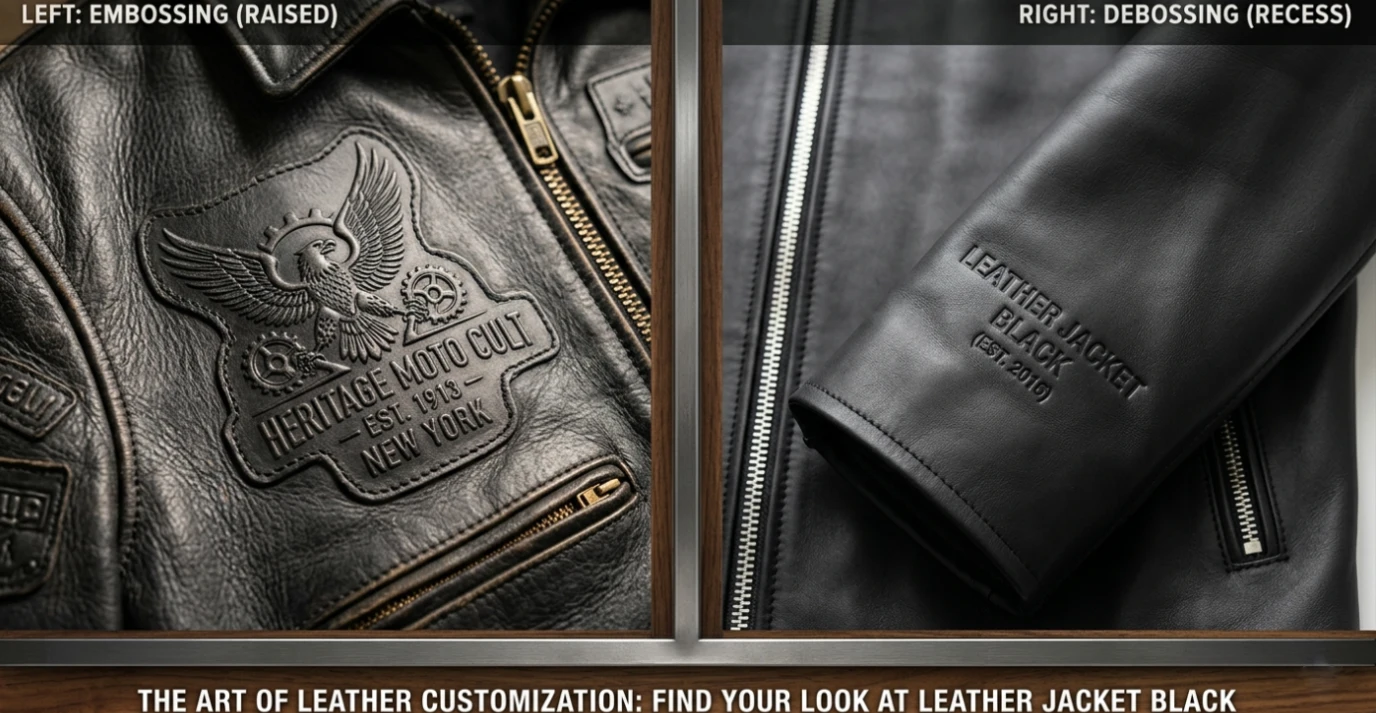
Embossing is a technique where a design, logo, or pattern is pressed into leather to create a raised surface. The image literally comes up off the material. You can see it. You can feel it. It stands out.
Heat and pressure are used together to push the leather up from underneath using a metal die. The result is a three dimensional effect that adds texture and depth to the surface.
Embossing is common in:
• Branded leather goods with logos
• Decorative patterns on jackets and bags
• Crocodile, snake, or exotic skin textures replicated on cowhide
• Custom initials or monograms on wallets and belts
The visual impact is high. It catches light differently at different angles, which makes the piece look dynamic and premium. Many high end brands use embossing specifically because it photographs beautifully.
What Is Debossing?
Debossing is the opposite. Instead of raising the design, it presses it down into the leather. The image sits below the surface level, creating an indented or sunken look.
The same heat and pressure process is used, but the die pushes down rather than up. The effect is more subtle, clean, and refined compared to embossing.
Debossing works especially well for:
• Minimalist brand marks
• Clean logo placement on jacket lining or cuffs
• Initials on premium wallets and cardholders
• Low profile text or symbols on bags
If embossing shouts, debossing whispers. And sometimes, that restraint is exactly what makes something feel expensive.
Emboss vs Deboss Leather: The Core Differences
Here’s an Emboss vs Deboss Leather difference side by side breakdown to make things crystal clear.
| Feature | Embossing | Debossing |
| Effect | Design raised above surface | Design pressed below surface |
| Visual Style | Bold, textured, high contrast | Clean, subtle, refined |
| Touch | Raised, tactile | Indented, smooth |
| Best For | Logos, patterns, textures | Monograms, minimal branding |
| Durability | Very durable | Very durable |
| Light Reflection | Catches light, dynamic | Absorbs light, matte |
| Cost | Similar | Similar |
| Leather Type | Works on most full grain & top grain | Works on most full grain & top grain |
Both are permanent. Neither fades easily with proper care. The choice is really about the look you want, not one being technically better than the other.
1. Know Your Leather Type First
Not every leather takes embossing or debossing equally well. The quality and thickness of the hide matters a lot here.
Full grain leather is the top tier option and it responds beautifully to both techniques. It holds the impression firmly, and the result stays crisp for years. Top grain leather also works well. Genuine or bonded leather is thinner and less dense, so the results tend to be less sharp and more likely to crack over time.
If you are buying a leather jacket or accessory and plan to get it customized, always ask what type of leather is being used before committing to any surface treatment.
2. The Design Size and Detail Level Matter
This is one thing most guides skip over, and it is genuinely important.
Embossing handles fine detail better than debossing in most cases. When you press a design upward, thin lines and small elements hold their shape well. Debossing compresses the leather into a recess, and very fine details can blur slightly if the leather is soft.
As a rough guide:
• Logos with fine lines do better with embossing
• Bold block text or simple shapes work great with debossing
• Anything under 10mm in height is risky with either technique on soft leather
• Larger designs give more room for detail on both sides
If you have a complex logo, talk to the craftsman first. They should be able to tell you which approach will preserve the most detail on the specific leather you have chosen.
3. Colour Fill Changes Everything
Here is where embossing gets a serious advantage in visual pop. You can add a colour fill to an embossed design. Gold foil, silver foil, or coloured ink can be applied to the raised surface to make the logo or pattern stand out even more.
Debossing can also take colour fill, but because the design is recessed, the fill sits inside the groove. This gives a different, more understated finish. Think of it like ink pressed into a seal.
Common combinations:
• Black leather with gold embossed logo: classic luxury look
• Brown leather with debossed initials, no fill: heritage and restraint
• Dark leather with silver foil on embossed pattern: modern streetwear edge
If you want colour, embossing is usually the stronger canvas. If you want clean simplicity, debossing without fill is the move.
4. Placement on the Garment or Item Affects the Result
Where the embossing or debossing goes on the leather piece changes how it reads visually and whether it even works structurally.
Flat panels are the easiest surfaces to work with. Curved areas, seams, or areas near pockets or zippers require more skill and sometimes a custom die shape.
For leather jackets specifically:
• Chest panels and back yoke are ideal for larger logos or patterns
• Cuffs and collar tips work well for small initials or brand marks
• Sleeve panels can handle medium sized designs
• Areas near seams need extra care to avoid distortion
Always ask to see a placement mock up before the work begins. A design that looks great centred on the back can look awkward if it is even slightly off.
5. Heat and Humidity Can Affect Long Term Results
Both embossing and debossing are permanent in the sense that they do not wash out or fade. But leather is a natural material, and it responds to its environment.
In very hot and humid climates, leather can soften over time. If the hide was not thick enough or properly tempered before the impression was made, you may notice the design losing sharpness after a few years.
In dry or cold climates, leather can stiffen, which generally preserves the impression well.
Tips to maintain the look long term:
• Condition your leather every 3 to 6 months with a quality leather conditioner
• Store away from direct sunlight and heat sources
• Avoid folding or creasing embossed or debossed areas repeatedly
• Do not use harsh cleaners on treated leather surfaces
Good craftsmanship at the start matters more than anything else. A deep, well set impression on quality leather will outlast a shallow one on cheap hide by years.
6. Schott NYC vs Leather Jacket Black: How Two Brands Handle Branding
Well Schott NYC vs Leather Jacket Black you look at how established brands handle surface detailing on leather, you start to see real differences in philosophy.
Schott NYC, one of the oldest American leather jacket makers, has traditionally kept branding minimal. Their signature look relies on the hardware, the silhouette, and the quality of the hide itself. When they do use surface detailing, it is usually a small debossed brand mark on the lining or a subtle patch. The brand lets the jacket speak first.
Leather Jacket Black takes a more customisation forward approach. The brand offers premium leather jackets with a focus on quality construction and modern styling. Their pieces are built on full grain and top grain hides, which means any surface treatment, whether embossed patterns or debossed logos, holds cleanly and lasts. If you are looking to get a jacket with a personalised mark, the leather quality matters enormously, and that is where a brand built on proper hide selection has a real edge.
You can explore their full range of leather styles at Leather Jacket Black’s Emboss vs Deboss guide if you want to see how the technique plays out across different jacket styles.
The broader point here is this: the brand matters because the leather matters. Embossing or debossing done poorly on cheap leather looks cheap. Done right on quality hide, it looks like it belongs there.
7. DIY vs Professional: When to Do It Yourself and When Not To
There are embossing stamps and tools available for home use. Some leatherworkers use them for small projects and they can produce decent results on flat leather goods.
But on a finished leather jacket or a structured bag, please do not try to DIY an embossed logo.
Here is why:
• Uneven heat application will scorch the leather
• Incorrect pressure will give a blurred or partial impression
• Repositioning mid-press almost always ruins the piece
• Finished garments have a structure underneath that interferes with a clean press
Professional leather artisans use hydraulic or pneumatic presses with custom dies and temperature-controlled plates. That consistency is what gives you clean edges and a sharp finish.
For any jacket or premium accessory, go professional. For a flat piece of leather you are working into a DIY project, good quality hand stamps can work fine with practice.
Quick Reference: Embossing and Debossing at a Glance
| Factor | Recommendation |
| Want bold visual impact | Choose embossing |
| Want minimalist branding | Choose debossing |
| Adding colour or foil | Embossing holds colour better |
| Working with thin or soft leather | Use debossing with simple designs |
| Large pattern across a panel | Either works, embossing adds texture |
| Small initials or monogram | Debossing is the cleaner choice |
| Budget-conscious customisation | Both cost roughly the same |
| High detail logo | Embossing preserves fine lines better |
FAQs
Is embossing or debossing better for leather jackets?
It depends on what you want. Embossing adds visible texture and is great for logos, patterns, or brand marks you want people to notice. Debossing is cleaner and more understated, making it ideal for minimal branding or initials. Both hold up equally well on quality leather.
Does embossing damage leather?
Not when done correctly. Professional embossing uses controlled heat and pressure that shapes the leather without breaking it. The key is starting with good quality leather. Cheap or thin hides are more likely to crack or distort during the process.
Can you emboss or deboss any leather jacket?
Most full-grain and top-grain leather jackets can be customised with either technique. Jackets made from genuine or bonded leather are less ideal because the hides are thinner and less dense. Always check the leather type before ordering customisation.
How long does an embossed or debossed design last?
On quality leather with proper care, both techniques last for the lifetime of the garment. The impression is permanent. Conditioning the leather regularly and avoiding extreme heat will keep the design looking sharp for years.
What is the difference between emboss vs deboss leather in terms of cost?
The price difference between the two is usually minimal when ordered from the same maker. The cost factors are more about die complexity, design size, and colour fill than the technique itself.
Does Leather Jacket Black offer embossed or debossed jackets?
Leather Jacket Black focuses on quality leather construction with carefully selected hides, which makes their jackets a strong base for any surface detailing. Their pieces are built to take customisation well without compromising the structure of the jacket.
Final Thought
Embossing and debossing are both excellent techniques. Neither is objectively better. The right choice depends on your design, your leather, your placement, and the look you are going for.
If you want presence and texture, go embossed. If you want quiet confidence, go debossed. And if you want a jacket worth putting either one on, start with the leather.