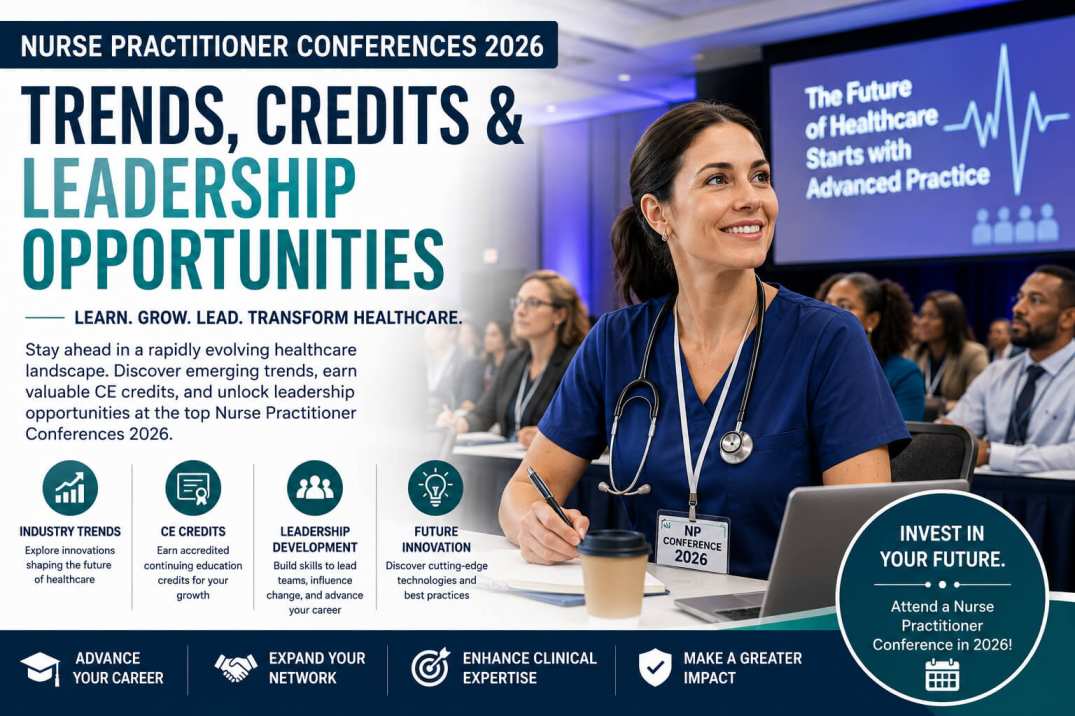
As healthcare delivery evolves at unprecedented speed, attending a Nurse Practitioner Conference 2026 has become more than a professional development opportunity—it is now a strategic necessity for nurse practitioners seeking to remain competitive, clinically current, and positioned for leadership. With nurse practitioners (NPs) playing an increasingly critical role in addressing provider shortages, expanding primary care access, and driving innovation across healthcare systems, the landscape of Nurse Practitioner Conferences 2026 reflects a transformative era for advanced practice providers.
According to recent workforce reports, the NP profession has become one of the fastest-growing healthcare occupations in the United States, with approximately 461,000 licensed nurse practitioners nationwide by 2025 and projected continued expansion due to physician shortages and rising patient demand. This surge is fueling a greater emphasis on continuing education, specialty certifications, healthcare policy awareness, and leadership development—all central themes of the top nurse practitioner conferences in 2026.
For NPs focused on career growth, CE credits, specialization, entrepreneurship, and future healthcare innovation, the right conference can provide measurable return on investment (ROI) that extends far beyond traditional networking.
Why Nurse Practitioner Conferences 2026 Matter More Than Ever
The healthcare industry in 2026 is being shaped by multiple converging forces:
- Expanded full-practice authority legislation in many states
- Rapid telehealth and digital health integration
- Artificial intelligence-assisted clinical decision-making
- Rising chronic disease burdens
- Behavioral health integration
- Increased focus on preventative care
- Growing NP-led independent practices
- Legislative changes affecting reimbursement and prescribing authority
Because of these shifts, Nurse Practitioner Conferences 2026 are increasingly designed not just as educational forums, but as innovation hubs where advanced practice providers gain direct access to:
- Clinical guideline updates
- Legislative advocacy resources
- Certification maintenance
- Leadership training
- Business and practice management tools
- Emerging healthcare technologies
For example, the 2026 AANP National Conference offers over 330 educational sessions, approximately 32 continuing education contact hours, policy sessions, hands-on workshops, and leadership programming, underscoring the elevated educational and strategic value of major NP conferences.
Key Trends Defining Nurse Practitioner Conference 2026
1. Future-Focused Clinical Innovation
The modern Nurse Practitioner Conference 2026 increasingly emphasizes healthcare innovation, including:
Emerging Conference Topics:
- AI in diagnostics
- Personalized medicine
- Remote patient monitoring
- Precision pharmacology
- Population health management
- Telepsychiatry
- Digital therapeutics
- Chronic care innovations
These trends reflect the expanding complexity of NP practice and the need for ongoing adaptation to technological and systemic healthcare transformation.
Why This Matters:
NPs who stay ahead of innovation trends gain:
- Competitive clinical expertise
- Greater employability
- Expanded reimbursement opportunities
- Leadership credibility
- Improved patient outcomes
2. Expanded Continuing Education Credits and Certification Opportunities
CE and certification remain foundational drivers for conference attendance.
Most leading Nurse Practitioner Conferences 2026 now offer:
- Pharmacology hours
- Specialty-specific CE
- Procedural workshops
- Board certification prep
- Policy-focused education
- Research methodology sessions
For example:
AANP National Conference:
- 26+ contact hours without workshops
- 32+ contact hours with workshops
- 75 CH available online via on-demand sessions
ROI of CE-Focused Attendance:
- License renewal compliance
- Specialty advancement
- Salary leverage
- Expanded clinical privileges
- Practice diversification
This consolidation of education can often reduce the fragmented costs associated with multiple smaller CE programs.
Leadership Opportunities Are Becoming a Central Focus
One of the most significant evolutions in Nurse Practitioner Conferences 2026 is the growing emphasis on leadership.
Leadership Tracks Commonly Include:
- Practice ownership
- Policy advocacy
- Healthcare administration
- Academic advancement
- Public speaking
- Clinical entrepreneurship
- NP-led innovation
- Workforce advocacy
As more NPs transition into:
- Clinical directors
- Healthcare executives
- Practice owners
- Educators
- Legislative advocates
conference leadership tracks provide critical frameworks for navigating beyond bedside practice.
Leadership ROI:
- Higher earning potential
- Greater policy influence
- Increased professional visibility
- Entrepreneurial growth
- National recognition
Specialty-Specific Conference Value
The diversity of nurse practitioner specialties means conferences increasingly tailor content to specialized practice areas.
High-Demand Specialty Conference Tracks:
- Family Nurse Practitioner (FNP)
- Psychiatric Mental Health NP (PMHNP)
- Pediatric NP
- Women’s Health NP
- Acute Care NP
- Gerontology NP
- Emergency NP
- Oncology NP
Specialized conference sessions improve clinical depth while directly supporting practice differentiation.
Nurse Practitioner Conferences 2026 and Legislative Advocacy
Healthcare policy is one of the most financially and professionally impactful components of NP conferences.
Policy Topics Often Covered:
- Full practice authority
- Medicare reimbursement
- Controlled substance regulations
- State licensure reforms
- Scope-of-practice legislation
- Telehealth reimbursement laws
Because regulatory frameworks continue evolving, conferences now function as essential policy intelligence centers.
Professional Advantage:
Attendees gain:
- Stronger advocacy tools
- Practice security
- Business compliance
- Legislative foresight
- Leadership credibility
The Financial ROI of Conference Attendance
Typical Costs:
- Registration: $500–$1,500
- Travel: $300–$1,000
- Lodging: $500–$2,000
- Additional workshops: $200–$1,000
Estimated Total Investment:
$1,500–$4,500
Potential Returns:
- CE value
- Specialty advancement
- New employment opportunities
- Salary increases
- Expanded clinical services
- Business partnerships
- Independent practice development
For ambitious practitioners, the long-term return often significantly outweighs the upfront cost.
Virtual Nurse Practitioner Conferences 2026: Accessibility Meets Innovation
Hybrid and virtual conference models continue to expand access.
Virtual Benefits:
- Reduced cost
- Flexible scheduling
- On-demand learning
- Global accessibility
- Expanded CE volume
In-Person Benefits:
- Hands-on workshops
- Career fairs
- Direct mentorship
- Stronger networking
- Leadership exposure
Choosing between formats depends on career goals, budget, and specialty requirements.
Conference Networking Is Evolving Beyond Traditional Connections
Modern conferences increasingly facilitate:
- Career placement
- Research collaboration
- Speaker development
- Practice partnerships
- Digital networking communities
- Mentorship programs
Networking now extends far beyond exchanging business cards—it can directly influence career trajectory.
Future Healthcare Innovations Highlighted at Nurse Practitioner Conferences 2026
Healthcare innovation remains central to 2026 conference value.
Key Innovations:
- Wearable health technology
- AI-supported chronic care
- NP-owned telemedicine models
- Digital prescribing tools
- Remote diagnostics
- Behavioral health technology integration
- Data-driven patient management
NPs who understand these innovations can position themselves as future healthcare leaders.
Choosing the Best Nurse Practitioner Conference 2026
Evaluation Criteria:
- Accreditation quality
- CE offerings
- Specialty relevance
- Innovation topics
- Leadership tracks
- Policy education
- Networking opportunities
- Cost efficiency
The best conference aligns with both immediate licensure needs and long-term strategic goals.
Why 2026 Represents a Critical Career Year for Nurse Practitioners
Several macro trends make 2026 especially important:
- National provider shortages
- Expanded NP workforce demand
- Policy reforms
- Technology disruption
- Rising independent practice opportunities
- Increased competition
Professionals who proactively invest in education and leadership are likely to outperform peers.
Final Thoughts: Nurse Practitioner Conferences 2026 Are Strategic Career Investments
Attending a Nurse Practitioner Conference 2026 is no longer simply about maintaining certification—it is about actively shaping your future in a rapidly transforming healthcare ecosystem.
Whether your goals include:
- Clinical advancement
- CE compliance
- Specialty mastery
- Leadership
- Policy influence
- Independent practice
- Entrepreneurship
- Technology adoption
the right Nurse Practitioner Conferences 2026 can provide the knowledge, credentials, and strategic opportunities necessary to thrive.
As healthcare innovation accelerates, nurse practitioners who embrace continuing education, future-focused learning, and leadership development through conferences will be best positioned to lead the next era of patient-centered care.