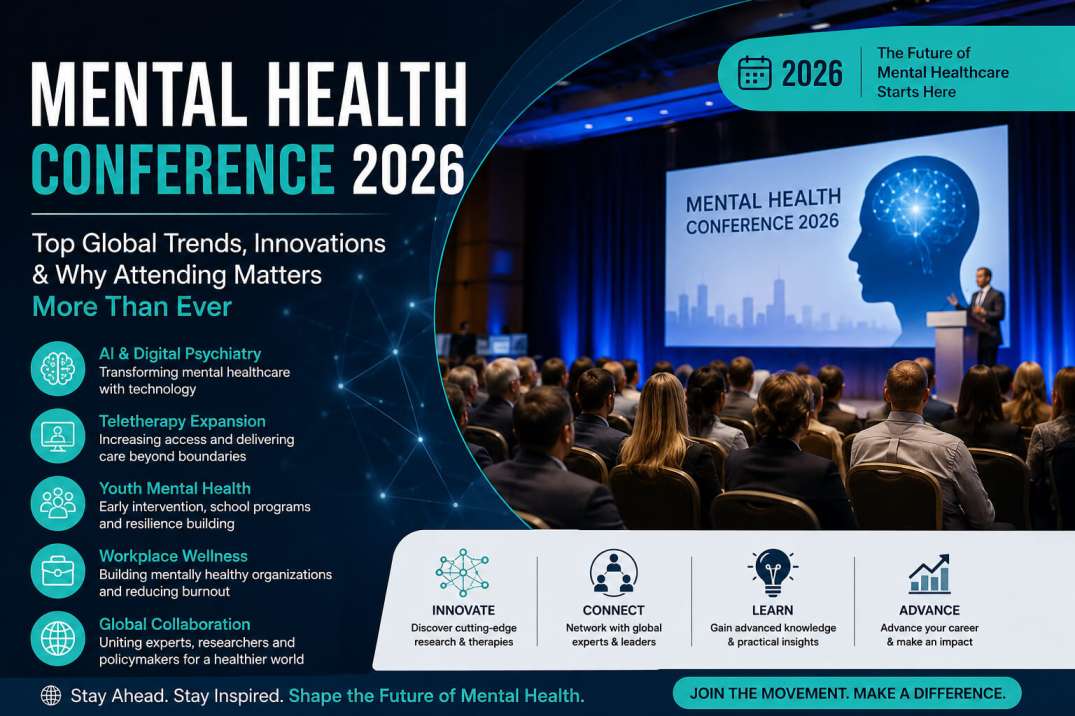
As global awareness around mental wellness continues to accelerate, attending a leading mental health conference in 2026 has become more critical than ever for clinicians, psychologists, researchers, policymakers, therapists, and healthcare innovators. Mental health disorders now affect approximately 1 in 8 people worldwide, according to WHO estimates, while depression, anxiety, burnout, and digital-age psychological challenges continue to rise across every demographic. At the same time, the global mental health market is rapidly evolving through breakthroughs in digital psychiatry, AI-assisted care, neurotechnology, trauma-informed practices, workplace wellness strategies, and policy reform.
In this shifting landscape, mental health conferences are no longer just educational gatherings—they are strategic hubs where future-focused professionals gain cutting-edge insights, build global collaborations, and discover transformative innovations shaping behavioral healthcare.
Why Mental Health Conferences Matter More in 2026
The urgency surrounding mental health has intensified due to several global factors:
- Rising rates of anxiety, depression, PTSD, and youth mental health crises
- Increased demand for accessible care amid provider shortages
- Rapid expansion of teletherapy and AI-powered interventions
- Growing focus on workplace mental wellness
- Policy integration of mental health into public health systems
- Greater need for culturally adaptive, equitable mental healthcare
The global burden of untreated mental illness, particularly in low- and middle-income countries where treatment gaps exceed 75%, highlights the necessity of interdisciplinary knowledge exchange. Conferences now serve as essential forums for discussing scalable solutions, innovative therapies, and systemic reforms.
Top Global Trends Dominating Mental Health Conference 2026 Agendas
1. Artificial Intelligence & Digital Psychiatry
One of the most prominent themes in mental health conference programs worldwide is the integration of AI into behavioral healthcare. Innovations include:
- AI-assisted cognitive behavioral therapy tools
- Predictive analytics for suicide prevention
- Digital symptom monitoring
- Chatbot-supported mental wellness platforms
- Remote psychiatric diagnostics
- Personalized treatment algorithms
Recent research shows AI can expand access, reduce wait times, and improve early intervention, though concerns around ethics, privacy, and bias remain central discussion points. Conferences provide professionals with opportunities to evaluate both technological benefits and regulatory challenges.
2. Teletherapy & Virtual Mental Health Expansion
Post-pandemic healthcare models have solidified telehealth as a permanent pillar of psychiatric and psychological care. In 2026, conferences increasingly emphasize:
- Hybrid therapy models
- Cross-border telepsychiatry
- Virtual counseling for underserved populations
- Mobile-based mental health interventions
- Insurance and reimbursement strategies
- Digital therapeutic outcomes research
This trend is especially relevant for practitioners seeking scalable solutions in global mental health systems.
3. Youth Mental Health & School-Based Intervention
Child and adolescent mental health continues to dominate conference discourse due to increasing concerns over:
- Social media impacts
- Academic stress
- Cyberbullying
- Suicide prevention
- ADHD and neurodevelopmental disorders
- Early screening frameworks
Mental health conferences now spotlight evidence-based prevention models, resilience education, and school-health collaborations.
4. Workplace Mental Health & Corporate Wellness
Burnout, productivity loss, and employee well-being are now major public health and economic concerns. Leading mental health conferences in 2026 explore:
- Organizational resilience
- Leadership mental health strategies
- Burnout prevention
- Employee assistance innovations
- Psychological safety
- Mental health ROI in corporations
With mental illness costing the global economy over $1 trillion annually in lost productivity, business leaders increasingly participate alongside healthcare professionals.
5. Trauma-Informed Care & Resilience Science
As trauma awareness expands, conferences are increasingly focused on:
- PTSD innovations
- Complex trauma
- Refugee and conflict mental health
- Somatic therapies
- Neurobiology of resilience
- Community recovery systems
This area is especially vital given rising geopolitical instability and climate-related psychological distress.
Innovations Revolutionizing Mental Health Conferences in 2026
Neuroscience & Brain-Based Therapies
Cutting-edge conferences are exploring:
- Neurofeedback
- Psychedelic-assisted therapy research
- Brain stimulation therapies
- Precision psychiatry
- Biomarker-guided treatment
- Functional neuroimaging
These innovations are reshaping how clinicians conceptualize diagnosis and intervention.
Cross-Cultural Psychiatry
Globalization has made culturally competent care essential. Major conference sessions now prioritize:
- Migrant mental health
- Refugee psychiatry
- Indigenous healing models
- Cultural adaptation in psychotherapy
- Minority mental health disparities
This broadens practitioner capacity to serve increasingly diverse populations.
Policy, Advocacy & Systems Reform
Mental health conferences increasingly influence:
- Universal health coverage integration
- National mental health policy
- Suicide prevention legislation
- Insurance parity
- Community care models
- Public-private partnerships
For policymakers and administrators, these events are essential strategic platforms.
Who Should Attend a Mental Health Conference in 2026?
Psychiatrists & Clinical Psychologists
Gain access to:
- Emerging treatments
- New diagnostic frameworks
- Continuing education
- Licensing insights
- Advanced therapeutic protocols
Therapists & Counselors
Benefit from:
- Updated evidence-based practices
- Trauma and resilience workshops
- Digital therapy training
- Networking opportunities
Researchers & Academics
Leverage:
- Publication opportunities
- Peer collaboration
- Clinical trial insights
- Global data trends
Students & Early-Career Professionals
Access:
- Career development
- Mentorship
- Exposure to innovations
- Specialized training
Policymakers & Public Health Leaders
Explore:
- Large-scale implementation strategies
- Prevention models
- Healthcare policy innovations
Key Benefits of Attending Mental Health Conferences
Professional Development
Mental health conferences offer:
- CME/CE credits
- Certification workshops
- Skill advancement
- Leadership growth
Global Networking
Build relationships with:
- International clinicians
- Academic institutions
- Healthcare startups
- NGOs
- Government agencies
Competitive Advantage
Stay ahead in:
- Emerging therapies
- Regulatory shifts
- Technology integration
- Research breakthroughs
Research Translation
Convert theory into practice through:
- Case studies
- Live demonstrations
- Applied workshops
Mental Health Conference 2026 and the Rise of Interdisciplinary Collaboration
The complexity of modern mental health challenges requires collaboration across:
- Psychiatry
- Psychology
- Neuroscience
- Public health
- Education
- Technology
- Corporate leadership
- Social work
Conferences increasingly foster this integration, accelerating real-world impact.
Why 2026 Is a Landmark Year for Mental Health Conferences
Several factors make 2026 particularly significant:
- Rapid AI adoption in healthcare
- Increased global mental health funding
- Greater youth mental health prioritization
- Expanded telehealth regulations
- Workplace wellness mainstreaming
- Policy momentum following global health reforms
Professionals who fail to stay informed risk falling behind evolving best practices.
How to Choose the Right Mental Health Conference
When selecting among mental health conferences, prioritize:
Scientific Credibility
Choose events with:
- Peer-reviewed programs
- Recognized experts
- Academic partnerships
Topic Relevance
Focus on:
- Digital psychiatry
- Clinical psychology
- Trauma
- Public policy
- Child mental health
- Workplace wellness
Networking Opportunities
Look for:
- Workshops
- Roundtables
- Poster sessions
- Industry exhibitions
Accessibility
Evaluate:
- Virtual attendance options
- International participation
- Continuing education credits
Final Thoughts
In 2026, the role of a mental health conference extends far beyond passive learning. These events are shaping the future of psychiatry, therapy, neuroscience, digital healthcare, and policy innovation. They empower professionals to respond effectively to escalating global mental health demands while fostering transformative collaboration across disciplines.
Whether you are a clinician seeking advanced treatment models, a researcher exploring emerging technologies, a policymaker designing equitable systems, or a student entering the field, participating in global mental health conferences can significantly enhance your knowledge, career trajectory, and real-world impact.
As the future of mental healthcare becomes increasingly digital, interdisciplinary, and prevention-focused, attending the right conference is no longer optional—it is essential.
To stay ahead of these trends, explore upcoming mental health conferences and position yourself at the forefront of the next generation of mental healthcare innovation.