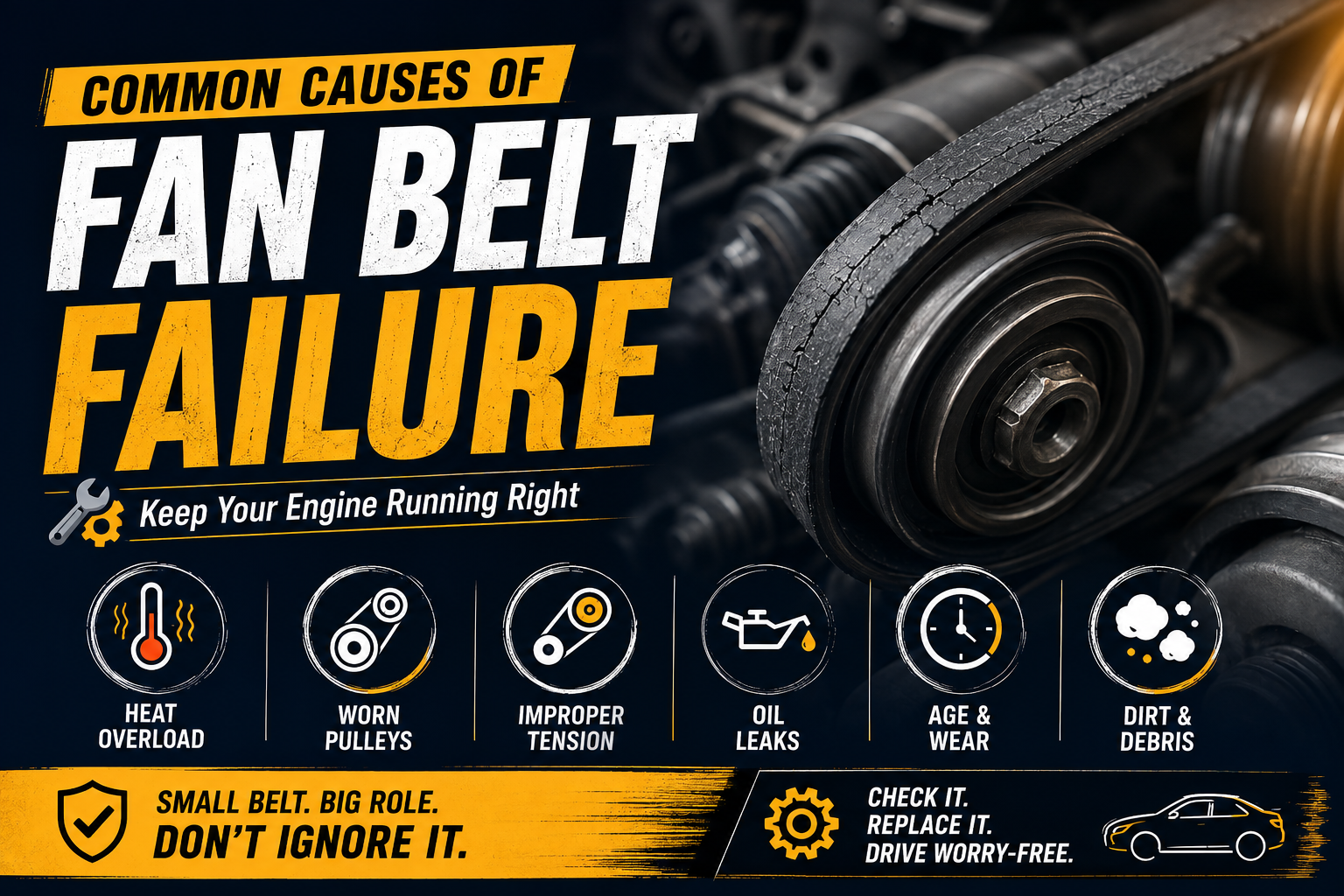
Modern vehicles rely on several important components to maintain smooth engine operation, and one of the most essential among them is the fan belt. Also known as the serpentine belt or drive belt in many vehicles, the fan belt powers multiple engine accessories such as the alternator, water pump, air conditioning compressor, and cooling fan. Although it may appear to be a simple rubber component, the fan belt plays a major role in overall vehicle performance and reliability.
Fairmount Tire offers high-quality Automotive Fan Belts along with professional installation and repair services for various vehicle models. Their experienced technicians ensure proper belt fitting, tension adjustment, and system inspection to improve engine performance, prevent breakdowns, and deliver reliable, safe, and smooth driving in all road conditions.
When a fan belt begins to fail, drivers may experience strange noises, overheating, poor battery charging, or even complete engine breakdown. Understanding the common causes of fan belt failure in modern vehicles can help car owners avoid expensive repairs and maintain safe driving conditions.
Normal Wear and Tear Over Time
One of the most common causes of fan belt failure is regular wear and tear. Fan belts operate continuously whenever the engine is running. Over time, the rubber material becomes weak due to constant movement, heat exposure, and friction.
As the belt ages, small cracks begin to appear along its surface. The rubber may become brittle, glazed, or stretched. Once the belt loses its flexibility and strength, it can no longer maintain proper tension and grip. This eventually leads to slipping or complete failure.
Improper Belt Tension
Fan belts require proper tension to function correctly. If the belt is too loose, it may slip on the pulleys, creating squealing noises and reducing the efficiency of engine accessories. A loose belt may also fail to properly drive the alternator or water pump, resulting in battery problems or engine overheating.
On the other hand, excessive belt tension can also cause serious issues. An overly tight fan belt places extra stress on bearings, pulleys, and engine accessories. This added strain accelerates belt wear and increases the chances of premature failure.
Exposure to Heat and Harsh Conditions
Modern engines generate significant heat during operation, and fan belts are constantly exposed to high temperatures. Excessive heat can cause the rubber compound to dry out and lose elasticity.
Vehicles driven in extremely hot climates or heavy traffic conditions may experience faster belt deterioration due to prolonged heat exposure. Additionally, engine compartments contaminated with oil, coolant, or dirt can weaken the belt material.
Misaligned Pulleys
Pulley alignment is critical for proper fan belt operation. The belt must travel smoothly across all pulleys without twisting or shifting. If one or more pulleys become misaligned, the belt experiences uneven wear and excessive friction.
Misalignment may occur due to damaged brackets, worn bearings, improper installation, or accident-related engine damage. Even a small alignment issue can gradually weaken the belt structure over time.
Faulty Belt Tensioners and Idler Pulleys
Belt tensioners and idler pulleys play a major role in maintaining smooth fan belt movement. These components help guide the belt and maintain consistent pressure across the pulley system.
When tensioners or pulleys become worn, seized, or damaged, they can create excessive friction and vibration. A defective pulley bearing may wobble or lock up completely, forcing the belt to slide improperly.
This abnormal movement rapidly damages the fan belt surface and may lead to cracking, glazing, or tearing. In many cases, replacing only the belt without addressing faulty pulleys results in repeated belt failure.
Oil and Fluid Contamination
Oil leaks are another major cause of fan belt failure in modern vehicles. Engine oil, coolant, power steering fluid, or transmission fluid can contaminate the belt surface and weaken the rubber material.
When fluids come into contact with the belt, they reduce friction and cause slipping. A slipping fan belt generates excessive heat and accelerates wear. Fluid contamination may also soften the rubber, making the belt more likely to crack or break.
Poor Quality Replacement Belts
Not all replacement fan belts offer the same level of durability and performance. Low-quality aftermarket belts may use inferior rubber compounds that wear out faster under normal driving conditions.
Cheap belts are often less resistant to heat, stretching, and cracking. They may also fit improperly, leading to tension issues and pulley misalignment. Although inexpensive belts may seem like a cost-saving option initially, they often result in more frequent replacements and higher repair costs.
Fairmount Tire also provides professional Vehicle Light Bulbs installation and repair services to ensure maximum visibility and road safety. Their skilled technicians replace damaged or dim bulbs quickly, helping drivers maintain proper lighting performance for safer driving during nighttime and challenging weather conditions.
Incorrect Installation
Improper installation is another overlooked cause of fan belt failure. Installing the belt incorrectly can place unnecessary stress on the belt and pulley system.
Common installation mistakes include incorrect routing, improper tension adjustment, and forcing the belt onto pulleys using sharp tools. These errors can weaken the belt structure or create alignment problems immediately after installation.
Sudden Mechanical Failure
Sometimes fan belts fail due to sudden mechanical issues within the engine system. A seized alternator, locked water pump, or damaged air conditioning compressor can instantly overload the belt.
When one driven accessory stops rotating properly, the belt experiences extreme stress and friction. This can cause the belt to burn, shred, or snap unexpectedly.
Neglecting Regular Vehicle Maintenance
One of the biggest contributors to fan belt failure is poor vehicle maintenance. Many drivers overlook belt inspections because the fan belt may appear functional from the outside. However, internal belt damage can develop long before visible signs appear.
Routine maintenance allows mechanics to identify cracks, glazing, fraying, pulley wear, and tension issues before complete failure occurs. Regular inspections also help detect oil leaks or alignment problems that could shorten belt lifespan.
Conclusion
Fan belts are essential components that keep modern vehicles operating efficiently. Although they are designed for durability, several factors can lead to premature fan belt failure. Normal wear and tear, improper tension, heat exposure, fluid contamination, pulley misalignment, and neglected maintenance are among the most common causes.
Understanding these issues allows vehicle owners to take preventive measures and reduce the risk of breakdowns. Regular inspections, timely replacements, and proper maintenance can significantly extend fan belt lifespan and improve overall engine reliability.