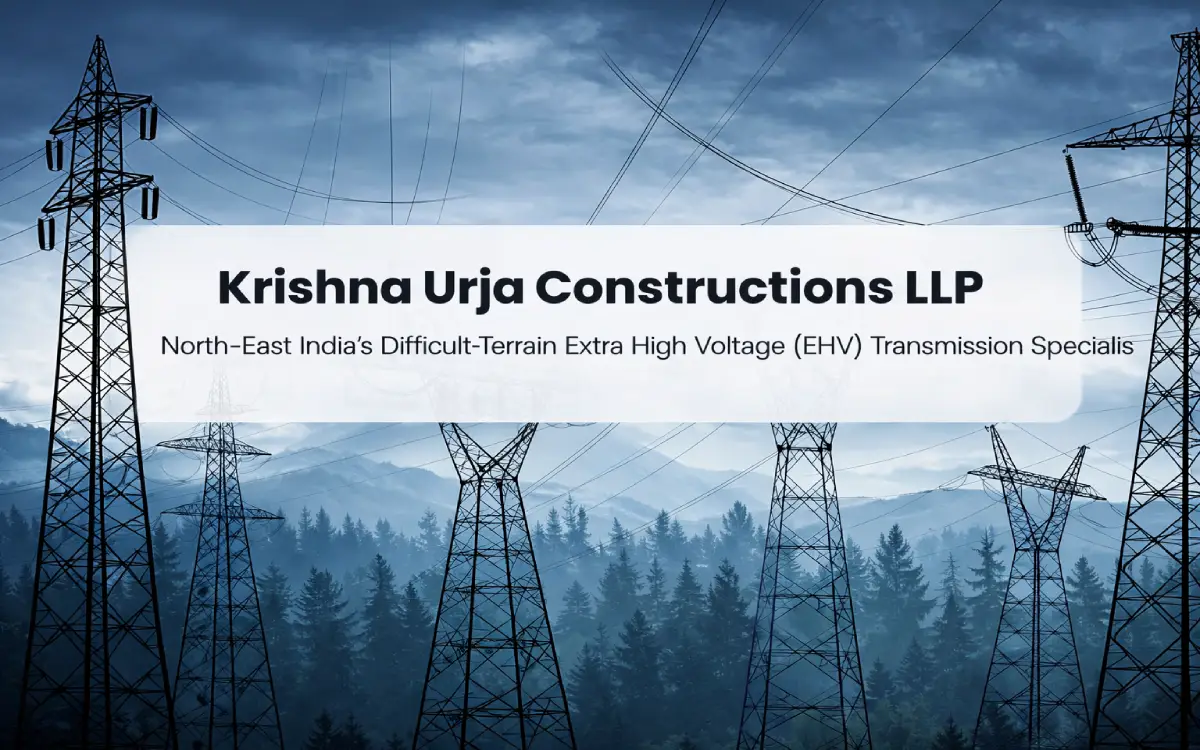
Electricity plays a vital role in modern life. It powers homes, industries, hospitals, transportation systems, and communication networks. As power demand continues to increase, electrical energy must be transmitted efficiently over long distances from generating stations to load centers.
One of the most effective solutions for long-distance power transmission is the use of Extra High Voltage (EHV) overhead transmission lines. These transmission systems are specially designed to carry large amounts of electricity with minimum losses while maintaining reliability and safety.
Understanding the design aspects of these transmission lines is important for engineers, utility companies, infrastructure planners, and anyone involved in power transmission projects. This article explains the major design considerations, components, and challenges involved in the construction and operation of EHV overhead lines.
What Are EHV Overhead Lines?
Extra High Voltage (EHV) overhead lines are transmission lines that operate at voltages typically above 220 kV. Common voltage levels include:
- 220 kV
- 400 kV
- 765 kV
- 800 kV and above
These lines are used to transmit electrical energy across large geographical areas. By transmitting power at higher voltages, the current in the conductor decreases, reducing transmission losses and improving system efficiency.
EHV lines form the backbone of national and regional power grids and help ensure a continuous supply of electricity across cities, towns, and industrial zones.
Importance of Proper EHV Line Design
The design of an EHV transmission line directly affects:
- Reliability of power supply
- Transmission efficiency
- Construction cost
- Safety standards
- Maintenance requirements
- Environmental impact
- Long-term performance
A poorly designed transmission line may experience excessive power losses, conductor damage, voltage instability, or safety issues. Therefore, every aspect of design must be carefully evaluated.
Route Selection and Survey
The first step in designing an EHV overhead transmission line is selecting the most suitable route.
Factors Considered During Route Selection
Terrain Conditions
Engineers study the geography of the area, including:
- Mountains
- Valleys
- Rivers
- Forests
- Agricultural land
The route should minimize construction difficulties while ensuring accessibility.
Population Density
Highly populated areas are generally avoided to reduce safety risks and future land acquisition challenges.
Environmental Impact
The selected route should minimize impact on:
- Wildlife habitats
- Protected forests
- Wetlands
- Ecologically sensitive regions
Accessibility
Construction teams must be able to transport materials, equipment, and workforce efficiently to the site.
Detailed Survey
After route selection, detailed surveys are conducted using:
- GPS technology
- Drones
- Geographic Information Systems (GIS)
- Topographical mapping
Survey data helps engineers finalize tower locations and foundation designs.
Voltage Selection
Selecting the appropriate voltage level is a critical design decision.
Factors Affecting Voltage Selection
Power Transfer Requirement
Higher power transfer demands generally require higher voltage levels.
Transmission Distance
Longer distances benefit from higher voltage transmission due to reduced losses.
Future Expansion
Designers often consider future load growth to avoid costly upgrades later.
Economic Analysis
The selected voltage should provide the best balance between:
- Capital investment
- Operating costs
- Energy losses
Proper voltage selection ensures economic and technical efficiency throughout the project’s lifespan.
Conductor Design
Conductors are among the most important components of EHV lines.
Characteristics of Good Conductors
A suitable conductor should have:
- High electrical conductivity
- High tensile strength
- Low weight
- Good corrosion resistance
- Long service life
Common Conductor Materials
ACSR Conductors
Aluminum Conductor Steel Reinforced (ACSR) conductors are widely used because they combine:
- High conductivity of aluminum
- Strength of steel core
AAAC Conductors
All Aluminum Alloy Conductors offer:
- Better corrosion resistance
- Reduced maintenance requirements
Bundle Conductors
Most EHV systems use bundled conductors rather than a single conductor per phase.
Benefits include:
- Reduced corona losses
- Lower radio interference
- Improved transmission capacity
- Reduced reactance
The number of subconductors depends on the voltage level and transmission requirements.
Tower Design Considerations
Transmission towers support conductors and maintain required clearances.
Types of Towers
Suspension Towers
Used for straight-line sections of transmission routes.
Tension Towers
Installed at:
- Line angles
- River crossings
- Special locations
Terminal Towers
Used at substations and line terminations.
Mechanical Loading
Tower design must account for:
- Wind loads
- Conductor weight
- Ice loading
- Earthquake forces
- Broken conductor conditions
Material Selection
Most EHV towers are constructed using galvanized steel because it offers:
- High strength
- Durability
- Corrosion resistance
Proper tower design ensures structural stability throughout the service life of the transmission line.
Foundation Design
The tower foundation transfers loads safely to the ground.
Soil Investigation
Engineers conduct geotechnical studies to determine:
- Soil bearing capacity
- Groundwater level
- Soil composition
- Settlement characteristics
Types of Foundations
Common foundation types include:
Pad and Chimney Foundations
Suitable for normal soil conditions.
Pile Foundations
Used in weak or waterlogged soils.
Rock Foundations
Used in rocky terrain where direct anchoring is possible.
A properly designed foundation prevents tower tilting and structural failures.
Electrical Clearance Requirements
Maintaining adequate electrical clearances is essential for safety and reliability.
Ground Clearance
The minimum distance between conductors and ground must comply with applicable standards.
Factors influencing ground clearance include:
- Voltage level
- Conductor sag
- Terrain conditions
Phase-to-Phase Clearance
Adequate spacing between phases prevents flashovers and electrical faults.
Structure Clearance
Safe distances must be maintained between conductors and tower structures to avoid insulation failures.
Insulation Design
Insulators support conductors while electrically isolating them from towers.
Types of Insulators
Disc Insulators
Widely used in EHV transmission systems.
Composite Insulators
Offer advantages such as:
- Lightweight construction
- High strength
- Improved contamination performance
Insulation Coordination
Engineers select insulation levels based on:
- System voltage
- Lightning performance
- Switching surges
- Environmental conditions
Proper insulation design improves reliability and minimizes outages.
Corona and Radio Interference Control
Corona discharge is a common issue in EHV transmission systems.
What Is Corona?
Corona occurs when the electric field around a conductor exceeds a critical value, ionizing the surrounding air.
Effects of Corona
- Power losses
- Audible noise
- Radio interference
- Ozone generation
Methods to Reduce Corona
Bundle Conductors
Increasing conductor diameter reduces electric field intensity.
Corona Rings
Installed at insulator strings to distribute electric fields more evenly.
Smooth Conductor Surfaces
Reduce localized electric field concentrations.
Effective corona control improves system efficiency and environmental performance.
Sag and Tension Calculations
Conductors naturally sag between transmission towers.
Factors Affecting Sag
- Span length
- Conductor weight
- Wind pressure
- Temperature changes
- Ice loading
Importance of Sag Calculations
Accurate sag calculations help ensure:
- Required ground clearance
- Structural safety
- Reliable operation
Engineers use specialized software and design standards to optimize conductor tension and sag characteristics.
Lightning Protection Design
Lightning is a major threat to overhead transmission lines.
Shield Wires
Ground wires or shield wires are installed above phase conductors to intercept lightning strikes.
Tower Grounding
Each tower must have a low-resistance grounding system to safely dissipate lightning currents into the earth.
Surge Protection
Additional protection may include:
- Surge arresters
- Improved insulation coordination
Proper lightning protection significantly reduces outage rates.
Environmental and Safety Considerations
Modern EHV projects must comply with environmental and safety regulations.
Environmental Aspects
Designers evaluate:
- Vegetation management
- Wildlife protection
- Land use impacts
- Visual effects
Public Safety
Safety measures include:
- Adequate clearances
- Warning signs
- Secure tower locations
- Compliance with electrical standards
These measures help protect both the public and maintenance personnel.
Reliability and Maintenance Planning
Long-term reliability is a major design objective.
Condition Monitoring
Utilities increasingly use:
- Drone inspections
- Thermal imaging
- Sensor-based monitoring
- Digital asset management systems
Maintenance Accessibility
Designers ensure towers and line components remain accessible for inspections and repairs.
Reducing Maintenance Costs
Using high-quality materials and robust designs reduces operational expenses over the life of the project.
Modern Technologies in EHV Line Design
Technological advancements continue to improve transmission line performance.
GIS and Digital Mapping
Enable accurate route planning and engineering analysis.
Drone Surveys
Improve data collection speed and safety.
Advanced Conductors
New conductor technologies offer:
- Higher current carrying capacity
- Reduced sag
- Better efficiency
Smart Monitoring Systems
Real-time monitoring improves reliability and enables predictive maintenance.
These technologies help utilities operate transmission networks more efficiently and economically.
Challenges in EHV Overhead Line Design
Despite their advantages, EHV transmission projects face several challenges.
Land Acquisition
Obtaining rights of way can be difficult in densely populated regions.
Environmental Regulations
Projects must meet strict environmental compliance requirements.
Extreme Weather
Transmission lines must withstand:
- High winds
- Floods
- Heat waves
- Lightning storms
Growing Power Demand
Designers must accommodate future load growth while maintaining system stability.
Addressing these challenges requires careful planning and engineering expertise.
Conclusion
The design of Extra High Voltage (EHV) overhead transmission lines involves a combination of electrical, mechanical, environmental, and economic considerations. From route selection and conductor design to tower structures, insulation systems, and lightning protection, every element plays a critical role in ensuring efficient and reliable power transmission.
As electricity demand continues to rise, well-designed EHV transmission networks will remain essential for delivering power safely across vast distances. Organizations with expertise in transmission infrastructure development, such as Krishna Urja Construction, contribute significantly to building reliable power networks that support industrial growth and national energy development.