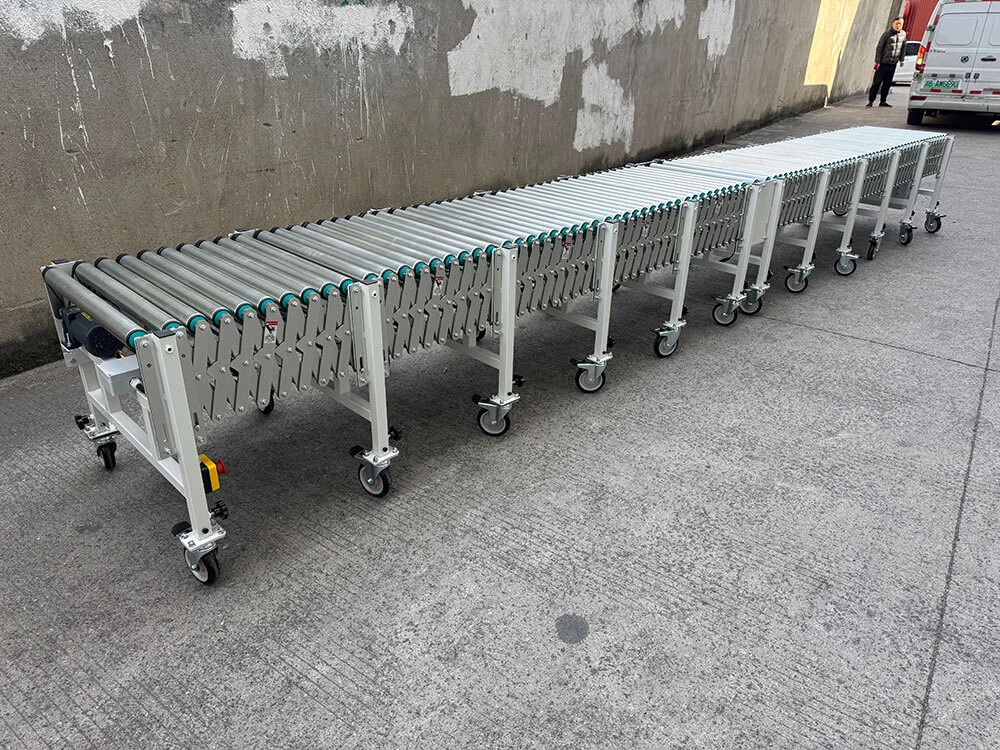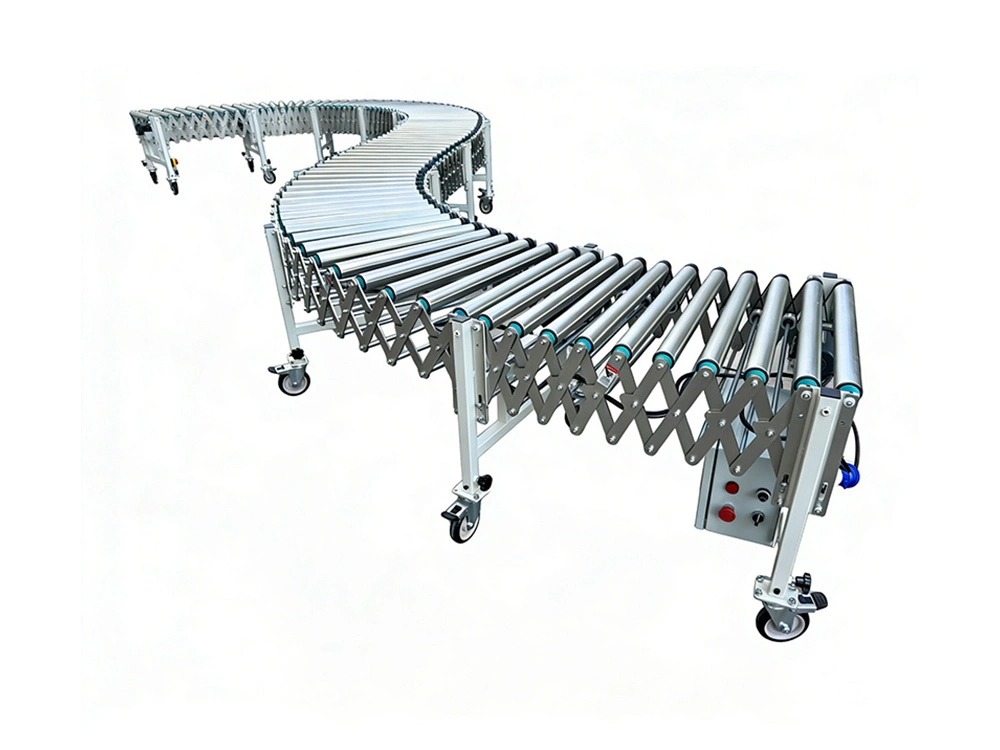
With so many types of material handling equipment on the market, it’s worth understanding exactly what sets a flexible motorized roller conveyor apart from other options that might look similar at first glance but perform quite differently once put into daily use. The combination of adjustable framing and motor-driven movement creates a tool that fits a wider range of situations than either a rigid conveyor or purely manual handling could manage alone, which is exactly why it has earned a place in so many different types of facilities.
Flexibility That Rigid Conveyors Can’t Match
Standard fixed conveyors are built for one specific layout and generally stay in that configuration for years, which works fine as long as the facility’s needs never change but becomes a real limitation the moment they do. A flexible unit, by contrast, can curve, extend, or shorten as needed, letting one piece of equipment serve multiple purposes across different parts of a facility rather than being limited to a single fixed task that it was originally installed to perform.
Motorized Movement Beyond Simple Gravity Rollers
Some roller conveyors rely purely on gravity, requiring a slight downward slope for items to move on their own, which limits where and how they can actually be installed within a facility. A flexible motorized roller conveyor removes this limitation entirely, since the motor drives movement regardless of whether the conveyor is level, sloped, or even slightly uphill in certain sections, giving it far more placement flexibility than a gravity-fed alternative could ever offer in a real-world facility layout.
Portability Compared to Fixed Installations
Because it isn’t bolted into the floor or built into permanent infrastructure, this equipment can be relocated as business needs change, without requiring a construction crew or a lengthy shutdown of the affected area. See how a flexible motorized roller conveyor offers this kind of portability, giving businesses far more freedom to reorganize their space compared to committing to a fixed conveyor installation from the start that would be costly and disruptive to remove or relocate later on.
Versatility Across Multiple Tasks
The same unit can often be used for truck loading one day and moving materials between production stages the next, simply by repositioning it to wherever it happens to be needed most on any given day of the working week. This versatility means a single piece of equipment can serve several different roles within a facility, rather than requiring separate specialized equipment for each individual task, which represents real savings both in upfront cost and in the amount of floor space needed to store multiple machines.
Why This Difference Matters for Buyers
Understanding these distinctions helps buyers avoid comparing this equipment directly against fixed conveyor pricing, since the value comes from adaptability rather than raw handling capacity alone and shouldn’t be judged purely on a dollar-per-foot basis. For many businesses, the ability to reposition and reuse the same conveyor across different tasks ends up being the deciding factor in the purchase decision, especially once they consider how much a fixed alternative would cost to modify every time their operational needs shift.