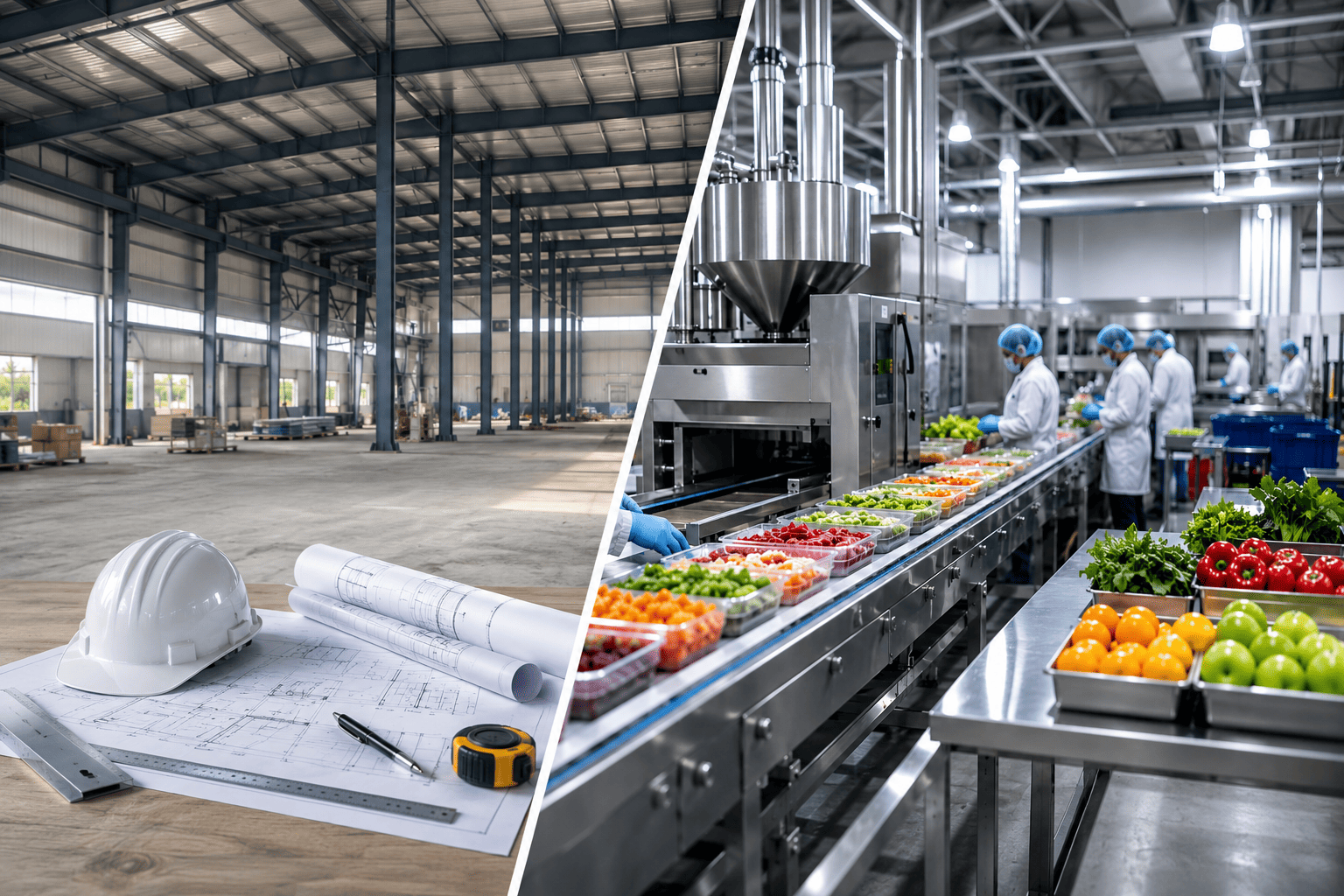
What a Plant Setup Consultant Does
A plant setup consultant works from a blank site or an empty shed. The job starts with feasibility and site assessment, then moves through facility layout, equipment selection, utility design, and FSSAI manufacturing licence preparation — ending with a working facility that’s never produced anything before. There’s no existing process to preserve, no current output to protect while changes happen.
What a Food Processing & Manufacturing Consultant Does
A food processing and manufacturing consultant works with a facility that’s already running. The job is diagnostic first — figuring out what’s actually limiting output, quality, or compliance today — then fixing it without shutting the line down for months. This includes process optimisation, standards implementation like HACCP or ISO 22000, manufacturing efficiency audits, and compliance preparation ahead of an inspection or buyer audit.
Which One Do You Actually Need?
- If you don’t have a manufacturing facility yet, you need a plant setup consultant.
- If you have a facility but it’s hitting a capacity ceiling, you likely need a manufacturing efficiency audit, not new equipment yet.
- If an FSSAI or buyer audit is coming up and you’re not confident you’ll pass, you need standards implementation support.
- If you’re expanding an existing facility — adding a line, not building a new site — this usually sits in between, and needs both perspectives at once.
A Real Example — When the Two Get Confused
A Lucknow-based dairy processor contacted FFCAE asking for “plant setup” help, expecting a full redesign. Their actual facility was only three years old and structurally sound — the real problem was a pasteurisation line running at 65% of its rated capacity due to a CIP (clean-in-place) cycle that had never been tuned for their specific product mix. This wasn’t a plant setup project at all; it was a manufacturing efficiency audit that happened to use the word “setup” in the initial conversation.
Reworking the CIP cycle timing brought the line to 88% of rated capacity within three weeks, at a fraction of what a redesign project would have cost. The lesson holds across categories: what sounds like a plant problem is often a process problem wearing a plant problem’s name.