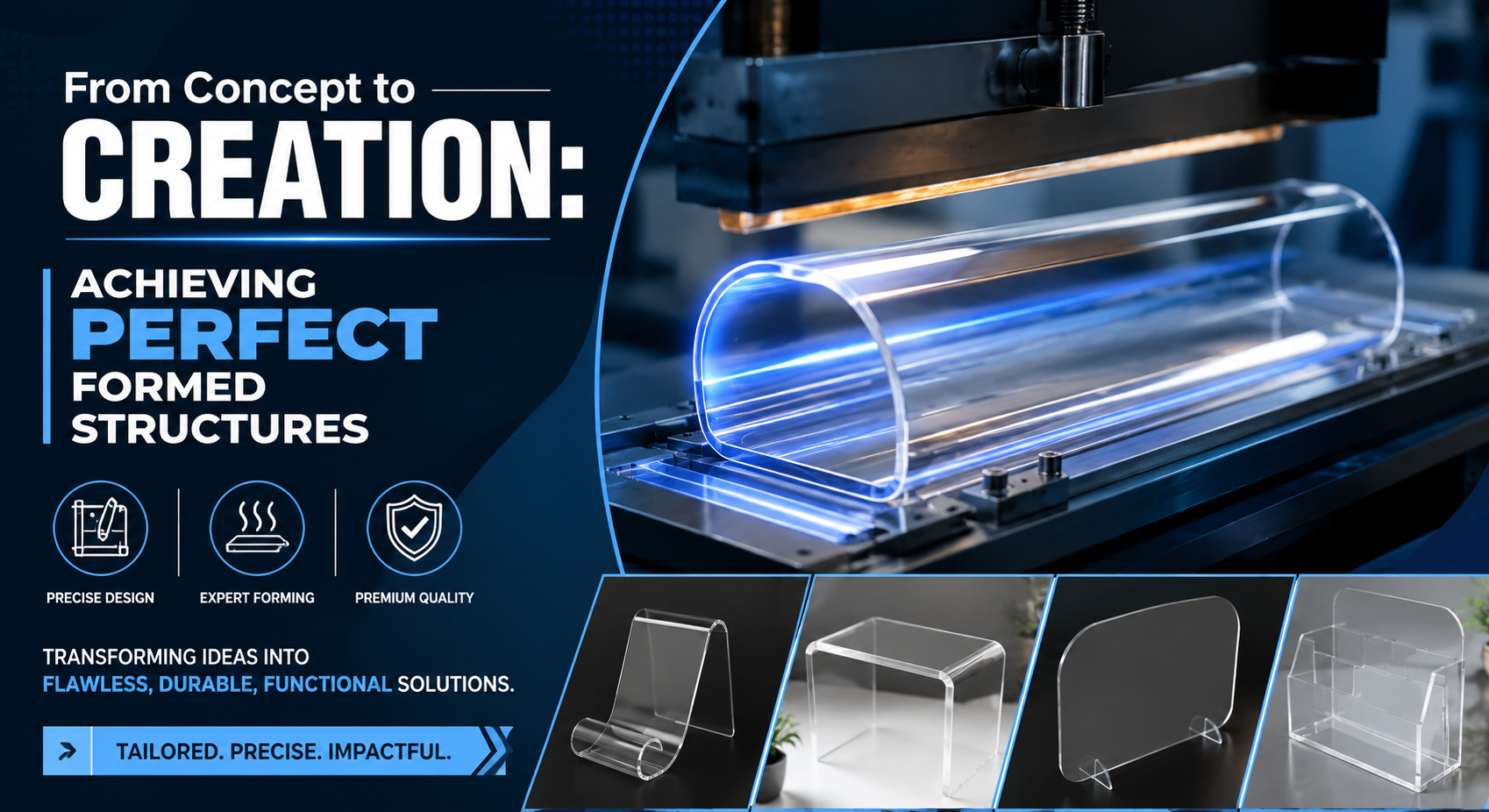
Acrylic has become one of the most versatile materials in modern manufacturing and design. Known for its clarity, durability, and adaptability, acrylic is widely used across industries ranging from retail displays and architectural applications to automotive components and decorative installations. The process of transforming a simple design idea into a precisely formed acrylic structure requires a combination of creativity, technical expertise, and advanced fabrication techniques. Understanding this journey from concept to creation is essential for achieving flawless acrylic formed structures that meet both aesthetic and functional requirements.
NOTE :- Acrylic bending services were used to create innovative acrylic products that combined durability with modern design. The finished structures met exact specifications and maintained excellent structural integrity. These solutions supported diverse commercial applications with dependable performance. Contact Acrylic Market today to receive expert guidance and quality acrylic services.
Understanding the Potential of Acrylic Forming
Acrylic forming is a manufacturing process that involves heating acrylic sheets until they become pliable and then shaping them into specific forms using molds or specialized equipment. The resulting structures can range from simple curved panels to highly complex three-dimensional designs.
One of the primary reasons acrylic is favored for forming applications is its excellent optical clarity. It offers a glass-like appearance while being significantly lighter and more impact-resistant. Additionally, acrylic can be easily customized in various colors, thicknesses, and finishes, making it suitable for diverse applications.
The success of any acrylic formed structure begins with a clear understanding of the material’s properties and capabilities. Designers and manufacturers must carefully consider factors such as load requirements, environmental exposure, and visual expectations before moving forward with production.
Developing a Strong Design Concept
Every successful acrylic structure starts with a well-defined concept. The design phase involves identifying the intended purpose of the structure, its dimensions, and its desired appearance. Whether creating a retail display, protective enclosure, or architectural feature, careful planning is crucial.
Modern computer-aided design software plays a significant role in this stage. Designers can create detailed three-dimensional models that accurately represent the final product. These digital models help identify potential challenges, optimize dimensions, and ensure that the design is both functional and manufacturable.
Attention to detail during the concept stage minimizes errors later in the process. Proper design planning also helps manufacturers determine the most suitable forming techniques and production methods for the project.
Selecting the Right Acrylic Material
Choosing the appropriate acrylic sheet is a critical step in achieving superior results. Acrylic materials are available in various grades, thicknesses, and finishes, each offering unique advantages.
For applications requiring exceptional clarity, premium-grade clear acrylic is often preferred. Colored acrylic sheets may be selected for branding or decorative purposes, while textured finishes can provide enhanced visual appeal and reduce glare.
Material selection should also take into account factors such as UV resistance, impact strength, and thermal performance. By matching the material properties to the application requirements, manufacturers can improve the durability and longevity of the final structure.
Precision Forming Techniques
The forming stage is where the design begins to take physical shape. Acrylic sheets are heated to a controlled temperature until they become flexible enough to be molded without compromising their structural integrity.
Several forming methods are commonly used in the industry. Vacuum forming involves drawing heated acrylic over a mold using vacuum pressure, creating precise and consistent shapes. Drape forming allows the material to naturally conform to a mold under controlled conditions, making it ideal for smooth curves and simple geometries. Pressure forming is often used when greater detail and sharper features are required.
Temperature control is one of the most critical aspects of acrylic forming. Uneven heating can result in distortions, bubbles, or stress marks that affect the quality of the finished product. Skilled technicians carefully monitor every stage of the process to ensure uniform results.
Maintaining Quality Throughout Production
Quality control is essential for producing perfect acrylic formed structures. Every stage of the manufacturing process must be monitored to ensure accuracy and consistency.
Inspection procedures typically include dimensional verification, surface quality assessment, and structural evaluation. Manufacturers examine formed components for defects such as scratches, warping, or inconsistencies in thickness.
Advanced production facilities often utilize precision measuring equipment to confirm that each component meets design specifications. Early detection of potential issues helps prevent costly rework and ensures that the final product meets customer expectations.
Finishing and Assembly Processes
Once the acrylic components have been formed, they undergo various finishing processes to achieve the desired appearance and functionality. These processes may include trimming, polishing, edge finishing, drilling, and bonding.
Polished edges enhance the visual appeal of acrylic structures by restoring transparency and creating a premium finish. Precision trimming ensures clean and accurate dimensions, while specialized adhesives provide strong and nearly invisible joints.
For larger structures, multiple formed components may be assembled into a single integrated system. Careful alignment and secure bonding contribute to both the strength and aesthetics of the finished product.
Overcoming Common Challenges
Creating high-quality acrylic formed structures involves overcoming several technical challenges. Material stress, thermal distortion, and dimensional inconsistencies can occur if proper procedures are not followed.
Experienced manufacturers address these challenges through careful process control, accurate mold design, and continuous monitoring of production conditions. Investing in advanced equipment and skilled personnel significantly improves the likelihood of achieving consistent and reliable results.
Collaboration between designers, engineers, and fabrication specialists also plays an important role in resolving complex project requirements and ensuring successful outcomes.
The Future of Acrylic Formed Structures
Advancements in manufacturing technology continue to expand the possibilities of acrylic forming. Improved heating systems, automated forming equipment, and sophisticated design software enable greater precision and efficiency than ever before.
As industries seek innovative materials that combine performance with visual appeal, acrylic formed structures are expected to remain in high demand. Their versatility, durability, and design flexibility make them an ideal solution for a wide range of modern applications.
Conclusion
Achieving perfect acrylic formed structures requires a carefully managed process that begins with a strong concept and continues through material selection, precision forming, quality control, and finishing. Each stage contributes to the overall success of the final product. By combining innovative design with expert fabrication techniques, manufacturers can transform creative ideas into durable, visually impressive acrylic structures that meet the highest standards of performance and quality.
For More Insightful Articles Related To This Topic, Feel Free To Visit: https://bloggingwebs.com/