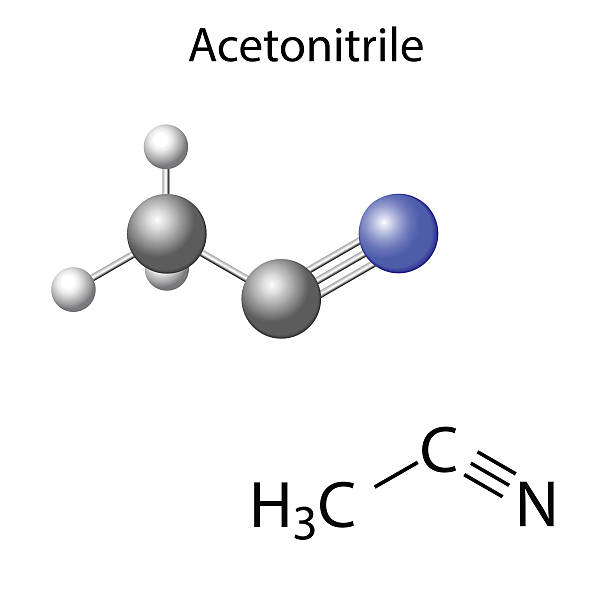
Acetonitrile has become an indispensable industrial solvent across pharmaceutical manufacturing, analytical laboratories, agrochemicals, and specialty chemical production. Its exceptional solvent properties, high purity, and compatibility with advanced analytical techniques have positioned it as a critical raw material for numerous high-value industries. As pharmaceutical innovation, laboratory testing, and chemical manufacturing continue to expand globally, demand for acetonitrile is steadily increasing across both industrial and research applications.
According to a study published by Vyansa Intelligence, the Acetonitrile Market size was valued at USD 500 Million in 2025 and is projected to reach USD 900 Million by 2032, expanding at a CAGR of 8.76% during 2026-2032. Rising demand from pharmaceutical manufacturing, analytical testing, biotechnology research, and specialty chemical production continues to support the Acetonitrile Market growth worldwide.
Acetonitrile Is Essential for Modern Chemical Processing
Acetonitrile is a colorless organic solvent widely recognized for its excellent solvency, low viscosity, and high polarity. It serves as an important processing solvent, reaction medium, extraction solvent, and purification agent across multiple industrial sectors. Its chemical stability and compatibility with sophisticated analytical equipment have made it one of the preferred solvents for laboratory and industrial applications.
Acetonitrile is extensively used in high-performance liquid chromatography (HPLC), pharmaceutical synthesis, agrochemical formulation, and biotechnology research. The Organisation for Economic Co-operation and Development (OECD) also recognizes acetonitrile as a suitable high-purity solvent for analytical and laboratory testing because of its effectiveness in chemical analysis and in vitro testing protocols.
The growing diversity of end-use applications continues to shape evolving Acetonitrile Market trends across global manufacturing industries.
Pharmaceutical Manufacturing Remains a Major Demand Driver
The pharmaceutical industry represents one of the largest consumers of acetonitrile due to its extensive use during drug synthesis, purification, quality control, and laboratory analysis. Pharmaceutical manufacturers rely on high-purity solvents to ensure consistency, regulatory compliance, and analytical accuracy throughout medicine development and production.
The OECD highlights that pharmaceutical production involves complex global supply chains requiring high-quality chemical feedstocks, solvents, and analytical materials throughout research, manufacturing, and quality assurance processes. As pharmaceutical production capacity expands globally, solvent demand continues to increase alongside research and development activities.
Increasing investment in generic medicines, biotechnology products, and contract manufacturing organizations is expected to further strengthen long-term demand.
Analytical Laboratories Continue Expanding Consumption
Laboratory testing has become another significant application area for acetonitrile. High-performance liquid chromatography remains one of the most widely used analytical techniques across pharmaceutical research, environmental monitoring, food safety, forensic science, and clinical diagnostics.
The solvent’s excellent chromatographic performance, low ultraviolet absorbance, and compatibility with advanced analytical instrumentation make it highly suitable for precise chemical analysis. Research laboratories, quality control facilities, and regulatory testing organizations continue adopting advanced analytical technologies that rely heavily on high-purity acetonitrile.
Growing investment in life sciences, biotechnology, and environmental monitoring continues to reinforce the Acetonitrile Market forecast as laboratory testing requirements become increasingly sophisticated.
Technological Advances Improve Production Efficiency
Chemical manufacturers continue investing in production technologies that improve solvent purity, manufacturing efficiency, and supply reliability. Modern purification systems enable the production of ultra-high-purity acetonitrile required for pharmaceutical manufacturing and analytical applications.
Automation, digital process monitoring, advanced distillation technologies, and quality assurance systems are improving operational efficiency while ensuring compliance with increasingly stringent industrial standards.
Green chemistry initiatives are also encouraging manufacturers to improve solvent recovery and recycling. The OECD Chemicals and Safety Programme has highlighted continued progress in reducing solvent waste through improved chemical manufacturing practices and more sustainable production technologies across the pharmaceutical industry.
Expanding Applications Across Specialty Industries
Beyond pharmaceuticals, acetonitrile continues to find growing applications across agrochemicals, electronics, fine chemicals, and biotechnology. It serves as an important solvent in chemical synthesis, extraction processes, purification systems, and specialty formulation development.
The expansion of biotechnology research, advanced materials development, and chemical innovation continues creating additional opportunities for solvent manufacturers. Increasing investment in laboratory infrastructure, research facilities, and precision analytical technologies further contributes to broader industrial demand.
As scientific research continues to accelerate globally, high-purity solvents capable of supporting advanced analytical techniques are expected to remain essential throughout industrial and academic laboratories.
Competitive Landscape
Competition within the industry centers on product purity, manufacturing efficiency, regulatory compliance, and supply chain reliability. Producers continue investing in purification technologies, quality assurance systems, and production optimization to meet the demanding specifications required by pharmaceutical manufacturers and analytical laboratories.
Companies are also strengthening distribution networks and expanding production capabilities to address increasing global demand while maintaining consistent product quality across multiple industrial applications.
Future Direction
The future of acetonitrile will be shaped by continued expansion in pharmaceutical manufacturing, biotechnology innovation, analytical chemistry, and specialty chemical production. Increasing adoption of advanced laboratory instrumentation, precision analytical methods, and high-value pharmaceutical manufacturing is expected to sustain demand over the coming years.
Technological improvements in solvent purification, recycling, and sustainable manufacturing will further enhance production efficiency while supporting environmentally responsible chemical processing. These long-term developments position the Acetonitrile Market for continued expansion as industries increasingly depend on high-purity solvents for research, manufacturing, and quality assurance.
Conclusion
Acetonitrile remains one of the most important specialty solvents supporting pharmaceutical manufacturing, laboratory analysis, biotechnology, and chemical production. Its outstanding chemical properties, compatibility with advanced analytical techniques, and broad industrial applicability continue to drive demand across multiple sectors. As scientific research and precision manufacturing continue to evolve, acetonitrile will remain a critical component of modern industrial and laboratory operations.