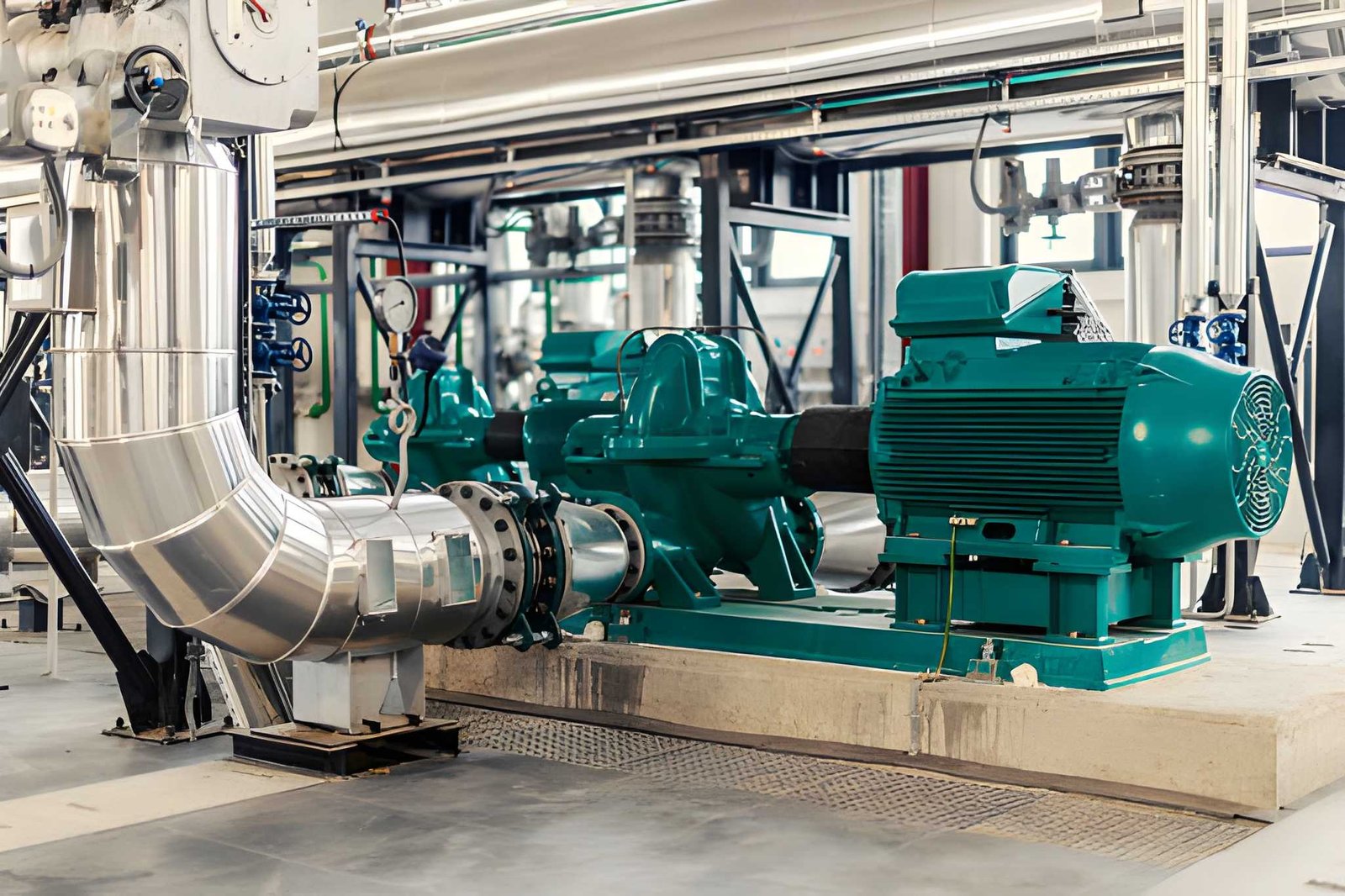
The combined cycle power plant is one of the most efficient types of power generating plants available today, with efficiencies over 60% being commonplace. This performance is dependent on a highly coupled water/steam cycle and, at the heart of this cycle, is the boiler feed pump.
The use of combined cycle facilities adds a layer of complexity that makes all the difference, ranging from the sizing of pumps to the type of materials. Anyone involved in plant design, operation, or equipment procurement must understand how these types of pumps are designed to operate in high-pressure environments.
Effect of Combined Cycle on Feed Water Demands
The combined cycle power plant is a combination of a gas turbine, a Heat Recovery Steam Generator (HRSG) and a steam turbine working in the Rankine cycle. The HRSG recovers the heat of the gas turbine and produces steam at several pressures (low pressure “LH”, intermediate pressure “IH”, high pressure “HP”) from diverse boiler feed pump circuits.
This multi-pressure configuration is what sets combined cycle BFP applications apart. Typically, in high pressure plants, feed water to the HP steam drum needs to be delivered at a pressure range of 100 to 180 bar depending on the design of the plant. It’s not something which a general purpose centrifugal pump can perform reliably year after year with continuous running.
Variable load operation adds another dimension. As gas turbine output fluctuates with demand, the HRSG heat profile changes, which in turn affects the steam generation rate and the flow requirements placed on each feed pump circuit. Pumps need to be able to run efficiently and effectively over a broad operating range, without causing hydraulic instability.
Engineering Specifications That Count
Differential Head and Pressure Requirements
A differential head in HP boiler feed service can be greater than 2000 meters of water column. Typically, this requires a multi-stage or integrally geared centrifugal pump that is compact and efficient. In the case of integrally geared pumps, the impeller can operate at optimally matched speeds with the aid of an integrated step-up gearbox inside the pump casing, which means that the pump operates with higher hydraulic efficiency at higher heads than conventional multi-stage ones.
NPSH Margin and Cavitation Risk
One of the important parameters in boiler feed applications is Net Positive Suction Head (NPSH). When water is fed into the pump, it is already within close proximity of its saturation temperature, leaving very little NPSH margin. The potential for cavitation is greatly increased if the suction conditions are not properly managed, especially at plant startups and load changes.
Boiler feed pump cavitations aren’t only a performance problem. Operating with cavitation affects impeller surfaces, increases mechanical seal wear, and can result in unexpected downtime. This is normally solved by careful design of the suction head, proper location of the deaerator, and with the use of minimum flow recirculation line which will protect the pump if flow is reduced.
Material Selection in High-temperature Service
The operating temperature range of water in HP circuits is usually from 150°C to 220°C. Pump casings, impellers and wear rings need to be made of material that can withstand these temperatures and the mechanical stresses associated with high pressure. This type of pump normally uses stainless steel or alloy steel internal parts. Though API 610 is the industry standard for centrifugal pumps in petroleum, petrochemical and natural gas industries, it is often required in power generation applications to provide a baseline of good practice for pressure containment, mechanical seal design and vibration limits.
Mechanical Seal and Bearing Design
Mechanical seal performance becomes a reliability differentiator at high pressures and temperatures. Dual mechanical seals using an appropriate barrier/buffer fluid (as defined in API 682) are usually necessary to prevent leakage and to keep personnel and equipment safe. The axial thrust forces also rise significantly with the number of pump stages and the differential pressure, and must be taken into consideration in the bearing design.
Operational Challenges In Combined Cycle Plants
Rapid Load Cycling: Unlike baseload thermal plants, combined cycle units are frequently dispatched to follow grid demand. This implies that BFPs should be capable of coping with the frequent start-stop cycles and transient pressures. These are periods when pumps with poor suction stability or those that do not have sufficient minimum flow protection are at special risk.
Parallel Pump Operation: Many combined cycle plants have two BFPs, one on line and the other on standby, or split flow between the two. Ensuring the flow is even across multiple pumps and matching the pump curves will require careful hydraulic design and, often, the use of variable speed drives (VSDs) so that the flow on each pump can be precisely controlled.
Thermal Transients on Startup: Thermal gradients across pump casings and shafts during cold start can lead to distortion, binding or seal failure if not controlled through proper warming procedures. This is especially important for pumps that are integrally geared, which must achieve a thermal equilibrium between the gearbox and the pump casing before they can be operated at maximum speed.
Choosing Between Pump Configurations
In a combined cycle plant, with high pressure boiler feed service, there are two major configurations:
Multi-Stage Horizontal Centrifugal Pumps are traditionally used in large HP feed water systems. These are reliable and come in a variety of flow/head combinations. The compromise is size and mechanical complexity of the axial thrust operation in multiple stages.
Single-Stage Integrally Geared Pumps are increasingly being used in combined-cycle and industrial cogeneration systems where space constraints, higher efficiency at higher speed and mechanical simplicity are appreciated. These pumps can operate at speeds that are the hydraulic optimum speed of the impeller (as opposed to synchronous speed of the motor) and therefore get efficiencies that can lower long-term operating costs, especially in continuous duty cycles like power generation.
The correct specification is dependent on plant-specific flow rates, pressure requirements, available suction head and maintenance philosophy. Most of the modern combined cycle plants have integrally geared feed pumps in the HP system and horizontal multi-stage pumps in LP and IP systems.
FAQs
Q1: In a combined cycle plant, what is the pressure at which a boiler feed pump runs?
The boiler feed pump discharge pressure in a combined cycle power plant is usually 100-180 bar, and depends on the steam cycle design and the operating pressure of the HP drum. Some
ultra-supercritical configurations go well beyond this.
Q2: Why is cavitation a major concern for boiler feed pumps?
In HP boiler circuits, feed water is used above saturation temperature and thus the Net Positive Suction Head (NPSH) is reduced. If the inlet conditions to the pump are insufficient to satisfy the requirements for NPSH, the liquid flashes to vapor and the bubbles inside the pump burst rapidly causing damage to the pump internals. This can be avoided with proper design of the suction and minimum protection of the flow.
Q3. What is the difference between a boiler feed pump and a condensate extraction pump?
Low pressure, low temperature, condensate returned from the steam turbine condenser is pumped by a Condensate Extraction Pump (CEP). That condensate (after passing through feedwater heaters and a deaerator) is fed to the boiler drum by a boiler feed pump. The BFP is run under much higher pressures and temperatures than the CEP.
Q4: Is it necessary for combined cycle plants to have separate boiler feed pumps for each pressure level?
Yes, in most cases. Each of the steam circuits in an HRSG works at different pressure and flow rates, and so each will usually be provided with its own pump or pump circuit. Depending on the plant design, some plant designs mix the LP and IP feed into one pump while there is almost always a dedicated high pressure pump in the HP circuit.
Q5: In power generation, what are the standards for the design of a boiler feed pump?
For centrifugal pumps used in process and power applications, API610 is the most widely-referenced standard. For mechanical seals, API 682 sets the design and selection criteria. In addition, there are specific parts of the feed water system design which might be covered by ASME and HEI (Heat Exchange Institute) standards. These standards provide consistent safety, reliability, and interchangeability.