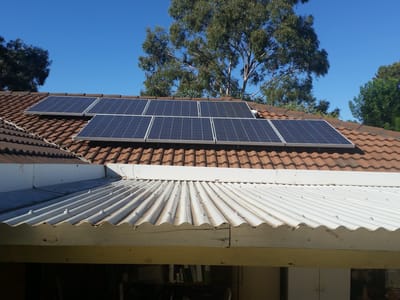
The shift toward on-site renewable energy represents an incredibly reliable strategy for locking in long-term household financial predictability. In a modern economic landscape continuously defined by erratic municipal utility rate hikes, delivery grid surcharges, and localized infrastructure failures during extreme seasonal weather, maximizing your on-site power generation remains the single best strategy for managing monthly operational overhead. Engineered with zero internal moving parts, modern photovoltaic arrays are meticulously built to withstand harsh outdoor elements and deliver reliable clean power for up to three decades. However, solar panels are not entirely set-and-forget appliances. Beneath the tempered glass surface lies a highly complex, interconnected network of series and parallel electrical pathways. Over years of operation, environmental stresses can degrade these electrical paths, causing sudden power drops. When your system’s performance drops, securing a certified solar system repair near me is vital to restore your sub-array’s circuit integrity and protect your investment.
A residential solar station functions as a high-value, multi-kilowatt infrastructure asset that interfaces directly with your primary electrical busbars, your roof’s waterproofing membranes, and the public utility grid. Because solar modules are wired in groups called sub-arrays, a single fault in one connection can quickly choke the power output of your entire array. Relying on an uncertified worker, a general handyman, or an uninsured third-party business to troubleshoot these advanced electrical networks introduces severe safety hazards, risks permanent hardware damage, and will instantly void your valuable equipment and structural warranties. Partnering with a factory-trained, certified local technician ensures that your sub-array circuit failures are diagnosed and repaired to rigorous manufacturing standards, keeping your long-term protections fully transferable and your property value at its absolute peak.
1. The Physics of Circuit Degradation: Why Sub-Array Integrity Matters
To understand why property owners prioritize a certified solar system repair near me when production drops, you must first understand the basic electrical engineering of a solar sub-array. In a typical solar setup, individual solar panels are connected in series “strings” to build up enough voltage to run your inverter.
2. The Invisible Threats: Thermal Cycling, Delamination, and Arc Faults
While physical impacts like falling branches or large hail cause obvious surface damage, the most common circuit failures in a solar sub-array are completely invisible to the naked eye. The primary cause of these hidden electrical faults is a natural process known as thermal cycling.
Every single day, your solar panels heat up under the direct afternoon sun and cool down rapidly at night.
This constant cycle of heating and cooling causes the different materials inside the panels to expand and contract at different rates.
Over several years, this physical stress can tear the microscopic solder joints that connect the individual solar cells, creating tiny micro-cracks that block the path of the electricity.
The Risk of Arc Faults: When these internal electrical pathways crack or pull apart, the high-voltage current tries to jump across the physical gap. This creates a highly dangerous electrical arc fault that can reach temperatures over $3000^\circ\text{F}$, melting the protective junction box on the back of the panel and presenting a severe fire hazard to your roof deck.
In addition to thermal cycling, moisture ingress can cause delamination—where the protective polymer backing of the panel separates from the tempered glass.
When moisture gets inside the sealed layers, it corrodes the silver conductor lines on the front of the cells.
This corrosion degrades the circuit’s grounding paths, causing your inverter to detect a ground fault and shut down entirely as a safety precaution. Finding a certified solar system repair near me ensures these hidden structural and electrical issues are quickly located and repaired before they can cause a complete system failure.
3. The Professional Diagnostics and Circuit Restoration Sequence
Safely finding, isolating, and repairing hidden circuit faults inside a high-voltage solar sub-array requires factory-certified specialists to follow a strict, code-compliant technical sequence.
The Circuit Diagnostics and Restoration Sequence
1.Thermal Imaging Sweep and Hot Spot Identification:Prerequisite Phase.
Scan the entire rooftop array using high-resolution infrared thermal cameras to instantly pinpoint hot spots, corroded bypass diodes, and failing junction boxes without touching the active circuits.
2.String Voltage Isolation and Open-Circuit Testing:Diagnostic Phase.
Shut down the central inverter, open the DC disconnect switches, and use a calibrated digital multimeter to measure the open-circuit voltage ($V_{\text{oc}}$) of each individual string.
3.Insulation Resistance testing (Megger Testing):Testing Phase.
Apply a controlled electrical voltage to the system using a specialized insulation tester to measure the resistance of the wire coatings, locating the exact point where electricity is leaking to the ground.
4.Junction Box Remediation and Connector Replacement:Remediation Phase.
Lift the damaged modules, cut away any corroded MC4 connectors, and install commercial-grade, weather-sealed replacement plugs using specialized crimping tools.
5.Array Re-Commissioning and Cloud Data Verification:Final Phase.
Repower the entire solar setup, run a comprehensive electrical safety check, and verify through the monitoring software that all sub-arrays are producing stable, balanced voltage.
4. Preserving Manufacturer Warranties and Ensuring Home Insurance Compliance
The primary reason why homeowners should always partner with a certified solar system repair near me rather than a general handyman is the protection of their long-term equipment warranties.
The industry-leading 25-year performance warranties offered by top-tier solar manufacturers are highly specific legal agreements.
These policies explicitly state that any physical repairs, circuit testing, or component replacements must be executed strictly by a factory-certified, licensed professional.
If an unlicensed handyman or general roofer attempts to cut into your solar wiring, splice damaged cables, or open a sealed junction box, the manufacturer will instantly void the warranty on that entire string of panels.
Furthermore, because residential solar arrays operate at high voltages (often up to 600V DC), most homeowner insurance policies require certified, licensed professionals to perform all system repairs.
Working with a certified specialist ensures your system remains fully code-compliant, keeps your valuable warranties active, and guarantees that your home insurance coverage remains completely valid.
Conclusion: Protecting Your Clean Energy Wealth with Certified Local Experts
Allowing an uncertified local handyman, an untrained general electrician, or a rushed third-party pest control service to alter or service your high-voltage solar array introduces massive financial and physical risks. Making modifications to advanced power conversion circuits without specialized diagnostic tools or applying incorrect circuit-balancing math can permanently ruin main breaker busbars, cause catastrophic electrical failures, and instantly void your multi-decade factory warranties.
Investing in a comprehensive sub-array optimization performed by a certified solar system repair near me provides absolute peace of mind and fully safeguards your household budget. Fully licensed, factory-trained local solar repair specialists possess the specialized thermal cameras, insulation testing gear, and direct manufacturer relationships needed to service your energy system safely and efficiently. By relying on fully insured local pros to manage your system’s technical health, you protect your real estate asset, keep your valuable multi-decade factory protections completely valid, and ensure your property generates clean, independent power for decades to come.