Manufacturing has become increasingly complex over the years. Companies must manage supply chains, production schedules, quality requirements, workforce challenges, customer expectations, and technological advancements—all while remaining competitive and profitable. With so many moving parts, it can be tempting to believe that success requires increasingly complicated systems and processes.
However, many of the most successful manufacturers take a different approach. Instead of adding layers of complexity, they focus on keeping their operations simple, organized, and effective. They understand that complexity often creates inefficiencies, communication problems, delays, and unnecessary costs.
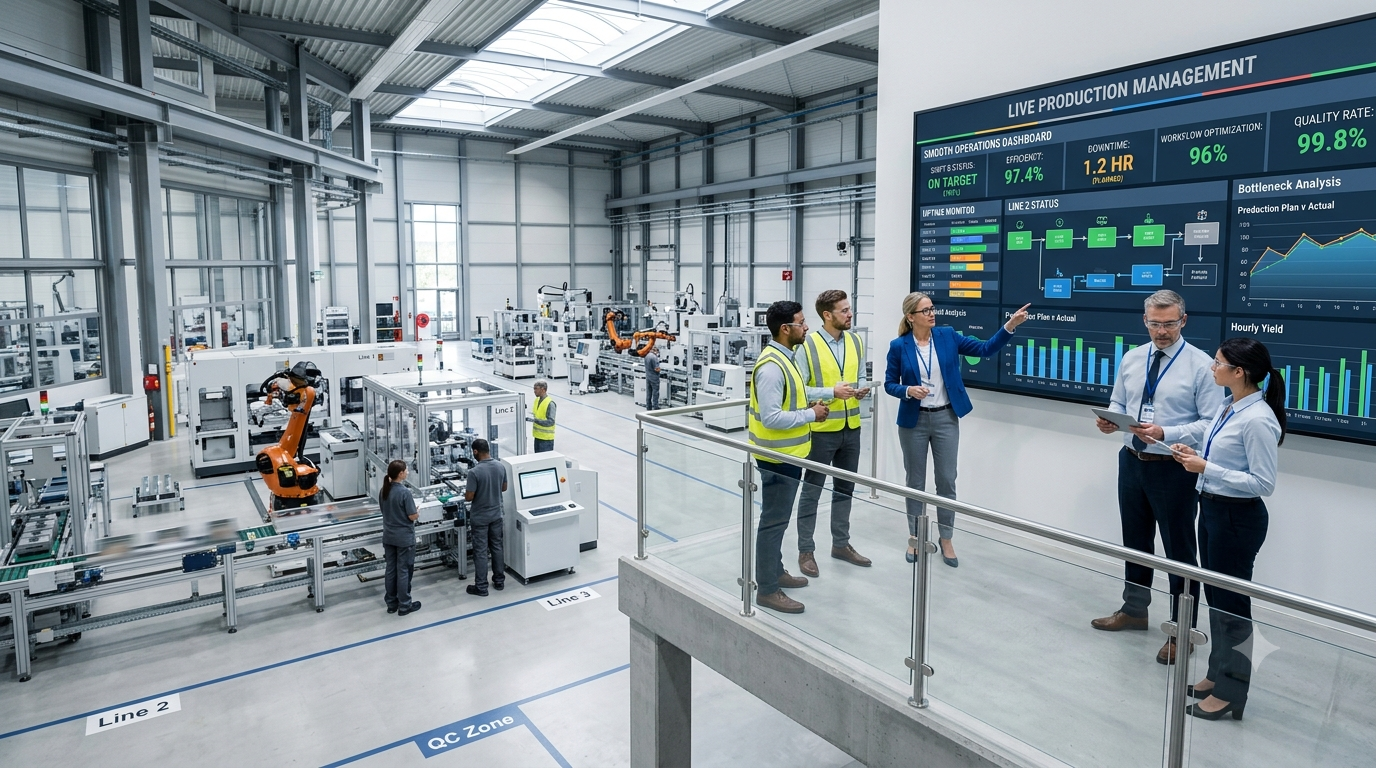
Simplicity does not mean doing less. It means creating systems that are easy to understand, easy to manage, and capable of delivering consistent results. Combined with strong Production Management, a simple and effective operational structure helps manufacturers improve efficiency, enhance quality, and support long-term growth.
The companies that consistently outperform their competitors are often the ones that have mastered the art of simplifying their operations without sacrificing performance.
Why Complexity Can Hurt Manufacturing Performance
As businesses grow, operational complexity tends to increase naturally. New processes are added, additional approvals are introduced, reporting requirements expand, and workflows become more difficult to manage.
While some complexity is unavoidable, excessive complexity can create significant challenges.
Common problems include:
- Slower decision-making
- Communication breakdowns
- Increased production delays
- Higher operating costs
- Reduced productivity
- Greater risk of errors
When employees spend more time navigating complicated systems than performing productive work, operational performance suffers.
Successful manufacturers regularly evaluate their operations to identify unnecessary complexity and remove obstacles that slow down performance.
Clear Processes Create Better Results
One of the key characteristics of high-performing manufacturers is the use of clear and standardized processes.
Employees should understand:
- What needs to be done
- How tasks should be performed
- Who is responsible
- What quality standards must be met
When processes are clearly defined, operations become more predictable and consistent.
Standardized processes help manufacturers:
- Improve efficiency
- Reduce errors
- Simplify training
- Strengthen quality control
- Enhance accountability
Rather than relying on individual experience or guesswork, successful organizations create systems that allow everyone to work toward the same objectives.
Effective Planning Eliminates Unnecessary Stress
Many manufacturing problems can be traced back to poor planning.
Unexpected delays, material shortages, missed deadlines, and workflow disruptions often occur because production activities were not properly coordinated.
Successful manufacturers prioritize planning because it creates stability and reduces uncertainty.
Strong planning helps organizations:
- Align production schedules with demand
- Allocate resources effectively
- Prevent bottlenecks
- Improve inventory control
- Maintain delivery performance
Planning allows teams to focus on execution rather than constantly responding to emergencies.
This proactive approach reduces operational stress while improving overall performance.
Focus on What Adds Value
One reason successful manufacturers keep operations simple is that they focus on activities that create value for customers.
Not every task contributes directly to production quality, efficiency, or customer satisfaction.
Organizations that continuously evaluate their workflows can identify activities that consume time and resources without providing meaningful benefits.
Examples of non-value-added activities include:
- Unnecessary approvals
- Duplicate reporting
- Excessive movement of materials
- Repeated data entry
- Avoidable rework
Eliminating these activities allows teams to concentrate on work that directly supports business objectives.
The result is a more efficient and productive operation.
Better Communication Leads to Better Operations
Manufacturing success depends on collaboration across multiple departments.
Production teams, quality personnel, maintenance staff, procurement professionals, and leadership teams must all work together effectively.
Successful manufacturers keep communication simple and transparent.
They establish clear reporting structures and ensure that employees have access to the information they need to perform their jobs effectively.
Strong communication helps organizations:
- Solve problems faster
- Improve coordination
- Reduce misunderstandings
- Increase accountability
- Support better decision-making
When communication flows smoothly, operations become more organized and predictable.
Using Data Without Creating Complexity
Modern manufacturing generates vast amounts of data. While data can be valuable, too much information can sometimes overwhelm decision-makers.
Successful manufacturers focus on tracking the metrics that matter most.
Instead of monitoring every possible indicator, they prioritize key performance measures that provide meaningful insights into operational performance.
Important metrics often include:
- Production output
- Equipment utilization
- Quality performance
- Delivery reliability
- Inventory levels
By focusing on relevant information, leaders can make informed decisions without becoming distracted by unnecessary data.
This approach supports efficiency and operational clarity.
The Role of Production Management in Simplicity
Strong Production Management plays a critical role in helping manufacturers maintain simple and effective operations.
Production management provides the structure needed to coordinate people, resources, equipment, and workflows efficiently.
Without effective management systems, operations can quickly become disorganized and difficult to control.
Successful manufacturers use production management to:
- Streamline workflows
- Improve scheduling
- Optimize resource utilization
- Enhance operational visibility
- Support continuous improvement
By creating clear processes and maintaining operational discipline, organizations can achieve better results while avoiding unnecessary complexity.
Prioritizing Quality From the Start
Quality issues often create additional work and operational challenges.
Defects, rework, customer complaints, and warranty claims increase costs and consume valuable resources.
Manufacturers that keep operations simple understand the importance of building quality into every stage of production.
This proactive approach helps:
- Reduce errors
- Improve consistency
- Lower operating costs
- Enhance customer satisfaction
- Strengthen brand reputation
Preventing problems is always simpler and more effective than correcting them later.
Quality-focused organizations create smoother operations and stronger business outcomes.
Continuous Improvement Without Overcomplication
Continuous improvement is essential for long-term success, but improvement efforts should not create unnecessary complexity.
Successful manufacturers focus on practical improvements that deliver measurable results.
Rather than implementing large-scale changes all at once, they often make smaller adjustments that gradually strengthen performance.
Continuous improvement initiatives commonly focus on:
- Reducing waste
- Improving workflows
- Enhancing communication
- Increasing productivity
- Strengthening quality controls
Small improvements implemented consistently can have a significant impact over time.
This approach allows organizations to evolve while maintaining operational simplicity.
Empowering Employees Through Simpler Systems
Employees are more productive when systems are easy to understand and use.
Complicated procedures can create confusion, frustration, and inefficiencies.
Successful manufacturers invest in creating processes that support employee success.
Simple systems help workers:
- Perform tasks more efficiently
- Understand expectations clearly
- Solve problems faster
- Adapt to changes more easily
When employees spend less time navigating complexity, they can focus more energy on productive work.
This contributes to both operational performance and workplace satisfaction.
Preparing for Future Growth
Many manufacturers mistakenly believe that growth requires increasingly complex operations.
In reality, sustainable growth often depends on maintaining simplicity while expanding capabilities.
Organizations that establish clear processes, strong management systems, and efficient workflows are better positioned to scale their operations successfully.
A foundation of simplicity provides the flexibility needed to adapt to changing market conditions without creating unnecessary operational challenges.
Successful manufacturers understand that growth is easier to manage when operations remain organized and effective.
Final Thoughts
The most successful manufacturers understand that simplicity is not a weakness—it is a competitive advantage. While manufacturing operations naturally involve complexity, organizations that focus on clear processes, effective communication, strong planning, and efficient systems are often the ones that achieve the best results.
Effective Production Management supports this approach by creating structure, improving coordination, and helping manufacturers maintain operational control. It allows organizations to streamline workflows, optimize resources, and reduce unnecessary complications that can hinder performance.
As manufacturing environments continue to evolve, companies that keep their operations simple and effective will be better equipped to improve efficiency, maintain quality, and support sustainable growth. By focusing on what truly matters and eliminating unnecessary complexity, manufacturers can create stronger operations and achieve long-term success.