To choose the right dense pack cellulose in Hayden ID contractor in Hayden, you must look for a team that uses high-pressure equipment and provides density verification. You need someone who can prove they reach a density of 3.5 pounds per cubic foot to prevent material settling. A qualified Idaho expert will also offer thermal imaging to confirm that every wall cavity is completely full and air-sealed.
This guide provides the specific steps and technical requirements you should look for when hiring local professionals. You will learn about equipment standards, material performance, and how to verify that the work meets Idaho building codes. Selecting an expert ensures your home stays warm during harsh Kootenai County winters while keeping your energy bills low.
Establishing trust starts with verifying a provider’s local history and technical knowledge. Professionals who understand the unique challenges of the Inland Northwest offer the best results for your property. They should be able to explain the science behind airflow and heat loss in older Hayden homes.
Identify Professional Equipment and Methods
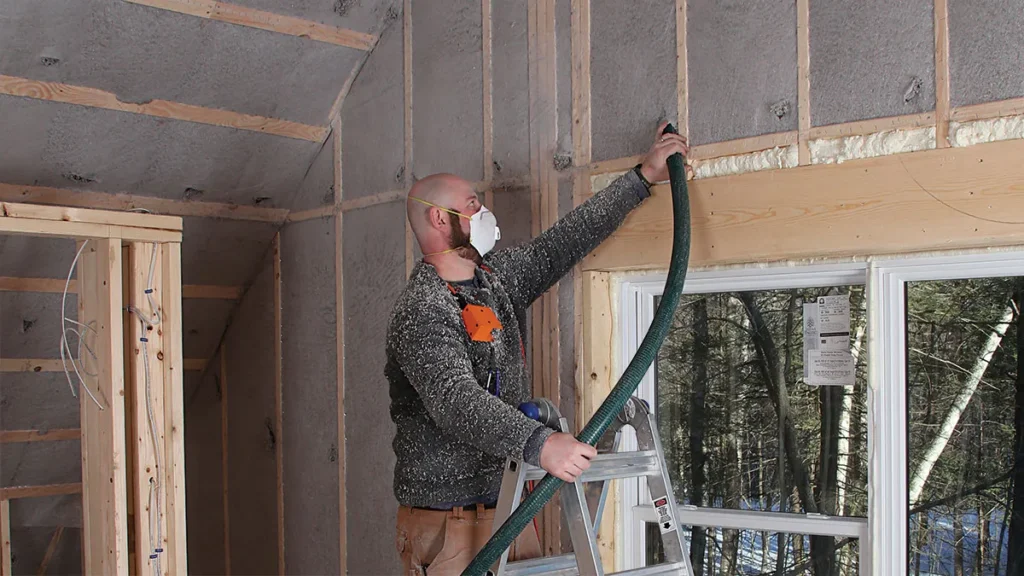
The first thing to check is the type of machinery the team brings to your site. A professional dense pack cellulose contractor does not use the same small, portable blowers found at local hardware stores. They require large, truck-mounted or high-capacity machines that can generate enough pressure to pack the material tightly into wall cavities.
If the pressure is too low, the insulation will eventually sink. This leaves empty gaps at the top of your walls where heat can escape. When you interview providers, ask about their machine’s capacity and the specific nozzles they use for wall injections.
Verify Technical Knowledge of Material Density
Proper dense packing insulation is about more than just filling a hole. It is a technical process that turns loose fibers into a solid, felt-like block inside your walls. This high density is what stops air from moving through the material. A professional should be able to explain how they calculate the amount of material used to ensure it meets industry standards.
In Hayden, the temperature drops significantly, making air infiltration a major concern. If the material is not packed tightly enough, it will not act as an air barrier. You should look for a contractor who measures the weight of the bags used against the square footage of your walls to confirm the final density.
Evaluate the Dense Pack Cellulose R-value and Performance
The dense-pack cellulose R-value is usually around 3.6-3.8 per inch. This makes it a very effective choice for the 2×4 or 2×6 walls found in Idaho homes. However, this value only holds true if the installation is uniform and free of voids. You should ask how the provider handles obstacles such as electrical wires or plumbing pipes in the walls.
| Feature | Standard Blown-In | Dense Pack Cellulose |
|---|---|---|
| Density Level | 1.0 to 1.5 lbs/ft³ | 3.5 to 4.0 lbs/ft³ |
| Air Flow Control | Low resistance | High resistance (Air barrier) |
| Settling Risk | High over time | Minimal to zero |
| Best Application | Open attics | Enclosed wall cavities |
Bonus Tip: Ask if the contractor includes air sealing around wall outlets as part of the service. Even with good insulation, air can leak through electrical boxes if they are not sealed during installation.
Confirm Local Experience with Hayden Building Styles
Hayden has a mix of older ranch-style homes and newer constructions. A knowledgeable, dense-pack cellulose contractor knows that older homes often have unique framing issues or fire blocks that can obstruct the flow of insulation. They should use a “drill and fill” method that accounts for these internal structures without damaging your siding or interior drywall.
National data shows that properly insulated homes can save homeowners up to 15 percent on heating and cooling costs. In the Pacific Northwest, these savings are often higher because of the long heating season. Experts who know local codes will ensure your project meets or exceeds the requirements for Region 6 climate zones.
Review the Dense Pack Cellulose Insulation Installation Process
A high-quality dense-pack cellulose insulation installation follows a specific sequence. First, the team identifies the best entry points, usually by removing a strip of siding or drilling small holes in the exterior sheathing. They then insert a flexible tube deep into each wall cavity, gradually pulling it back as the space fills with pressurized material.
You should watch for a “back-pressure” technique. This is when the machine naturally slows down or changes sound because the cavity is full and tightly packed. If a contractor moves too quickly from one hole to the next, they might leave soft spots that lead to cold drafts later.
Questions to Ask Before Hiring
Before you sign a contract, you need to vet the provider’s specific expertise. A general laborer might know how to blow insulation into an attic, but wall packing is a specialized skill. Use these questions to find the best fit for your project:
- What specific density do you aim for in wall cavities?
- Do you use infrared cameras to check for gaps after the job is done?
- How do you ensure that the cellulose doesn’t blow out the interior drywall?
- Are you licensed and insured to work in the state of Idaho?
- Can you provide references from other homeowners in Kootenai County?
Bonus Tip: Check if the contractor offers a warranty against settling. Reliable professionals stand by their work and will return to fix any issues if the material shifts within the first year.
Analyze the Costs and Value
Price is always a factor, but the cheapest bid is often the most expensive in the long run. If a contractor under-packs the walls to save on material costs, your energy bills will remain high. You should look for a detailed estimate that lists the number of bags they plan to use. This transparency shows that they have calculated the amount of material needed to reach the correct density.
Market research indicates that high-quality insulation upgrades provide one of the highest returns on investment for home improvements. This is especially true in areas like Hayden, where winter temperatures stay below freezing for months. A professional job pays for itself through lower utility bills and increased home comfort, creating a more durable structure that handles local weather patterns effectively.
Understand Regional Climate Requirements
Hayden sits in a climate zone that requires high thermal resistance. The moisture levels in North Idaho also mean your insulation must be treated with borates. This treatment prevents mold growth and discourages pests such as ants and mice from nesting in your walls. A good contractor will only use high-quality, borate-treated cellulose.
They should also understand the importance of vapor retarders in our region. These layers prevent indoor moisture from traveling into the wall assembly, where it might condense. While dense cellulose slows airflow, the contractor must ensure that your home’s moisture balance remains healthy to protect the building’s integrity.
What to Expect During the Project
A typical residential project in Hayden takes one to two days. The crew should spend a significant amount of time on prep work and protection. This includes covering your landscaping if they are working from the outside or using drop cloths if they are working from the inside.
After the holes are filled, a professional team will plug them with tapered wood or foam plugs. They should then patch the holes to a level where they are ready for paint or siding replacement. Cleanliness is a sign of a professional dense pack cellulose contractor. They should leave your property looking exactly as it did before they arrived.
Check for Technical Certifications
While Idaho does not always require specific insulation licenses, the best contractors hold certifications from manufacturers or national organizations. These certifications show they have undergone training on the latest safety standards and installation techniques. It also means they are familiar with the fire safety ratings of the products they install.
Bonus Tip: Look for contractors who participate in local utility rebate programs. Often, companies like Avista or Kootenai Electric offer incentives for insulation upgrades, and experienced contractors can help you manage the paperwork.
Direct Advice for Making Your Final Choice
When you make your final decision, prioritize the contractor’s process over their sales pitch. Look for clear communication about how they will handle the specific layout of your home. You want a partner who focuses on the science of building performance and long-term durability.
Review their past work and ensure they have a history of successful projects in the Hayden area. By focusing on density verification, equipment quality, and local expertise, you will find a provider who can significantly improve your home’s efficiency. Evaluate your specific comfort goals and choose the team that offers the most detailed plan for your property.
Get a Professional Insulation Assessment in Hayden
If you are ready to improve your home’s comfort and efficiency, reaching out to a local expert is the best next step. You can contact Selkirk Energy Solutions for a detailed evaluation of your property’s needs. They specialize in high-density applications and serve the entire Hayden area with professional equipment. You can call them at (208) 295-9780 or send an email to [email protected] to request a free quote for your project. Their team can explain how different insulation options will perform in your specific Idaho home.
Common Questions About Professional Insulation Services
How do you know if the insulation is packed tight enough?
Professionals use a density test by weighing the material used in a specific volume or by using an infrared camera to spot any air pockets or soft spots in the wall.
Will dense packing my walls damage my drywall?
No, an experienced team monitors the pressure closely. They use specialized techniques to ensure the cavity is full without putting excessive stress on the interior wall surfaces.
Is cellulose insulation safe for my family?
Yes, modern cellulose is made from recycled paper and treated with natural minerals like borate. These treatments make the material fire-resistant and safe for indoor environments.
How long does the installation process usually take?
Most Hayden homes can be completed in one to two days depending on the size of the house and the ease of access to the wall cavities.
Can I stay in my home during the installation?
Yes, the process is non-invasive and does not produce harmful fumes. You can go about your daily routine while the crew works on your exterior or interior walls.