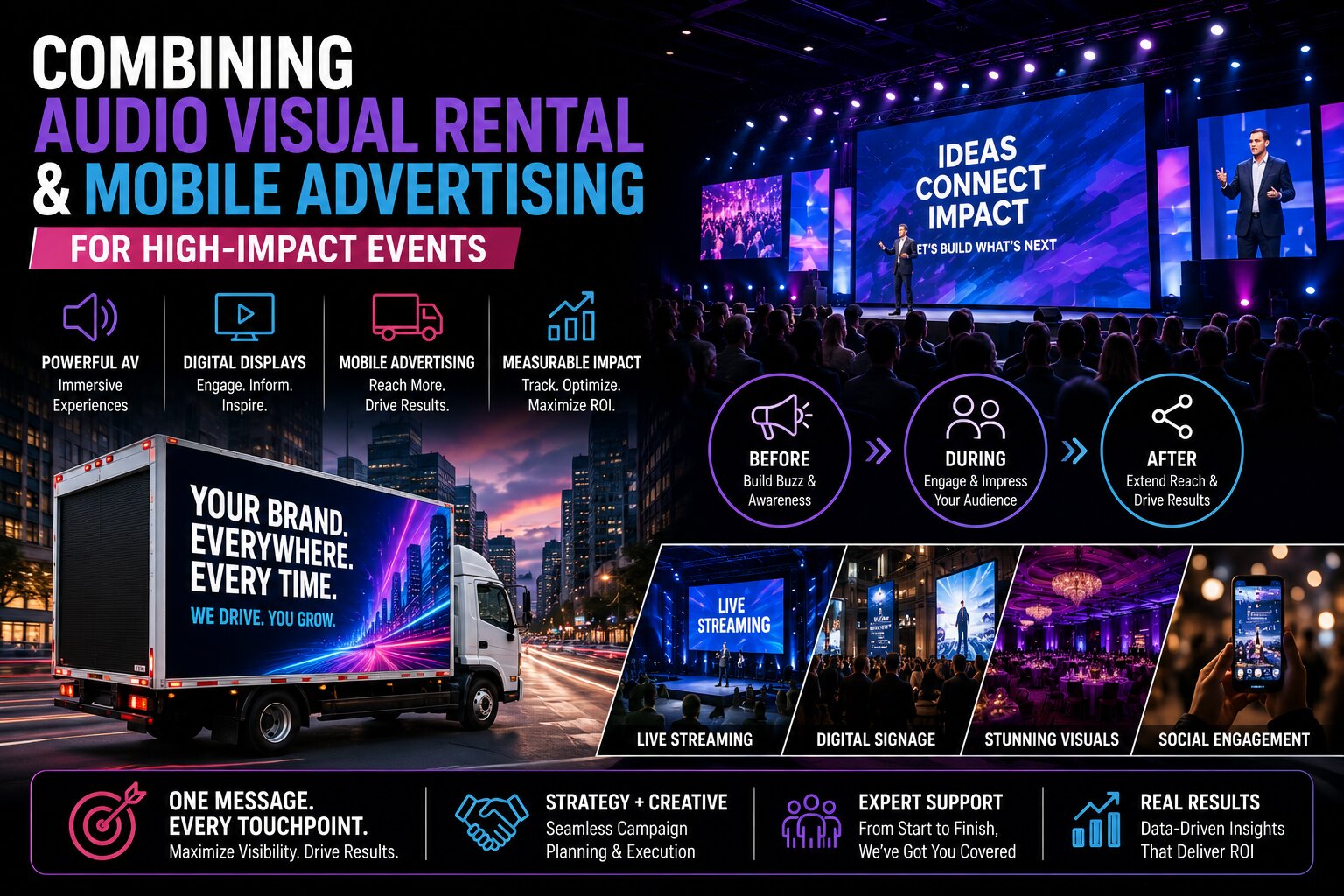
Here’s the thing about events today: guests have already seen your brand a dozen times before they walk in the door. Between the ads in their feed, the emails, and the group chat invites, a single banner at check-in just doesn’t register the way it used to. That’s exactly where audio visual rental earns its keep. Pair strong event production with smart digital event marketing solutions, and you’ve got a brand that stays visible before, during, and after the doors close.
Why Your Event Needs More Than Great Planning
Attendees expect more than they used to. A tightly run schedule was once the whole job. Now guests want something worth remembering, maybe even worth posting about.
This shift is the reason why experiential marketing technology shows up in so many event budgets today. Visual storytelling has as much impact as the program itself. An impressive entrance and a properly scheduled lighting signal, or an inviting screen when they arrive and so on. All of these can generate excitement long before your first speaker opens their mouth.
Traditional promotion hasn’t gone completely. However, it’s no longer able to run the event on its own. Combine powerful visuals with real anticipation that begins weeks prior to the doors are opened to create the type of expectation that transforms a new visitor into one who will come to the next event with their guests.
None of this takes a huge budget. A countdown post, a short teaser video looping at check-in, a backdrop that actually reflects your brand, small touches like these often beat a bigger spend with no real plan behind it.
Creating an Immersive Event Experience with Professional AV Support
Every visual choice at your event says something about your brand, whether you plan for it or not. Large screens let people in the back row actually see what’s happening. The sound systems ensure your speakers are heard clearly, and not only visible from a distance.
A good lighting system sets the tone before anyone even says a single word. The smooth playback of video can carry excitement through the tense gap between the sessions. And when guests can see and hear a speaker from anywhere in the room, they stay engaged far longer. That’s the real value audio visual rental brings to your event, since these pieces rarely come together well once you split them across separate vendors.
Professional equipment also raises the quality of your event in ways guests rarely notice consciously. A reliable setup means fewer awkward pauses while someone fumbles with a cable. Technicians who’ve handled events before know how to configure a room for whatever shape or crowd size you’re working with, cutting down on last-minute surprises.
That same groundwork feeds into digital signage for corporate events, since good signage depends on the same solid technical base underneath it. Get this right early, and troubleshooting on the actual day drops way down. That leaves more time to focus on your guests instead of chasing a loose cable minutes before doors open.
Why Digital Displays Continue to Capture Attention
Nothing pulls the eye like a bright, high-resolution screen, certainly not a printed banner sitting in a corner. An LED display rental holds up in blazing daylight and after dark alike, which matters when your event stretches across a full day.
Live feeds keep your overflow room, or anyone tuning in remotely, connected to the main stage. Sponsor logos rotating on screen feel far more alive than a static backdrop ever could. Presentations look sharper, video looks cleaner, and a well-placed social wall gives your guests a reason to pull out their phone and tag your event themselves.
Hybrid event engagement ideas lean on this too, since a single screen can serve your in-person crowd and a remote audience at once. That flexibility explains why digital displays have become such a workhorse for planners.
Content on those screens can shift on short notice, whether that’s a new sponsor logo going up or a schedule change after a speaker runs long. Your event stays current instead of stuck with whatever got printed three weeks earlier.
Taking Your Message Beyond the Event Venue
Your event’s impact shouldn’t stop in the parking area. A mobile billboard truck carries your messages beyond the building as well as into surrounding streets and keeps the message active well beyond the venue itself.
Make an announcement prior to the event to generate buzz. Promote it live as the event is happening to draw people who might not have been there. Maintain the visibility afterward to ensure that the momentum doesn’t fade away. Mobile ads put your company on the radar of the commuters and shoppers in busy shopping malls, as well as large crowds in business areas, basically wherever the audience you target is currently.
Real-time event promotion shines in this area as you can alter your routes and designs throughout the day, based on where the audience is. Outdoor digital advertising campaigns made with mobile units offer an array of creative and routing options that you can change on the fly to ensure that your message changes in tandem with the event. Add measurable campaign analytics, and you get a clearer read on impressions and actual reach.
Why Combining Both Strategies Creates Better Results
Put event production and mobile advertising together, and you get something neither delivers alone. Event marketing solutions that fold both in give your brand one consistent message across every point where a guest might encounter it.
That kind of repeat exposure sticks. If a person sees an interactive billboard while on the journey to work and later enters a venue with the same brand recall your event far better than a person who only saw, it once. It’s a payoff that shows in greater engagement and higher ROI for sponsorships, because sponsors gain more exposure and visibility for the same money.
Handling event production, mobile LED trucks, sound, campaign tracking, and audience analytics through one provider also makes coordination easier. Everything runs on a single timeline instead of splitting across several vendors you have to manage separately. That’s what real brand activation for live events looks like, and it’s tough to pull off when the pieces stay scattered.
Planning an Integrated Campaign from Start to Finish
Start with a clear goal. Ticket sales, brand awareness, lead generation, whatever it is, that goal shapes nearly every decision that follows.
Next, figure out who you’re actually trying to reach and pick event locations that match. Line up creative across the venue and your mobile billboard truck routes, and your message stays consistent no matter where someone runs into it.
Spread promotion out before, during, and after the event instead of cramming it into a single day. Track performance as you go, not just once it’s over, so you can adjust while there’s still time to matter. Careful event audience targeting, paired with a coordinated timeline, ties the whole plan together.
Small Decisions Create Bigger Event Impact
Technology shapes the experience your attendees walk away with. Mobile advertising stretches how far that experience travels. Integrated planning keeps your visibility strong at every stage, and consistent branding helps people actually remember your event afterward. Rely on the data, and each event gets a little easier to improve than the last.
Bring Every Part of Your Campaign Together
An event built around a single channel rarely leaves the impression you’re hoping for. Look past traditional promotion, pair solid event production with mobile advertising, and you build a customer journey that holds together from that first glimpse all the way through actual participation.
Put an LED display rental next to a well-planned mobile campaign, and your brand shows up everywhere your guests look. Add event marketing solutions that tie both together, and the whole thing feels like one message instead of a handful of separate efforts. So don’t just plan for the hours guests spend in the room. Plan for what happens before and after too, and the results will speak for themselves.
FAQS
When should you book audio visual rental?
Aim for six to eight weeks before your event, longer during busy seasons like fall conferences. That gives your provider time to walk the venue, plan power runs, and lock in the right gear instead of scrambling last-minute.
How does a mobile billboard truck work?
A driver runs a set route through areas your audience already visits, showing your ad on a rotating digital screen mounted on the truck. You can update the creative or shift the route mid-campaign if something isn’t landing.
Does weather affect outdoor event advertising?
Not much. Modern displays and mobile units are built for rain, heat, and wind, so your message keeps showing up regardless of the forecast. Just double-check your outdoor screens have proper weatherproofing before booking, especially for multi-day events.
How do you measure event campaign success?
Track attendance against impressions from your mobile and digital ads, then compare that to past events. Sponsor engagement, social shares, and lead capture numbers also tell you which pieces of the campaign actually pulled their weight.
Can small businesses afford integrated event campaigns?
Yes, and often more easily than expected. Many providers let you scale a single LED screen or one mobile route instead of the full package, so you can test what works before committing a bigger budget to next year’s event.