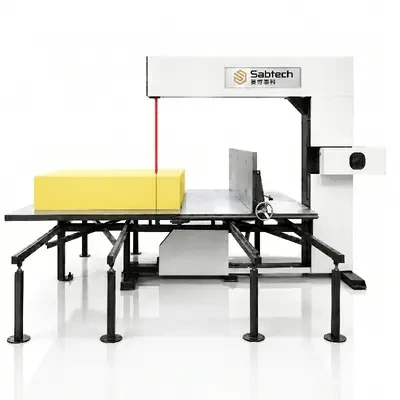
Selecting the right polyurethane foam machinery requires working through a structured evaluation process that considers production requirements, budget constraints, and long-term business goals together rather than focusing narrowly on any single factor in isolation from the broader purchasing decision context. This guide walks through the key considerations that should inform equipment selection, helping buyers arrive at a genuinely well-matched purchasing decision rather than relying on incomplete comparisons between competing equipment options.
Assessing Your Actual Production Volume Requirements
The starting point for equipment selection involves honestly assessing your actual production volume requirements, both current needs and reasonably anticipated future growth, since choosing equipment sized incorrectly for your genuine production volume can lead to either wasted capital on unnecessary capacity or a persistent production bottleneck that limits business growth potential. Buyers should document their typical daily and weekly production volumes, along with any seasonal variation patterns, providing potential suppliers with concrete data that supports genuinely appropriate equipment sizing recommendations rather than generic, one-size-fits-all suggestions that might not actually fit the business’s real operational needs.
Understanding Your Specific Foam Formulation Requirements
Different foam applications require genuinely different formulation characteristics, whether that’s soft, flexible foam for bedding applications or dense, rigid foam for structural insulation purposes, and equipment needs to be genuinely capable of handling your specific formulation requirements reliably and consistently. Buyers should clearly communicate their intended foam applications and formulation characteristics to potential suppliers early in the evaluation process, since this information significantly influences which equipment configurations genuinely suit the application versus which might struggle to deliver consistent quality with the specific chemical formulations the business actually intends to process.
Evaluating Precision and Consistency Requirements
Different applications also demand different levels of dosing precision and output consistency, with some applications tolerating modest variation while others, particularly those serving demanding downstream customers with tight quality specifications, require exceptionally precise, consistent performance that leaves little room for batch-to-batch quality variation. Honestly assessing your genuine precision requirements helps avoid both under-specifying equipment for demanding applications and unnecessarily over-specifying precision capability beyond what your actual application genuinely requires, which would add unnecessary cost without providing meaningful practical benefit.
Considering Budget Within a Total Cost of Ownership Framework
While upfront budget constraints genuinely matter, evaluating equipment purely on initial purchase price without considering total cost of ownership, including maintenance costs, material waste, energy consumption, and expected operational lifespan, often leads to purchasing decisions that prove more expensive in the long run than a slightly higher initial investment in more efficiently engineered equipment. Working through a genuine total cost of ownership analysis, rather than focusing exclusively on upfront pricing, typically reveals which equipment options genuinely represent the better long-term value for your specific production situation and anticipated operational timeframe.
Verifying Manufacturer Support and Reliability
Explore how pu foam machinery suppliers differ meaningfully in their ongoing support capability, spare parts availability, and demonstrated equipment reliability track record, all of which significantly affect the actual long-term ownership experience beyond simply the initial equipment purchase transaction. Buyers should request customer references, ask detailed questions about typical maintenance requirements, and verify that potential suppliers can genuinely support their equipment reliably throughout its expected operational lifetime rather than disappearing once the initial sale has been completed and payment received.
Finalizing a Confident Equipment Selection
Once production volume, formulation requirements, precision needs, total cost of ownership, and manufacturer support have all been thoroughly evaluated, buyers should have considerably more confidence in their final equipment selection decision than they would have had relying purely on initial impressions or surface-level specification comparisons between competing options. Taking this structured, thorough approach to equipment selection ultimately leads to purchasing decisions that genuinely serve the business’s long-term production needs, rather than decisions that seem reasonable initially but reveal costly shortcomings only after the equipment has already been installed and put into regular daily production use. This kind of careful, methodical selection process ultimately proves worthwhile, since the equipment chosen through this thorough evaluation approach typically delivers considerably more reliable, satisfying performance across its operational lifetime than equipment selected through a more rushed or superficial comparison process focused narrowly on initial price alone.