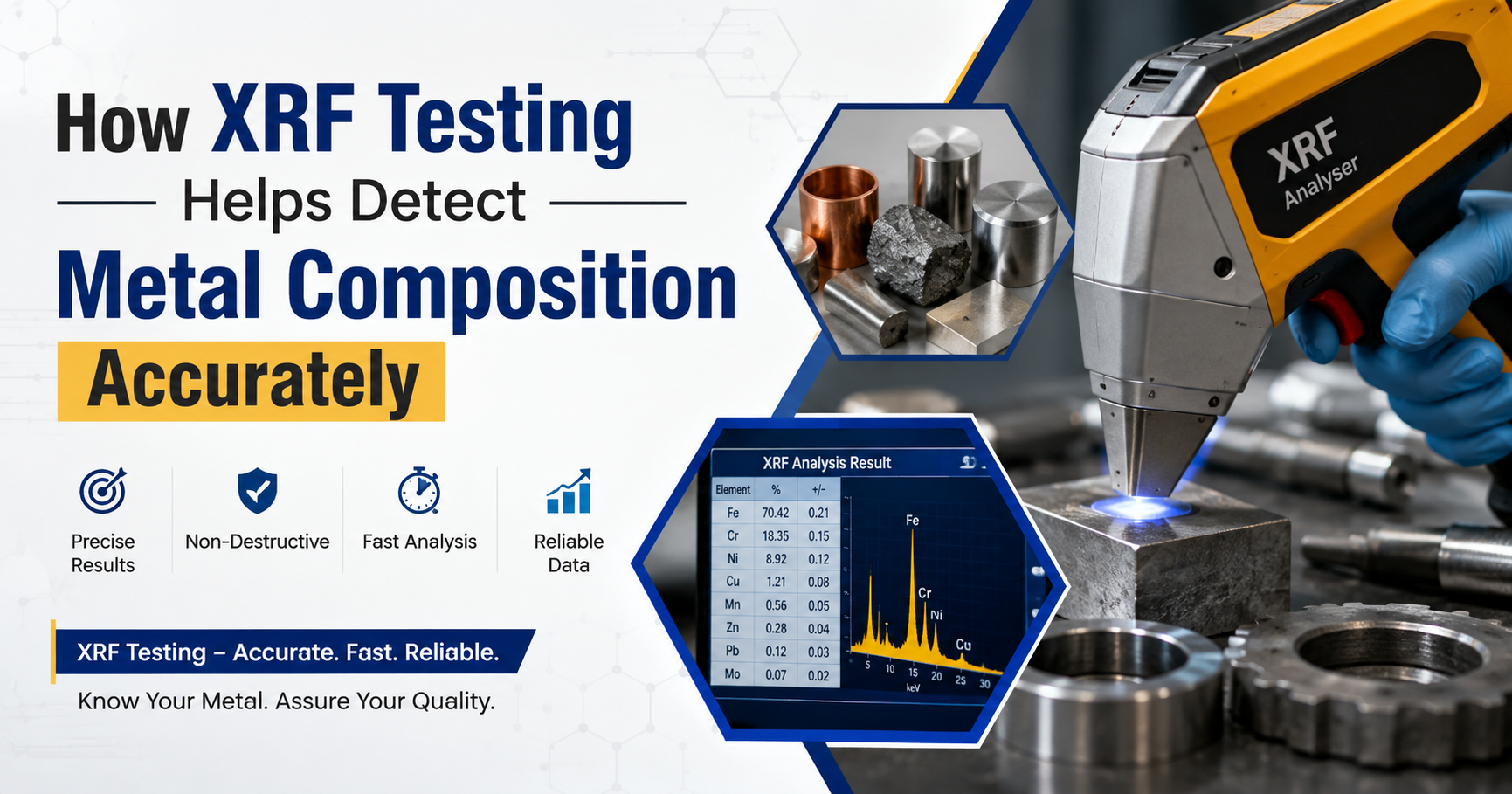
Metal composition analysis plays a crucial role in manufacturing, quality control, recycling, mining, and research. Even a small variation in the elemental composition of a metal can impact its strength, corrosion resistance, conductivity, and overall performance. This is where XRF (X-ray Fluorescence) testing becomes an invaluable analytical technique.
XRF testing provides a fast, non-destructive, and highly accurate method for identifying and quantifying the elements present in metals and alloys. Industries worldwide rely on XRF testing to verify material quality, ensure regulatory compliance, and prevent costly material mix-ups.
What Is XRF Testing?
XRF (X-ray Fluorescence) is a non-destructive analytical technique used to determine the elemental composition of materials. During the test, a sample is exposed to X-rays, causing the atoms within the material to emit secondary (fluorescent) X-rays.
Each element emits a unique energy signature, allowing sophisticated detectors to identify and measure the concentration of elements present in the sample.
Unlike traditional chemical analysis, XRF testing requires little or no sample preparation and delivers results within minutes.
How XRF Testing Works
The XRF testing process follows several simple steps:
1. Sample Placement
The metal sample is positioned inside the XRF instrument or analyzed using a handheld XRF analyzer.
2. X-ray Excitation
The instrument directs X-rays toward the sample.
3. Fluorescence Generation
Atoms within the sample absorb the energy and emit fluorescent X-rays unique to each element.
4. Detection
The detector captures the emitted X-rays and identifies the elements based on their energy levels.
5. Data Analysis
The software calculates the concentration of each detected element and generates a detailed composition report.
The entire process typically takes only a few seconds to a few minutes.
Why Accurate Metal Composition Matters
Knowing the precise composition of metals is essential because it directly affects:
- Mechanical strength
- Corrosion resistance
- Heat resistance
- Electrical conductivity
- Product lifespan
- Manufacturing consistency
- Regulatory compliance
- Safety and reliability
Incorrect material identification can lead to product failures, production delays, or expensive recalls.
Advantages of XRF Testing
1. Non-Destructive Analysis
One of the biggest advantages of XRF testing is that it does not damage the sample.
Manufacturers can test valuable components without altering or destroying them.
2. Fast Results
Most XRF analyses are completed within seconds.
This rapid turnaround makes XRF ideal for production environments where quick decisions are critical.
3. High Accuracy
Modern XRF instruments provide highly accurate elemental analysis for a wide range of metals and alloys.
The technology can detect both major and trace elements with excellent precision.
4. Minimal Sample Preparation
Unlike many laboratory techniques, XRF generally requires minimal cleaning or preparation.
This reduces testing time and operational costs.
5. Portable Testing Options
Handheld XRF analyzers allow inspectors to perform on-site metal analysis without transporting samples to a laboratory.
This is especially valuable in construction, mining, and scrap recycling industries.
6. Cost-Effective Testing
Since XRF testing is quick and requires minimal consumables, it offers an economical solution for routine quality control.
Metals Commonly Analyzed Using XRF
XRF testing can accurately identify numerous metals, including:
- Stainless steel
- Carbon steel
- Aluminum
- Copper
- Brass
- Bronze
- Nickel alloys
- Titanium
- Zinc
- Lead
- Iron
- Chromium
- Cobalt
- Magnesium
- Precious metals such as gold, silver, and platinum
Industries That Use XRF Testing
Manufacturing
Manufacturers verify raw materials before production begins to prevent material mix-ups.
Automotive Industry
XRF testing ensures engine components and structural parts meet required material specifications.
Aerospace
Aircraft components require strict alloy verification to maintain safety and performance.
Oil and Gas
Pipeline materials, valves, and pressure vessels undergo XRF analysis to ensure compliance with industry standards.
Mining
Mining companies use XRF to analyze ores and determine valuable mineral concentrations.
Metal Recycling
Scrap yards use handheld XRF analyzers to quickly sort metals based on composition, improving efficiency and reducing contamination.
Electronics
Manufacturers verify solder materials, electronic components, and printed circuit boards while checking compliance with regulations such as RoHS.
Applications of XRF Testing
XRF testing supports a wide range of industrial applications, including:
- Positive Material Identification (PMI)
- Alloy grade verification
- Incoming raw material inspection
- Failure analysis
- Weld inspection
- Corrosion studies
- Heavy metal detection
- Environmental testing
- Research and development
- Quality assurance
Why Businesses Choose Professional XRF Testing Labs
Professional XRF testing laboratories offer:
- Advanced analytical equipment
- Experienced technical professionals
- Accurate and repeatable results
- Standardized testing procedures
- Fast turnaround times
- Detailed analytical reports
- Compliance with national and international testing standards
Partnering with an accredited laboratory helps businesses maintain product quality, reduce risks, and meet customer expectations.
Factors That Influence XRF Accuracy
Several factors can affect the precision of XRF results, including:
- Surface cleanliness
- Sample thickness
- Instrument calibration
- Measurement time
- Sample homogeneity
- Proper testing methodology
Working with experienced testing professionals helps ensure reliable and consistent analytical results.
Future of XRF Testing
Advancements in detector technology, software, and portable instrumentation continue to improve the speed and accuracy of XRF analysis. Modern systems provide enhanced sensitivity, cloud-based data management, and automated reporting, making XRF testing even more valuable for industrial quality assurance.
As industries demand faster, more reliable material verification, XRF testing will remain a key technology for elemental analysis and quality control.
Conclusion
XRF testing has transformed the way industries analyze metal composition. Its ability to deliver fast, accurate, and non-destructive elemental analysis makes it an essential tool for manufacturers, researchers, recyclers, and quality control professionals. Whether verifying alloy grades, identifying unknown materials, or ensuring compliance with industry standards, XRF testing provides dependable results that support informed decision-making and improved product quality.
Choosing a trusted XRF testing laboratory ensures access to advanced equipment, skilled analysts, and precise reports, helping organizations maintain high standards of quality, safety, and operational efficiency.