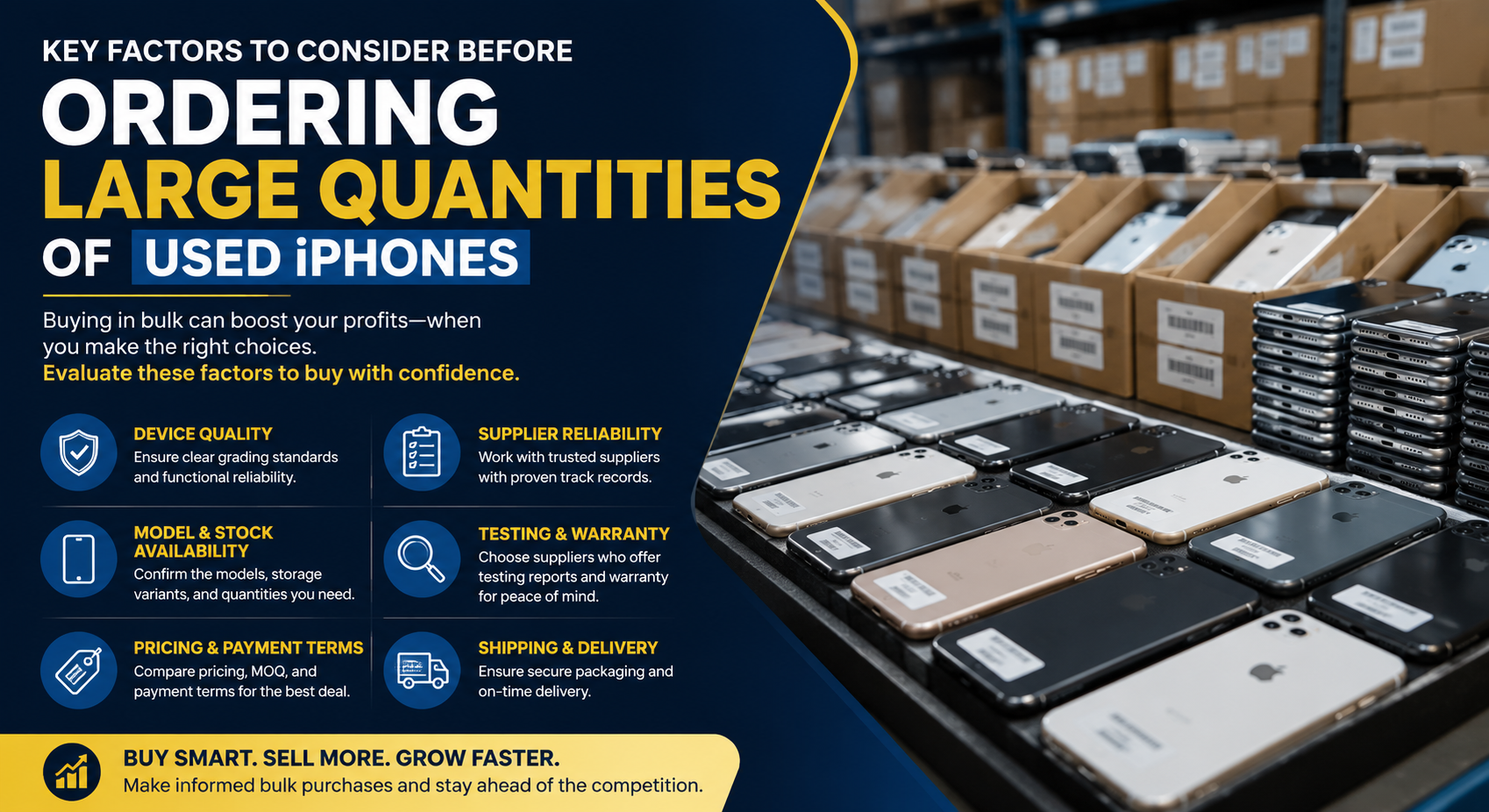
The global demand for pre-owned smartphones continues to rise as businesses and consumers seek cost-effective alternatives to brand-new devices. Among all refurbished and used smartphones, iPhones remain one of the most sought-after products due to their strong brand reputation, reliable performance, and long software support. For retailers, wholesalers, and resellers, purchasing used iPhones in bulk can be a profitable business opportunity. However, ordering large quantities without proper evaluation can lead to financial losses, customer complaints, and inventory challenges. Understanding the key factors before making a bulk purchase is essential for ensuring quality, profitability, and customer satisfaction.
NOTE :- Many retailers had sourced inventory through used iPhone bulk suppliers in spain to meet growing market demand. Access to graded and functional devices had helped improve profitability and customer trust. Reliable supply chains had contributed to business growth. Reach out to GLP Wireless for professional bulk iPhone supply services.
Verify the Supplier’s Reputation
One of the most important steps before placing a large order is evaluating the credibility of the supplier. A reliable supplier should have a proven track record in the used smartphone industry and should be able to provide references, customer reviews, or business certifications. Working with an experienced supplier reduces the risk of receiving poor-quality devices or inaccurate product descriptions.
It is also beneficial to assess the supplier’s communication standards and responsiveness. A professional supplier should be transparent about device conditions, grading standards, shipping timelines, and warranty policies. Establishing trust with the supplier is critical when purchasing large volumes of used iPhones.
Understand Device Grading Standards
Used iPhones are generally categorized into different grades based on their cosmetic and functional condition. Before placing an order, buyers should clearly understand how the supplier defines each grade. Terms such as Grade A, Grade B, and Grade C may vary between suppliers, making it important to request detailed grading guidelines.
A clear understanding of grading standards helps avoid misunderstandings and ensures that the devices received match customer expectations. Businesses that plan to resell used iPhones should carefully choose the grade that aligns with their target market and pricing strategy.
Check Functional Testing Procedures
The quality of used iPhones depends significantly on the testing process performed before resale. Buyers should inquire about the supplier’s testing procedures and quality control measures. Devices should be tested for key functions such as battery performance, touchscreen responsiveness, cameras, speakers, microphones, charging ports, and network connectivity.
Comprehensive testing reduces the likelihood of defective products entering inventory. Suppliers that provide detailed testing reports demonstrate a stronger commitment to quality assurance and customer satisfaction.
Evaluate Battery Health
Battery condition is one of the most important factors influencing the value and usability of used iPhones. Since batteries naturally degrade over time, devices with poor battery health may result in negative customer experiences and increased return rates.
Before ordering in bulk, buyers should confirm the minimum battery health percentage offered by the supplier. Many professional wholesalers provide devices with battery health above a specified threshold, ensuring acceptable performance and longevity. Understanding battery standards can help businesses maintain customer trust and reduce post-sale issues.
Confirm Activation and Security Status
Used iPhones should be free from activation locks and security restrictions. Devices linked to previous owners’ accounts may be difficult or impossible for new users to activate. Buyers should verify that all devices have been properly reset and are ready for immediate use.
It is equally important to ensure that the devices are not blacklisted, reported lost, or associated with unpaid carrier obligations. Conducting these checks protects businesses from legal complications and prevents inventory losses.
Review Warranty and Return Policies
A strong warranty and return policy provide additional security when purchasing large quantities of used iPhones. Even with thorough testing, occasional defects may occur. Suppliers that offer warranties demonstrate confidence in the quality of their products.
Before finalizing a purchase, buyers should review warranty coverage, claim procedures, and return conditions. Understanding these policies helps minimize financial risks and ensures smoother issue resolution if problems arise after delivery.
Consider Pricing and Profit Margins
While competitive pricing is important, the lowest price does not always represent the best value. Extremely low prices may indicate poor-quality devices, insufficient testing, or hidden issues. Buyers should evaluate pricing in relation to device condition, battery health, warranty coverage, and supplier reliability.
Calculating potential profit margins before ordering is essential. Businesses should consider shipping costs, taxes, refurbishment expenses, and potential return rates when determining profitability. A balanced approach helps maximize long-term business success rather than focusing solely on initial cost savings.
Assess Inventory Consistency
For businesses that regularly sell used iPhones, inventory consistency is crucial. Suppliers should be capable of providing a steady supply of devices across different models and grades. Inconsistent inventory can create challenges in meeting customer demand and maintaining stable sales operations.
Establishing relationships with suppliers who have reliable sourcing networks can help businesses secure continuous access to quality products. Consistent inventory availability also supports long-term growth and customer retention.
Examine Shipping and Logistics Capabilities
Large orders require efficient shipping and logistics management. Delays, improper packaging, or inadequate tracking systems can result in damaged products and operational disruptions. Buyers should discuss shipping methods, transit times, insurance options, and packaging standards before placing an order.
Reliable logistics contribute to smoother inventory management and ensure that products arrive in good condition. Working with suppliers that have established international shipping experience can significantly reduce logistical challenges.
Ensure Compliance with Market Requirements
Different markets may have specific regulations related to imported electronics, certifications, and consumer protection standards. Buyers should ensure that the used iPhones meet the legal and technical requirements of their target market.
Compliance helps avoid customs delays, legal issues, and unexpected costs. Understanding regional regulations before placing a bulk order protects both the business and its customers.
Conclusion
Ordering large quantities of used iPhones can be a profitable investment when approached strategically. Factors such as supplier reputation, grading standards, testing procedures, battery health, security status, warranty coverage, pricing, inventory consistency, logistics, and regulatory compliance all play a significant role in determining the success of a bulk purchase. By carefully evaluating these considerations, businesses can reduce risks, improve customer satisfaction, and build a sustainable operation in the growing market for pre-owned iPhones.
For More Insightful Articles Related To This Topic, Feel Free To Visit: https://bloggingwebs.com/