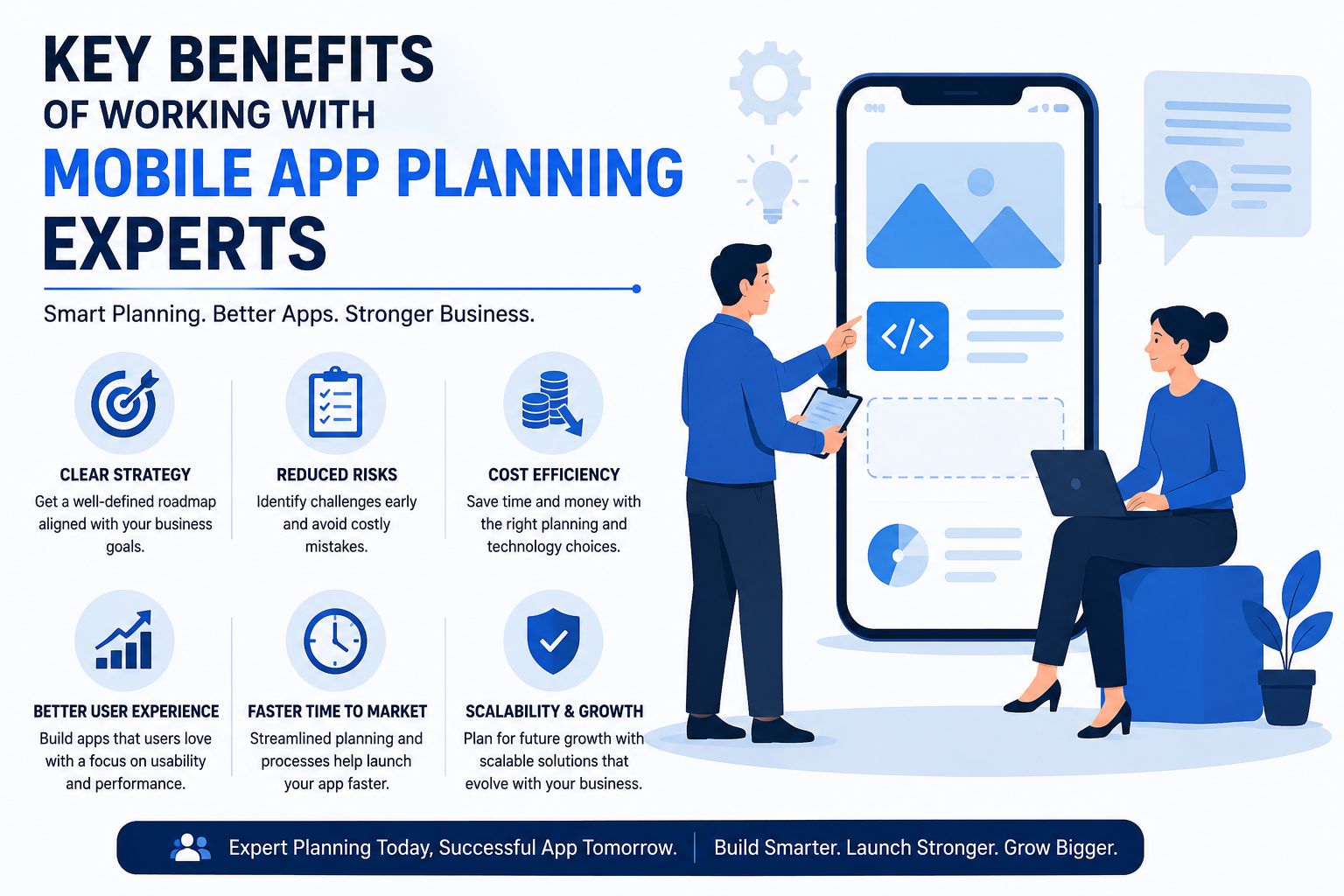
The mobile app market has become more competitive than ever. Every day, new applications enter app stores hoping to attract users, solve problems, and generate revenue. However, many apps never reach their full potential—not because the idea is weak, but because the planning behind it is incomplete. An exceptional app is rarely the result of coding alone. It begins with thoughtful planning, strategic decision-making, and a clear understanding of business goals.
This is where mobile app planning experts create significant value. They help transform raw ideas into structured, actionable roadmaps that reduce uncertainty and improve the likelihood of success. Instead of rushing directly into development, these professionals evaluate the business model, target audience, technical feasibility, market opportunities, and long-term scalability before a single line of code is written.
Many organizations mistakenly believe app planning is an optional phase that can be skipped to save time. In reality, poor planning often leads to expensive redesigns, delayed launches, feature overload, and disappointing user experiences. Investing in planning at the beginning can dramatically reduce these risks while creating a stronger foundation for future growth.
Turning Ideas Into Practical Business Solutions
Every successful application starts with an idea, but ideas alone don’t guarantee results. Mobile app planning experts evaluate concepts from multiple perspectives, asking questions that many businesses overlook.
They examine whether the app solves a genuine problem, whether people are willing to use it regularly, and how it differs from existing competitors. This process helps refine broad concepts into focused solutions with measurable business value.
Instead of asking, “Can we build this?” planning experts ask, “Should we build this, and how can we build it most effectively?”
This shift in thinking prevents unnecessary investments in features that provide little value while highlighting opportunities that can create meaningful competitive advantages.
Creating a Strong Product Strategy
Building an app without a strategy is like constructing a building without architectural drawings. Every decision becomes reactive rather than intentional.
Planning experts develop comprehensive product strategies that include:
- Business objectives
- Target customer profiles
- User journey mapping
- Core functionality
- Revenue opportunities
- Long-term product vision
- Expansion possibilities
This strategic foundation keeps every stakeholder aligned throughout development and ensures the final product supports broader business goals rather than simply delivering technical functionality.
Reducing Costly Development Mistakes
One of the biggest financial advantages of professional planning is avoiding expensive errors.
Changing a feature after development begins often requires redesigning interfaces, modifying databases, rewriting code, updating documentation, and conducting additional testing. These adjustments consume both time and budget.
Planning experts identify potential issues early, when changes are relatively inexpensive. They evaluate technical dependencies, workflow bottlenecks, integration challenges, and scalability concerns before development starts.
Preventing problems is significantly more cost-effective than fixing them after launch.
Building Around Real User Needs
Successful apps focus on users—not assumptions.
Planning specialists invest time in understanding customer behaviors, expectations, frustrations, and daily routines. Through interviews, market analysis, competitor evaluation, and behavioral research, they identify what users actually need rather than what businesses think they need.
This user-centered planning leads to applications that feel intuitive, solve meaningful problems, and encourage long-term engagement.
When users immediately understand how an app improves their lives, adoption naturally increases.
Prioritizing Features That Deliver Maximum Value
Many app projects become overloaded with features before development even begins.
Businesses often assume that adding more functionality automatically creates a better product. In reality, excessive features can confuse users, increase development costs, and delay launches. This is one reason many organizations invest in best mobile application development consulting services, where experienced consultants help identify the features that truly matter. By relying on expert mobile app development consulting guidance, businesses can prioritize functionality that aligns with user needs and business goals instead of overwhelming the product with unnecessary additions.
Mobile app planning experts prioritize features based on business impact, customer demand, technical complexity, and market importance.
Instead of attempting to build everything simultaneously, they identify the essential features that create the strongest initial product.
This approach accelerates time-to-market while leaving room for future improvements based on actual user feedback.
Accelerating Time to Market
Speed matters in today’s digital economy.
Markets evolve quickly, customer expectations change rapidly, and competitors constantly introduce new innovations.
Planning experts streamline development by eliminating uncertainty before coding begins.
Clear documentation, defined workflows, organized feature lists, and realistic timelines reduce delays caused by misunderstandings or changing requirements.
Development teams can concentrate on building rather than repeatedly revising project objectives.
As a result, businesses often launch faster while maintaining higher quality.
Improving Communication Across Teams
App development typically involves multiple stakeholders:
- Business owners
- Designers
- Developers
- Marketing specialists
- Project managers
- Quality assurance teams
- Investors
Without structured planning, communication gaps frequently emerge.
Planning experts establish shared documentation, visual workflows, product specifications, and clear project goals that everyone understands.
This shared understanding minimizes confusion, reduces unnecessary meetings, and keeps every team working toward the same objectives.
Supporting Smarter Technology Decisions
Selecting the wrong technology stack can limit future growth and increase maintenance costs.
Planning experts evaluate numerous technical considerations, including:
- Native versus cross-platform development
- Cloud infrastructure
- Security requirements
- Third-party integrations
- Performance expectations
- Scalability needs
- Maintenance complexity
Rather than choosing technologies based on trends, they recommend solutions aligned with business requirements and long-term sustainability.
These informed decisions reduce technical debt while supporting future expansion.
Enhancing User Experience Before Development Begins
User experience is not simply about attractive design.
It encompasses navigation, accessibility, responsiveness, usability, and overall satisfaction.
Planning professionals create user flows, information architecture, and interaction models before interface design starts.
By mapping every user journey in advance, they identify friction points that might otherwise frustrate customers.
The result is an app that feels natural, efficient, and enjoyable from the very first interaction.
Identifying Market Opportunities
Experienced planning experts continuously analyze market conditions.
They evaluate:
- Industry trends
- Customer behavior
- Emerging technologies
- Competitive positioning
- Untapped opportunities
This research helps businesses discover gaps that competitors have overlooked.
Instead of copying existing apps, organizations can position themselves with distinctive value propositions that attract loyal audiences.
Innovation often begins during planning rather than development.
Improving Budget Forecasting
Unexpected costs frequently derail app projects.
Professional planning provides realistic budget estimates based on technical complexity, feature priorities, infrastructure, testing requirements, and future maintenance.
Businesses gain better visibility into:
- Initial investment
- Operational costs
- Scaling expenses
- Third-party service fees
- Future development phases
Accurate forecasting enables smarter financial planning and reduces unpleasant surprises later.
Strengthening Risk Management
Every digital project involves uncertainty.
Potential risks include:
- Technical challenges
- Security vulnerabilities
- Compliance issues
- Resource shortages
- Market shifts
- User adoption problems
Planning experts identify these risks early and develop mitigation strategies before they become serious obstacles.
Instead of reacting to problems, businesses become prepared to manage them proactively.
Designing for Long-Term Scalability
Many apps launch successfully but struggle as user numbers increase.
Performance declines, infrastructure becomes unstable, and maintenance costs rise.
Planning experts anticipate future growth by designing systems capable of handling increasing traffic, expanding functionality, and evolving business needs.
Scalable planning prevents businesses from rebuilding their applications as they grow.
Instead, the product evolves naturally alongside customer demand.
Improving App Store Readiness
Launching an app involves much more than publishing software.
Planning experts prepare businesses for:
- Platform guidelines
- Store optimization
- Metadata preparation
- Privacy compliance
- Permission management
- User onboarding
- Launch strategies
These preparations reduce approval delays while improving visibility after release.
A well-prepared launch often generates stronger initial momentum.
Supporting Better Business Decisions With Data
Modern applications generate valuable information.
Planning experts determine which metrics should be collected from the beginning.
These may include:
- User acquisition
- Retention
- Session duration
- Feature engagement
- Conversion rates
- Customer lifetime value
- Revenue performance
Meaningful analytics enable businesses to improve their products based on measurable evidence rather than assumptions.
Data-driven decision-making becomes part of the product from day one.
Creating Better Collaboration With Development Teams
Developers perform their best when requirements are clear.
Incomplete documentation often results in repeated revisions, conflicting interpretations, and inconsistent implementation.
Planning experts translate business goals into technical documentation that developers can execute efficiently.
This reduces ambiguity while improving productivity throughout development.
Teams spend more time creating solutions and less time clarifying expectations.
Increasing Investor Confidence
For startups seeking funding, planning demonstrates professionalism.
Investors rarely support ideas without structured execution plans.
Comprehensive planning documents show:
- Market validation
- Financial projections
- Product strategy
- Growth roadmap
- Competitive positioning
- Risk analysis
These materials strengthen presentations and increase credibility during funding discussions.
A well-planned product appears significantly less risky than one built on assumptions alone.
Preparing for Future Innovation
Technology evolves continuously.
Artificial intelligence, augmented reality, wearable devices, voice interfaces, automation, and connected ecosystems continue reshaping user expectations.
Planning experts don’t simply prepare businesses for today’s market.
They create flexible foundations capable of incorporating tomorrow’s innovations without requiring complete redevelopment.
Future-ready planning protects long-term investments.
Encouraging Sustainable Product Growth
Growth isn’t just about acquiring more users—it’s about maintaining quality while expanding.
Planning experts define product roadmaps that prioritize continuous improvement through measurable milestones. They help businesses schedule feature releases, gather customer feedback, evaluate performance metrics, and introduce enhancements without overwhelming users or development teams.
This structured approach creates steady progress rather than unpredictable bursts of development, making the product more reliable and easier to maintain over time.
Establishing a Competitive Advantage
Competition in the mobile app industry is intense. Thousands of apps may offer similar services, but the ones that stand out often have a stronger strategic foundation.
Planning experts help businesses identify unique selling points, refine customer messaging, and align product capabilities with market demands. Instead of competing solely on price or features, companies can differentiate themselves through better user experiences, faster performance, innovative workflows, or specialized services.
A clearly defined competitive strategy increases customer trust and supports long-term brand recognition.
Conclusion
Creating a successful mobile application requires far more than technical expertise. It demands strategic thinking, market awareness, user-focused planning, financial discipline, and a clear vision for future growth. Mobile app planning experts bring all of these elements together before development begins, helping businesses avoid costly mistakes while maximizing opportunities for success.
Their expertise extends beyond creating project documents. They shape product direction, improve communication, reduce uncertainty, prioritize meaningful features, strengthen technical decisions, and prepare organizations for sustainable expansion. Every hour invested in careful planning has the potential to save countless hours of redevelopment, budget overruns, and missed market opportunities later.