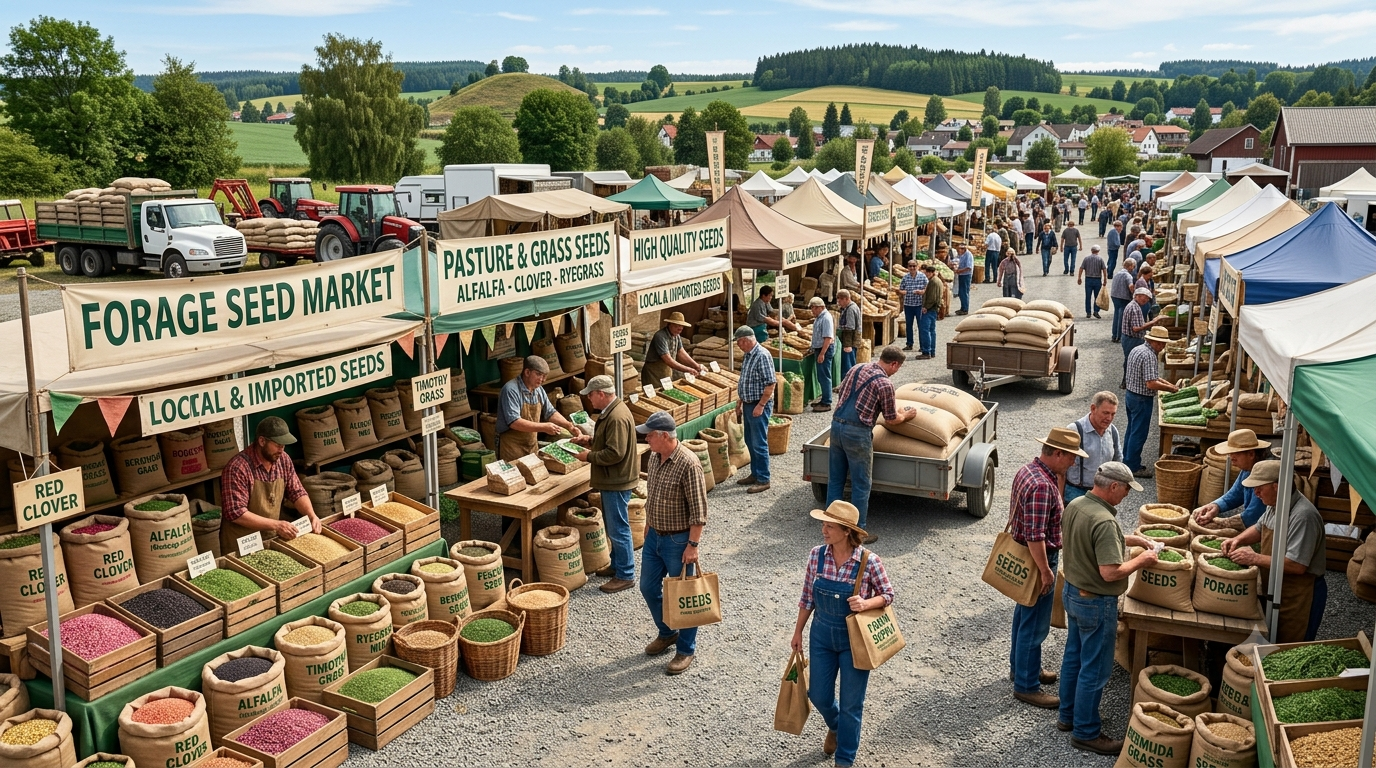
The future of livestock nutrition is being shaped by innovation in the Forage Seed Market, where advanced seed genetics, precision agriculture, and sustainable farming practices are transforming the way high-quality animal feed is produced. As global demand for dairy, meat, and other livestock products continues to rise, farmers are adopting improved forage seed varieties that deliver higher yields, better nutritional value, and greater resilience to climate challenges. Innovations such as drought-tolerant grasses, disease-resistant legumes, and AI-driven crop management are helping maximize pasture productivity while reducing input costs.
These advancements not only enhance animal health and farm profitability but also support long-term food security, environmental sustainability, and the evolution of modern livestock production systems worldwide. .The global forage seed market size reached USD 21.97 Billion in 2025 and is projected to reach USD 42.54 Billion by 2034, exhibiting a CAGR of 7.39% during 2026-2034.Government support for regenerative agriculture, precision farming technologies, and improved seed genetics are also strengthening industry growth. IMARC Group combines extensive primary research, proprietary databases, and continuous market monitoring to deliver actionable insights that help businesses identify growth opportunities and strengthen competitive positioning.
How AI is Transforming the Forage Seed Market
AI Driven Seed Breeding and Genetic Improvement
Artificial intelligence is accelerating forage seed breeding by analyzing genetic traits, weather patterns, and soil conditions to identify high-performing seed varieties. AI significantly reduces breeding cycles while improving drought tolerance, disease resistance, and biomass yield.
Precision Farming and Smart Pasture Management
AI powered farm management platforms help farmers determine the best sowing periods, fertilizer application schedules, irrigation requirements, and grazing rotations. These technologies improve pasture productivity while minimizing input costs.
Predictive Disease Monitoring
Machine learning tools use satellite imagery, drones, and field sensors to detect pest infestations and crop diseases before they spread. Early intervention improves forage quality and reduces production losses.
Request Sample For PDF Report: https://www.imarcgroup.com/forage-seed-market/requestsample
Forage Seed Market Growth Drivers and Emerging Trends
The global livestock industry continues to create strong demand for quality forage. According to the Food and Agriculture Organization (FAO), livestock contributes approximately 40% of global agricultural output while supporting the livelihoods of more than 1.3 billion people. High quality forage remains one of the most important components of efficient livestock production.
The dairy sector is also expanding investments in improved feed quality. Better forage directly contributes to higher milk yields, improved meat quality, and healthier livestock. Studies published by agricultural research institutions indicate that quality forage can reduce purchased feed costs by up to 30% while improving farm profitability.
Climate change is reshaping forage production strategies. Farmers are increasingly adopting drought tolerant alfalfa, ryegrass, clover, sorghum, and other resilient forage crops capable of maintaining productivity under water stress. This trend is particularly strong across North America, Europe, Australia, and parts of Asia.
Sustainability has become another major market driver. Regenerative agriculture practices encourage permanent pasture management, crop rotation, nitrogen fixing legumes, and reduced soil erosion. Legume based forage crops also naturally improve soil fertility by fixing atmospheric nitrogen, lowering fertilizer requirements.
Digital agriculture continues to gain momentum. GPS enabled seed drills, drone based field monitoring, satellite imaging, and variable rate seeding technologies help maximize forage establishment while reducing operational costs.
Government Programs Supporting the Forage Seed Industry
Governments worldwide continue to strengthen sustainable agriculture through financial incentives, research investments, and conservation initiatives.
- The United States Department of Agriculture expanded conservation funding through the Environmental Quality Incentives Program during May 2025, encouraging pasture improvement, rotational grazing, and forage establishment on working farms.
- The European Union continues implementing the Common Agricultural Policy, supporting biodiversity, grassland conservation, and sustainable livestock farming across member countries.
- Agriculture and Agri Food Canada announced additional investments during February 2025 to strengthen climate smart agriculture, including improved forage systems, soil health management, and resilient crop production.
- India’s National Mission on Sustainable Agriculture continues promoting climate resilient farming practices, water conservation, and integrated farming systems that support forage cultivation alongside livestock production.
These initiatives encourage farmers to invest in improved forage seed varieties while supporting environmental sustainability and long term agricultural productivity.
Forage Seed Market Segmentation
Breakup by Seed Type
- Alfalfa
- Clover
- Ryegrass
- Chicory
- Fescue
- Timothy
- Sorghum
- Others
Alfalfa represents one of the leading product segments because of its high protein content, superior digestibility, and widespread use in dairy and beef production.
Breakup by Livestock
- Dairy Cattle
- Poultry
- Pork
- Others
Dairy cattle account for a significant share of global forage demand due to continuous nutritional requirements for milk production.
Breakup by Distribution Channel
- Direct Sales
- Agricultural Cooperatives
- Seed Dealers
- Online Retail
- Others
Agricultural cooperatives remain an important distribution channel because they provide technical guidance, quality assurance, and localized seed availability.
Breakup by Region
- North America
- Europe
- Asia Pacific
- Latin America
- Middle East and Africa
North America continues to hold a leading position due to advanced livestock farming, high adoption of improved seed varieties, precision agriculture, and extensive pasture management practices.
Competitive Landscape
IMARC Group provides detailed profiles of major companies operating in the Forage Seed Market, covering business strategies, product portfolios, research investments, partnerships, and competitive positioning.
Leading companies include:
- DLF Seeds
- Barenbrug Group
- RAGT
Recent News and Developments in the Forage Seed Market
- June 2026: Corteva Agriscience expanded its forage genetics research program to develop drought tolerant forage varieties designed for regions experiencing increasing climate variability.
- March 2026: DLF introduced new high performance forage grass mixtures focused on improving pasture productivity and carbon sequestration across European livestock farms.
- October 2025: Barenbrug announced the expansion of its regenerative agriculture seed portfolio with new forage blends designed to improve biodiversity and soil health.
- April 2025: S&W Seed Company strengthened its alfalfa seed portfolio through expanded breeding initiatives targeting improved disease resistance and higher forage quality.
- September 2024: Agriculture researchers across Europe launched collaborative projects focused on climate resilient forage breeding, supported by public research funding aimed at improving sustainable livestock systems.
Future Outlook
The Forage Seed Market is expected to benefit from continuous innovation in seed genetics, digital agriculture, and sustainable farming practices. Future industry development will likely be supported by:
- Wider adoption of AI assisted crop breeding
- Increasing investment in climate resilient forage varieties
- Expansion of regenerative agriculture practices
- Greater use of precision farming technologies
- Rising demand for high quality livestock nutrition
- Improved pasture management through digital monitoring
- Continued government support for sustainable agriculture
As global agriculture focuses on improving productivity while reducing environmental impact, the Forage Seed Market is positioned to play a vital role in supporting efficient livestock production, soil conservation, and long term food security. IMARC Group’s comprehensive research helps businesses, investors, and policymakers understand these evolving trends and make informed strategic decisions.