For historical reenactors, museum curators, and dedicated military history enthusiasts, holding a piece of history in your hands is one thing—but wearing it is an entirely different experience. The weight of the wool, the specific cut of a tunic, and the precise placement of brass buttons pull the past into the present.
Whether you are gearing up for a living history timeline, preparing a theatrical production, or expanding your private collection, finding gear that gets the details right is paramount. If you are looking to buy world war 2 uniforms, or searching for a rare ww1 army uniform online, navigating the world of historical reproductions requires knowing what to look for and where to find museum-grade craftsmanship.
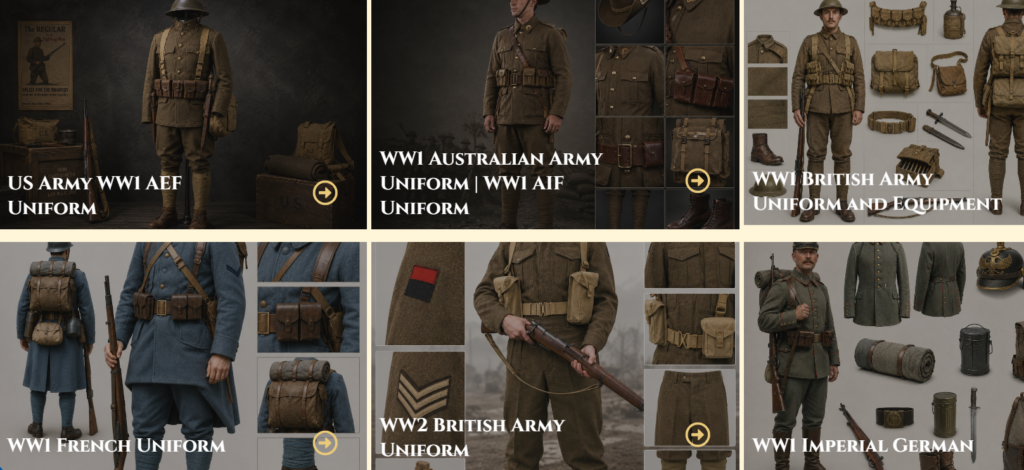
The Evolution of Combat Garments: WWI vs. WWII
Military uniforms evolved dramatically during the first half of the twentieth century. Understanding these structural shifts helps ensure your historical impression remains completely accurate.
World War I: The Age of Wool and High Collars
The Great War was a transitional era for military dress. Armies stepped away from the bright, highly visible ceremonial colors of the nineteenth century and adopted muted tones to blend into the mud of the trenches.
- The Silhouette: British and American forces favored tight, high-collars and stiff standing tunics, such as the iconic US Model 1917 or 1918 Olive Drab (OD) wool uniforms.
- The Mechanics: Soldiers wore leg puttees (protective cloth wraps) and relied on heavy wool to handle the brutal, damp conditions of European trenches.
Finding these specific, early-century patterns can be incredibly challenging. When searching for a ww1 army uniform online, collectors look for textiles that replicate the coarse texture, weave density, and exact shade of khaki or feldgrau used over a century ago.
World War II: Functionality, Utility, and Layers
By the time global conflict erupted again in 1939, the nature of combat demanded utility over stiffness. Uniforms became looser, highly specialized, and designed for mobility across varied global theaters—from the humid jungles of the Pacific to the frozen fields of Bastogne.
- The Silhouette: Open-collar jackets, specialized field trousers, and rugged utility gear replaced the rigid cuts of the past.
- The Mechanics: Think of the rugged canvas M1942 paratrooper jump jackets, the classic British wool battle dress, or the specialized camouflage patterns introduced for armored vehicle crews.
When enthusiasts look to buy world war 2 uniforms, they aren’t just buying clothes; they are investing in complex, multi-layered combat systems that require meticulous tailoring to hang, drape, and wear correctly under stress.
Why Authenticity Matters in Historical Tailoring
A true reproduction is far more than a simple costume. Modern fast-fashion textiles simply cannot mimic the structural properties of vintage military garb. Authentic historical tailoring requires:
- Archival Pattern Study: Patterns must be drafted directly from surviving original pieces to ensure the exact drape and silhouette are maintained.
- Correct Material Weights: Genuine historical wools, heavy-duty cotton twills, and authentic canvas elements provide the structural durability required for field use.
- Hardware and Trims: Using custom-cast brass buttons, correct period-accurate zippers, and proper bullion or machine-embroidered insignia transforms a basic garment into a living piece of history.
Source Museum-Quality Gear with Replicamilitary
When precision cannot be compromised, you need a trusted partner who understands the deep history woven into every thread. Replicamilitary specializes in crafting premium, hand-stitched historical reproductions that bridge the gap between the past and present.
Covering iconic eras from World War I and World War II all the way back to the Victorian and Zulu War periods, Replicamilitary pairs deep historical research with expert tailoring. Every tunic, pair of trousers, and webbing strap is built to custom-size specifications, ensuring your uniform fits perfectly while retaining its absolute historical accuracy. Trusted by living history groups, theatrical directors, and discerning collectors globally, they deliver the weight, silhouette, and authenticity your collection deserves.