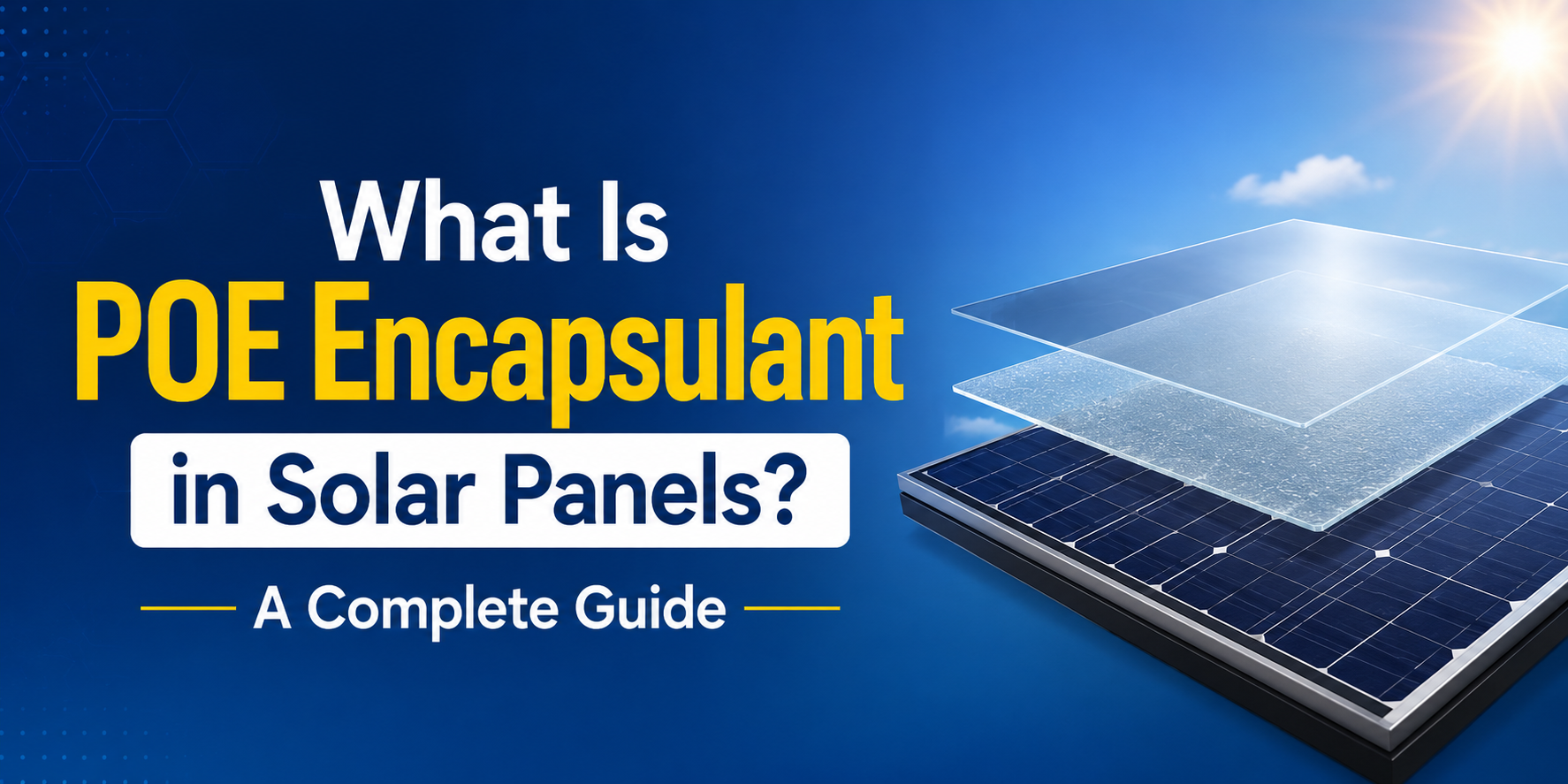
In the world of solar panel, you mostly see the glass top and the dark cells that catch the sun. However, there is a hidden hero inside the panel that keeps everything working for twenty-five years or more. This hidden layer is called an encapsulant. It acts like a strong, clear glue that holds the solar cells between the glass and the back sheet.
Choosing the right material for this layer is a big deal for anyone building or buying solar energy systems. In the past, most people used a material called EVA. But as technology has improved, a better option has become popular: POE Encapsulant. This guide will explain what this material is, why it matters, and why it is quickly becoming the top choice for modern solar panels.
What Is POE Encapsulant?
POE Encapsulant stands for Polyolefin Elastomer. To put it simply, it is a type of plastic that is very flexible and tough. In the world of solar energy, it is used as a thin, clear film. During the solar manufacturing process, this film is melted slightly to wrap around the solar cells. This creates a protective seal that blocks out air and water while letting sunlight pass through to the cells.
Unlike older materials, POE Solar technology is designed to handle the tough conditions found on a roof or in a large solar farm. It does not break down easily when exposed to high heat or heavy rain. This makes it a very reliable choice for protecting the fragile silicon wafers that actually create electricity. It is basically the bodyguard for the solar cell, ensuring nothing from the outside world can damage it.
Why POE Encapsulants Are Important in Solar Modules
The solar panel is like a sandwich. If the filling of that sandwich—the solar cells—gets wet or dirty, the whole thing stops working. This is why the Solar POE Encapsulant is so important. It provides the structural strength needed to keep the cells from moving or cracking. If the cells shift even a tiny bit, it can cause small breaks that lower the amount of power the panel produces.
Also, solar panels are a long-term investment. Most people expect them to last at least two or three decades. If the encapsulant fails after only ten years, the panel becomes useless. This material ensures that the internal parts stay dry and safe for the entire life of the panel. Without a high-quality seal, the metallic parts inside would rust, and the energy output would drop quickly. Using a high-quality POE Encapsulant is the best way to make sure a solar panel pays for itself over time.
Key Properties of POE Encapsulant
1. Superior moisture barrier
Water is one of the biggest enemies of solar panels. If even a tiny amount of moisture gets inside, it can cause corrosion. POE Encapsulant is famous for having a very low water vapor transmission rate. This means it is much better at blocking water than other materials like EVA. In humid places or areas with lots of rain, this property is a lifesaver for the panel’s electronics.
2. No acid formation
One common problem with older solar materials is that they can release acetic acid over time. This acid smells like vinegar and can eat away at the metal wires inside the panel. POE Solar materials do not produce this acid. Because they are chemically stable, they don’t create harmful waste products that could destroy the panel from the inside out. This keeps the internal parts looking like new for much longer.
3. High PID resistance
PID stands for Potential Induced Degradation. It is a fancy way of saying that electricity is leaking where it shouldn’t go, which ruins the panel’s power. Solar POE Encapsulant has very high electrical resistance. This helps keep the electricity flowing exactly where it belongs. By preventing PID, this material ensures that the panel keeps producing as much power as possible throughout its life.
4. Enhanced UV resistance
Solar panels sit in the sun all day, every day. Most plastics turn yellow or become brittle when they are left in the sun for too long. However, POE Encapsulant is built to withstand intense UV rays. It stays clear and flexible, which means it doesn’t block the light that the solar cells need to make power. This clear path for light is essential for keeping efficiency high.
5. Thermal Stability
Roofs get incredibly hot in the summer. A solar panel can easily reach temperatures that would melt or warp lower-quality plastics. POE Solar films are designed to handle these temperature swings. Whether it is a freezing winter night or a scorching summer afternoon, the material stays stable and continues to protect the cells without shrinking or cracking.
How to Choose the Right POE Encapsulant
When you are looking for the best material, you should check for testing certifications. A good Solar POE Encapsulant should be tested by independent labs to prove it can handle long-term heat and moisture. You want a product that has a proven track record of not yellowing or peeling away from the glass.
It is also important to think about the type of panels being used. For example, if you are using bifacial panels, which catch light from both the front and the back, you absolutely need a material that stays perfectly clear on both sides. Look for a supplier that offers consistent thickness and high purity, as these factors determine how easy the material is to use during the assembly of the panel.
Why Raynex Solar Is the Best Encapsulant?
Raynex Solar are designed to provide reliable protection and long-lasting performance for solar modules. They offer excellent resistance to moisture, help prevent PID, improve module safety, and support higher durability.
Designed to perform for 25+ years in harsh environmental conditions, our POE encapsulants help manufacturers build reliable and efficient solar panels with confidence.
How to Contact Raynex Solar?
Address:
806, Sarthana Business Hub, Sarthana-Jakatnaka, Surat , Gujarat – 395006.
Phone:
+91 87586 12077
Conclusion
Understanding the role of the POE Encapsulant helps you see why some solar panels last longer than others. While it might be a small part of the overall system, its job is vital. It blocks moisture, prevents acid damage, and stops electrical leaks, all while letting the sun’s rays through.
If you want a solar system that stays strong for decades, pay attention to the materials inside. Choosing POE Solar technology, especially from a trusted name like Raynex Solar, is a smart way to protect your investment. By picking the right protection today, you ensure clean, cheap energy for many years to come.
FAQs
What is the full form of POE encapsulant?
The full form is Polyolefin Elastomer. It is a specialized type of polymer used to protect solar cells within a module.
What is POE?
In the solar industry, POE is a clear, flexible film used to seal solar cells. It protects them from moisture, heat, and physical damage while allowing sunlight to pass through.
What is the difference between EVA and POE?
EVA is an older material that can produce acid and turn yellow over time. POE is more stable, does not produce acid, and is much better at blocking moisture and preventing power loss.
Does POE encapsulant prevent PID?
Yes, POE has high electrical resistance, which effectively prevents Potential Induced Degradation (PID), a common cause of power loss in solar panels.
Why is POE preferred for bifacial solar panels?
Bifacial panels generate power from both sides. POE is preferred because it is more durable and stays clear longer, ensuring that the back side of the panel can continue to catch reflected sunlight efficiently.