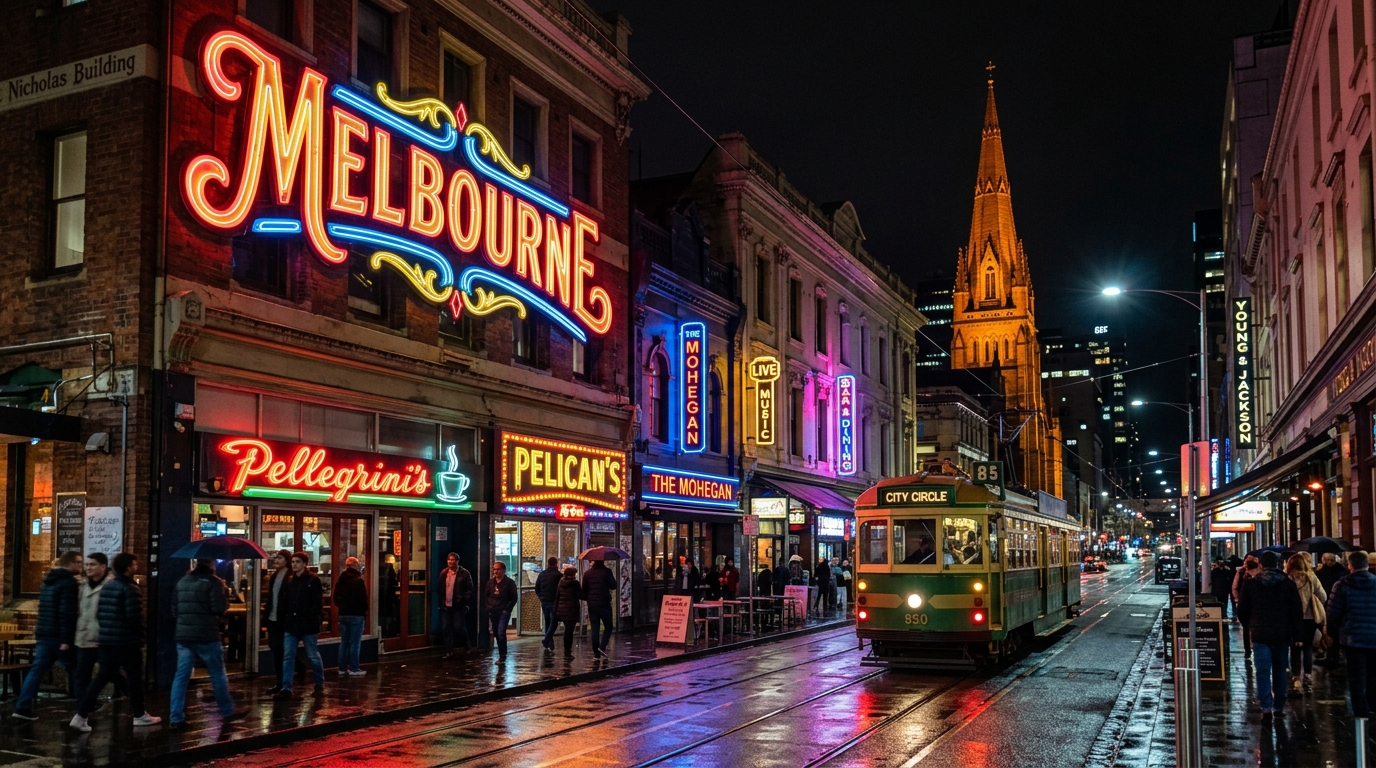
In the fast-paced commercial environment of 2026, the streets of Melbourne—from the iconic laneways of the CBD to the revitalized shopping strips of South Yarra and Fitzroy—are undergoing a visual metamorphosis. For business owners, the challenge of capturing consumer attention has never been more complex. With the rise of “screen fatigue” and increasingly stringent privacy regulations impacting digital ad tracking, the physical storefront has reclaimed its throne as the most critical touchpoint in the customer journey.
The adoption of LED signs in Melbourne is no longer just an aesthetic choice for trendy cafes; it has become a strategic necessity for survival. As of early 2026, the outdoor advertising market in Australia has seen a record growth of 7.4%, largely driven by a shift back to physical, high-impact media. Businesses are moving away from traditional, high-maintenance glass neon and towards advanced LED technology to bridge the gap between the digital and physical worlds.
This shift is driven by three main pillars: technological innovation, environmental responsibility, and a fundamental change in how Melburnians interact with local brands. Whether you are a boutique retailer on Chapel Street or a high-end restaurant in the Docklands, understanding the future of LED signage is the key to future-proofing your business in the Victorian capital.
The Visual Revolution: Why Static Ads Are Fading in 2026 Melbourne
The era of the “set and forget” static poster is officially over. In 2026, Melbourne’s retail landscape is defined by “hyper-personalization” and dynamic content. Modern LED signage technology allows businesses to move beyond a simple glowing nameplate to an interactive branding tool that can change its message based on the time of day, current weather, or even local foot traffic patterns.
Recent studies into consumer behavior in 2026 suggest that Gen Z and Millennial shoppers, who now make up the bulk of Melbourne’s discretionary spending, are increasingly rejecting intrusive digital ads on their phones. Instead, they are gravitating toward high-quality, “real-world” visual experiences. An LED sign serves as a beacon that cuts through the visual noise of a crowded street, offering a sense of permanence and credibility that a temporary social media post simply cannot match.
Furthermore, the “Experience Economy” has hit its peak. Melburnians don’t just want to buy a product; they want to engage with a brand. High-brightness LED displays—now reaching upwards of 8,000 nits—ensure that your brand is visible even under the harsh Australian midday sun, providing a 24/7 advertising loop that works even when your doors are closed.
Key Performance Benefits of LED vs. Static Signage
| Feature | LED Signage (2026 Tech) | Static Printed Signage |
| :— | :— | :— |
| Visibility | High (Vibrant in day and night) | Low (Needs external lighting) |
| Attention Span | Captures eye in < 13ms | Often ignored as “visual noise” |
| Messaging | Dynamic and easily updated | Fixed; requires costly reprinting |
| Brand Perception | Modern, premium, and tech-savvy | Can appear dated or budget |
| Lifespan | Up to 100,000 hours of use | Fades/tears within 1-2 years |
Sustainability as a Standard: Meeting Victoria’s Net-Zero Targets
As of June 2026, the Victorian Government’s legislated emissions targets are no longer a distant goal; they are a pressing reality for every business owner. With a state mandate to reduce emissions by 45-50% by 2030, commercial energy consumption is under the microscope. Traditional glass neon, while nostalgic, is notoriously inefficient, requiring high voltage and frequent maintenance. In contrast, modern LED signs are the cornerstone of the “Green Melbourne” movement.
Switching to LED technology allows businesses to reduce their signage-related electricity consumption by up to 80%. This is particularly important for Melbourne CBD businesses, where the City of Melbourne is actively pushing for carbon-neutral building retrofits. An LED sign not only lowers your monthly overheads but also serves as a public statement of your brand’s commitment to sustainability—a factor that 54% of Australian shoppers now use to decide where to spend their money.
Moreover, the materials used in modern LED neon—primarily flexible silicone and recyclable acrylic—are far more eco-friendly than the lead-based glass and mercury gas found in old-school neon. In a city that prides itself on being one of the most liveable and environmentally conscious in the world, your signage should reflect those values.
Environmental and Cost Advantages of LED Signs
- Energy Efficiency: Uses approximately 150 Watts per hour compared to the much higher draw of traditional neon.
- Reduced Heat Output: LEDs remain cool to the touch, reducing the load on your store’s air conditioning during Melbourne’s summer heatwaves.
- Recyclable Materials: Components like acrylic thermoplastics can be repurposed, aligning with the “Circular Economy” trends of 2026.
- Regulatory Compliance: Meets the latest Victorian energy standards for commercial buildings.
- Lower Insurance Risks: Low-voltage operation (12V or 24V) significantly reduces the risk of electrical fires compared to high-voltage glass neon.
Navigating Melbourne’s Updated 2026 Local Signage Policies
2026 is a landmark year for Melbourne’s urban planning. The City of Melbourne has recently completed a comprehensive review of its Local Signs Policy—the first major update in over 20 years. These new regulations are designed to balance the need for vibrant commercial advertising with the goal of maintaining the city’s architectural heritage. For businesses, this means that while “illuminated signs” are encouraged, they must meet specific standards for luminance, size, and placement.
The new policy specifically targets “animated and electronic signage” near arterial roads and the CBD grid to prevent driver distraction while encouraging “creative lighting” in pedestrian zones. This is where high-quality LED neon signs have a distinct advantage. Because they offer precision control over brightness and color temperature, they are much easier to approve under the 2026 Planning Scheme Amendment than older, flickering lighting systems.
Working with a local Melbourne manufacturer who understands these specific council requirements is vital. Signs must often be “visible from the public realm” but not “intrusive to residential neighbors.” Modern LED controllers allow for automatic dimming during late-night hours, ensuring your business stays compliant while remaining visible to the late-night hospitality crowd.
Checklist for Melbourne Signage Compliance in 2026
1. Planning Permit Status: Check if your sign is in a “Heritage Overlay” or “Capital City Zone.”
2. Luminance Limits: Ensure your LED nits (brightness) stay within the council’s candela-per-square-meter (cd/m²) limits for nighttime.
3. Electronic Referral: Signs within 60 meters of freeways (like the West Gate or CityLink) must be referred to Transport for Victoria.
4. Enclosure Rating: For outdoor signs, ensure an IP65 or higher rating to withstand Victorian weather standards.
5. Smart Dimming: Implement light sensors that adjust brightness based on ambient light levels to save energy and comply with local laws.
Impact on Foot Traffic and the Gen Z “Offline” Movement
In 2026, the relationship between physical signage and digital search has reached a fascinating synergy. Data shows that 54% of Gen Z consumers will search for a product on their smartphone immediately after seeing an “Out of Home” (OOH) ad or a striking physical storefront. This is known as the “Post-Poster Search” phenomenon. In Melbourne’s competitive retail hubs, an LED sign acts as the initial “thumb-stopper” in the physical world.
The revival of suburban shopping strips has also played a major role in the LED boom. As more Melburnians work from home or in hybrid models, suburban hubs like Malvern, Northcote, and Williamstown have seen a surge in foot traffic. Strategic signage in these areas helps local businesses capture the attention of residents who are now exploring their neighborhoods more than ever before.
Interestingly, 2026 has seen a rejection of “intrusive” advertising. Consumers are ignoring banners and pop-ups but responding positively to “experiential” signage. A custom LED sign that doubles as a piece of art creates a destination, encouraging passersby to stop, take a photo, and engage with the brand—effectively turning every customer into a micro-influencer for your business.
Why Physical Signage Drives Higher ROI in 2026
- Offline Trust Factor: 96% of consumers view in-store/storefront ads more positively than online pop-ups.
- Impulse Buying: LED signs at the “point of purchase” are proven to increase impulse buys by up to 20% in the hospitality sector.
- Wayfinding: In complex Melbourne laneways, bright signage is the primary tool for customer navigation.
- Local Dominance: Unlike social media ads that reach a broad audience, an LED sign targets 100% of the people who are actually within walking distance of your shop.
Durability and ROI: Weathering Melbourne’s “Four Seasons in One Day”
The legendary unpredictability of Melbourne’s weather—from scorching 40-degree summer days to freezing, rain-lashed winter nights—is the ultimate stress test for business signage. Traditional neon glass tubes are fragile and susceptible to cracking under extreme temperature fluctuations. In contrast, the LED neon signs of 2026 are built for the Australian climate.
Advanced silicone-based LED neon is shatter-resistant and UV-stable, meaning it won’t turn brittle or yellow under the harsh Victorian sun. With a lifespan typically ranging from 50,000 to 100,000 hours, an LED sign represents a one-time investment that provides nearly a decade of continuous service. When compared to the rising costs of digital ad spend—which in 2026 can cost small businesses anywhere from $2,000 to $15,000 per month—the ROI of a permanent physical sign is unmatched.
Furthermore, maintenance costs for LED signs are virtually non-existent. There are no gases to refill and no fragile glass tubes to replace. For a Melbourne SME, this translates to predictable overheads and the peace of mind that your brand will remain illuminated through every storm and heatwave.
ROI Comparison: Physical LED Signage vs. Digital Marketing (2026)
| Investment Type | Initial Cost | Monthly Ongoing Cost | Expected Lifespan | Local Reach |
| :— | :— | :— | :— | :— |
| Custom LED Sign | $500 – $3,000 | ~$5 (Electricity) | 8 – 12 Years | 100% of Local Traffic |
| Google/Meta Ads | $0 | $2,000 – $5,000 | Instant (Ends when you stop paying) | Subject to Algorithm |
| Local Newspaper/Print | $500 | Variable | 1 Day / 1 Week | Declining |
Designing for the “Instagrammable” Era of Retail and Hospitality
Melbourne is the cultural and coffee capital of Australia, and in 2026, “aesthetics” are a currency of their own. The most successful businesses in the city—whether it’s a hidden bar on Lonsdale Street or a boutique on Gertrude Street—all share a common thread: they are “Instagrammable.” A custom LED sign is no longer just a way to show your name; it is a focal point for social media content.
The design trends for 2026 have shifted toward minimalist, high-concept LED designs. Brushed brass backings, “floating” 3D LED letters, and RGB technology that can shift colors to match the season or a specific event (like the Australian Open or Melbourne Fashion Week) are in high demand. This flexibility allows a business to stay fresh and relevant without needing a complete brand overhaul.
By creating a visually stunning environment, businesses encourage “organic reach.” When a customer takes a selfie in front of your glowing neon logo and tags your location, they are providing free, high-trust advertising to their entire social circle. In Melbourne’s crowded market, this social proof is the most effective way to build a brand.
Current 2026 Design Trends for Melbourne Business Signs
- Minimalist Typography: Clean, sans-serif fonts in white or “warm” LED tones are dominating the CBD.
- Color-Changing RGB: Signs that change from “Melbourne Blue” in winter to “Sunset Orange” in summer.
- Interactive QR Integration: Small, subtle LED-lit QR codes that allow customers to view menus or catalogs after hours.
- Mixed Media: Combining LED neon with natural materials like timber, stone, or brushed metal to suit the “Industrial-Chic” aesthetic of the inner north.
- UV Printing + Neon: Using UV printing for complex logos and overlaying them with LED neon accents for a 3D effect.
Conclusion: Lighting the Path Forward
As we navigate the middle of 2026, it is clear that the future of business advertising in Melbourne is bright—literally. LED signs have evolved from simple décor into a powerhouse of marketing, sustainability, and brand identity. They offer a solution to the modern business’s biggest problems: rising energy costs, digital ad fatigue, and the need for localized impact.
Investing in a high-quality, Australian-made LED sign is more than just a renovation; it is a long-term commitment to your brand’s physical presence in one of the world’s most vibrant cities. By choosing energy-efficient technology that complies with updated Victorian regulations and appeals to the modern consumer’s aesthetic, Melbourne businesses are ensuring they remain visible, relevant, and profitable for years to come.