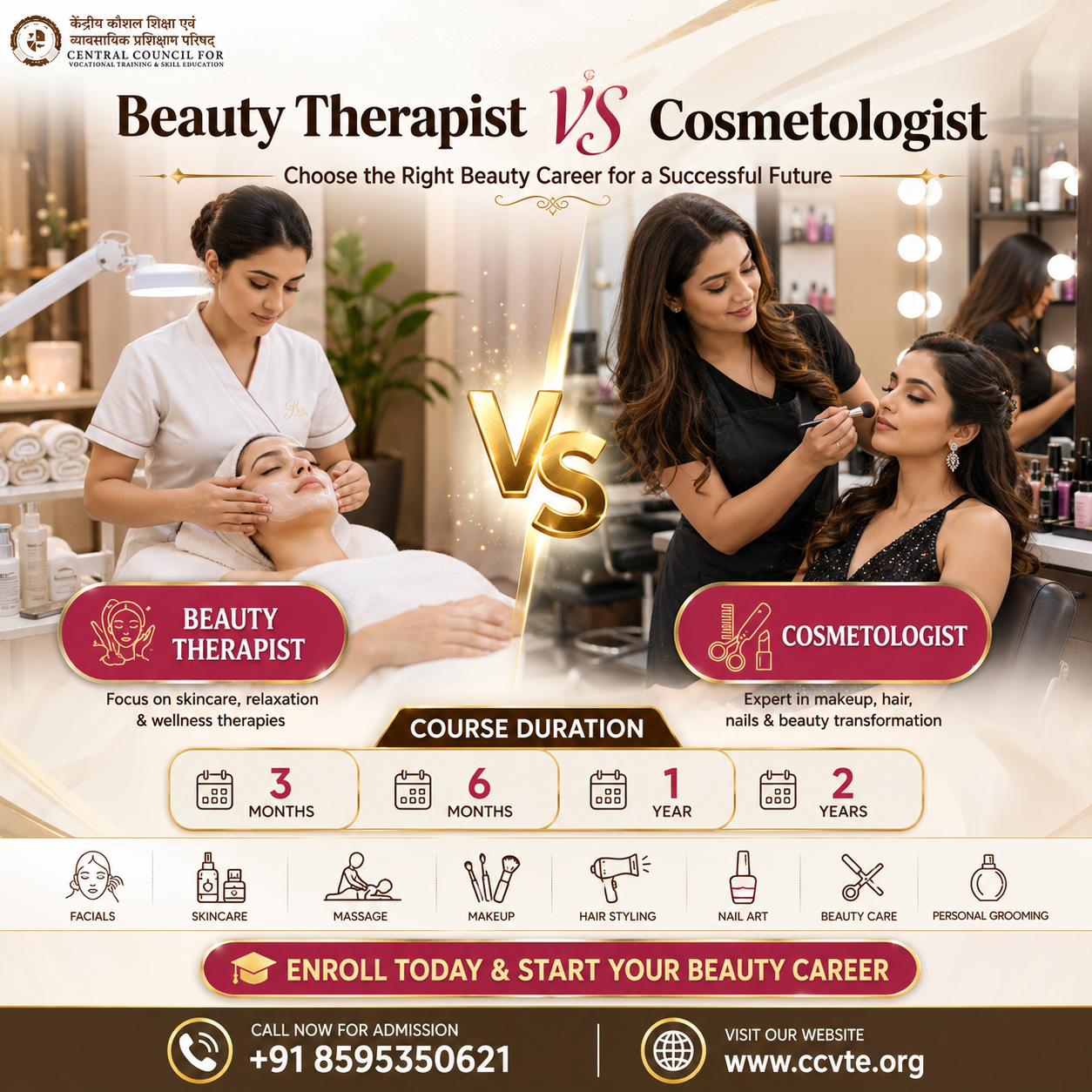
When students compare a Beauty Therapist vs Cosmetologist, the honest answer is this: the “worth it” course depends on your career goals, interests, and preferred specialization. Neither path is universally better. Instead, one may suit you far more than the other based on what excites you day to day.
Many students weigh the Beauty Therapist vs Cosmetologist decision before enrolling in a certification course because both careers overlap in salons and spas. Still, the training focus, skills, and services differ. So, let’s break down each role clearly, compare them side by side, and help you pick a course that truly fits your future in the beauty and wellness industry.
What is a Beauty Therapist?
A Beauty Therapist specializes in skin care, body treatments, and relaxation services. Their main job is to help clients look refreshed and feel calm. Because of this focus, they work closely with skin and spa services rather than hair.
Daily responsibilities usually include:
- Facials, cleanups, and skin analysis
- Body massages and spa therapies
- Waxing, threading, and other hair removal
- Manicures, pedicures, and basic nail care
- Suggesting simple skin care routines to clients
To do this well, a therapist needs patience, steady hands, good hygiene habits, and clear communication. Product knowledge and empathy matter just as much.
You will find these professionals in salons, spas, wellness centers, resorts, and dermatology clinics. Many start as an Assistant Beauty Therapist, then grow into a senior role or a Skin Therapist. A Beauty Therapist Career suits students who enjoy calm, detailed, and client-focused work.
What Does a Cosmetologist Do?
So, what does a Cosmetologist do? A Cosmetologist offers a wider mix of beauty services. Unlike a therapist who leans toward skin and spa work, a cosmetologist handles hair, makeup, skin, and nails together.
Here is what their work usually covers:
- Hair care: cutting, coloring, styling, and treatments as a skilled hair stylist
- Makeup: bridal, party, and event looks as a makeup artist
- Skin treatments: facials and basic skin services as a skin care specialist
- Nail care: manicures, pedicures, and nail art
- Beauty consultations: understanding client needs and suggesting the right services
- Advanced services: newer techniques picked up through ongoing training
Because they serve many needs, cosmetologists often become the most versatile experts in a salon. With experience, many train further to become a Master Cosmetologist.
Beauty Therapist vs Cosmetologist: What’s the Difference?
The core Difference Between Beauty Therapist and Cosmetologist comes down to focus. A therapist specializes in skin, spa, and wellness. A cosmetologist covers a broader mix of services.
Consider these key points:
- Training focus: Beauty Therapy Courses lean toward skin and spa, while Cosmetology Courses cover a wider syllabus.
- Skills: Therapists master spa and skin techniques; cosmetologists build hair, makeup, and styling skills.
- Services offered: Therapists focus on relaxation and skin health; cosmetologists deliver all-round beauty care.
- Work environment: Therapists often work in spas and clinics; cosmetologists thrive in full-service salons.
- Career growth: Both grow steadily, though cosmetology usually offers more service variety.
- Certification: Each path has its own beauty certification course levels, from basic to advanced.
- Industry demand: Both stay in demand as the wellness industry keeps expanding.
In short, choose focused spa work or versatile salon services based on what you enjoy.
Which Beauty Course is Worth It After 10th or 12th?
The right course depends on you, not on which one sounds fancier. Start by matching the program to your interests and strengths.
Ask yourself these questions:
- Career interests: Do you prefer calm skin work or creative variety?
- Creative skills: Do you love styling hair and makeup, or gentle skin treatments?
- Practical learning: Which hands-on skills excite you most?
- Job opportunities: Where do you want to work: a spa, salon, or clinic?
- Higher education goals: Do you plan to specialize later?
- Industry demand: Which services stay busy in your city?
If you enjoy skin and relaxation, Beauty Therapy Courses fit well. If you like variety, Cosmetology Courses suit you better. Either way, a solid Beauty and Wellness Course builds a strong base. Beauty Courses After 12th often include diplomas that open more roles, while short certificates help you enter quickly after Class 10.
read more: beauty therapist vs cosmetologist
How to Become a Cosmetologist
Wondering how to become a Cosmetologist? Follow these clear steps:
- Check eligibility: Complete Class 10 or 12, since most programs accept both levels.
- Choose a course: Pick recognized Cosmetology Courses that cover hair, skin, makeup, and nails.
- Build practical training: Practice often, because beauty work depends on real hands-on skill.
- Earn certification: Finish a beauty certification course, such as a Diploma in Cosmetology.
- Complete an internship: Gain real salon experience to build speed and confidence.
- Create a portfolio: Save photos of your best work to show clients and employers.
- Explore career opportunities: Apply to salons and spas, or start freelance work, then keep learning new trends.
Following this path steadily turns beginners into confident, job-ready professionals.
Popular Career Opportunities
The beauty industry offers many career paths. Once trained, you can pick roles that match your strengths and interests.
Popular beauty industry careers include:
- Beauty Therapist
- Assistant Beauty Therapist
- Skin Therapist
- Hair Stylist
- Makeup Artist
- Salon Professional
- Spa Therapist
- Master Cosmetologist
- Beauty Consultant
As grooming and self-care stay popular, demand for skilled professionals keeps growing. These salon careers and wellness industry jobs let you move from entry-level roles into specialist or leadership positions over time.
Choosing the Right Beauty Certification Course
Picking the right program matters as much as the career itself. Before you enroll, review a few key factors carefully.
Look for these things:
- Curriculum: Does it cover topics like Clinical Cosmetology Courses or a Skin Therapist Course?
- Hands-on training: Will you get enough real practice, not just theory?
- Certification: Is the beauty certification course respected by employers?
- Faculty: Do trainers have real industry experience?
- Industry exposure: Will you learn current tools and trends?
- Career support: Does the institute guide you toward jobs or freelance work?
For strong options, explore a well-structured Beauty and Wellness Course or trusted Cosmetology Courses in India that balance theory with steady practice.
Why Consider CCVTE Beauty Courses?
CCVTE focuses on vocational education built around real, job-oriented skills. Its programs aim to prepare students for practical work in the beauty and wellness field.
CCVTE Beauty Courses stand out because they offer:
- Skill-based learning with a strong practical approach
- Beauty and wellness training aligned with industry needs
- Certification-focused programs designed for real ability
- Vocational courses suited to students after Class 10 and 12
Additionally, CCVTE skill courses aim to keep learning accessible and career-focused. If you want structured, hands-on beauty education, CCVTE is worth exploring closely.
Conclusion
The Beauty Therapist vs Cosmetologist choice really comes down to focus versus variety. A Beauty Therapist thrives in skin, spa, and wellness work, while a Cosmetologist enjoys a wider mix of hair, makeup, skin, and nails.
So, the “best” course depends on your interests, career goals, and preferred specialization. If calm, detailed skin work appeals to you, choose therapy. If creative variety excites you, cosmetology fits better.
Ready to take the next step? Explore CCVTE Beauty Courses, review the curriculum, and learn more before you choose a program. Your beauty career can start today.
FAQs
Which is better: Beauty Therapist or Cosmetologist?
Neither is better overall; it depends on your interests. Choose Beauty Therapy if you enjoy skin and spa work. Pick Cosmetology if you prefer varied services like hair and makeup. Both offer strong career growth and job-oriented training paths.
Can I join a beauty course after 10th?
Yes, many certificate and skill-based beauty courses welcome students right after Class 10. These programs teach core beauty basics quickly and help you enter the field early. Later, you can upgrade to diploma or advanced courses to grow your career further.
What does a cosmetologist do?
A cosmetologist offers all-round beauty services, including hair cutting, coloring, and styling, plus makeup, facials, and nail care. They also consult with clients to suggest the right treatments. Because they handle many services, they become versatile, in-demand professionals in busy salons.
How long does a beauty certification course take?
Most beauty certification courses take six months to two years. Short certificate programs finish faster, while a diploma in cosmetology covers more depth and takes longer. Your timeline depends on the course level, specialization, and the amount of practical training included.
What are the best cosmetology courses in India?
The best Cosmetology Courses in India include certificate programs, a diploma in cosmetology, and specialized options like Clinical Cosmetology Courses. Look for hands-on training, respected certification, and industry exposure. CCVTE Beauty Courses offer practical, skill-focused vocational education worth considering.
Which beauty course offers better career opportunities?
Both paths offer solid opportunities. Cosmetology usually opens more varied roles, from hair stylist to makeup artist, while beauty therapy leads to spa and skin specialist positions. Choose based on your strengths, since demand stays strong across the beauty and wellness industry.