Intestinal mucosal homeostasis requires a tight balance between local immune surveillance, epithelial barrier function, and microbial tolerance. When this balance breaks down—such as in inflammatory bowel disease (IBD), mast cell activation syndrome (MCAS), or ischemia-reperfusion injury—the gut mucosal lining experiences hyperpermeability (“leaky gut”) accompanied by uncontrolled pro-inflammatory cytokine cascades.
Central to this breakdown is the activation of mucosal mast cells and the degradation of epithelial tight junction proteins (such as Claudins, Occludin, and ZO-1). Traditional anti-inflammatory strategies often utilize systemic immunosuppressants, which carry broad off-target risks.
In contrast, targeted peptide research has identified α-melanocyte-stimulating hormone ($\alpha$-MSH) derivatives as potent, localized immunomodulators. Among these, the tripeptide C-terminal fragment KPV ($Lys-Pro-Val$) demonstrates significant anti-inflammatory and cytoprotective properties without inducing the melanogenic (skin-pigmenting) side effects associated with full-length $\alpha$-MSH.
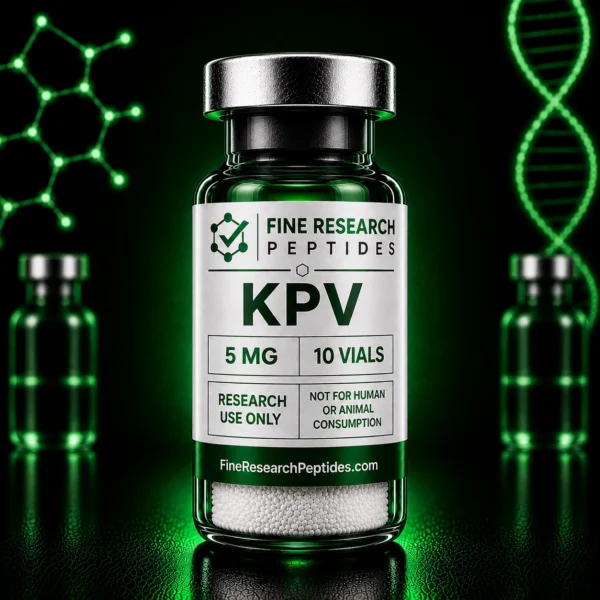
For mucosal immunologists, gastroenterology researchers, and preclinical trial teams, sourcing an analytical-grade kpv peptide for sale provides a validated model for studying targeted NF-$\kappa$B inhibition, mast cell stabilization, and mucosal barrier restoration.
1. Molecular Mechanism: Intracellular Transport and Anti-Inflammatory Signaling
To understand how KPV modulates mucosal immunity, researchers must examine its unique entry mechanism and cellular targets. Unlike large peptide ligands that depend solely on surface receptor binding, the tripeptide KPV utilizes active peptide transporters to work directly within the cytoplasm and nucleus.
The primary mechanisms governing KPV’s anti-inflammatory cascade include:
- PepT1-Mediated Translocation: In inflamed mucosal tissue, the solute carrier transporter PepT1 (SLC15A1) is significantly upregulated on the apical membrane of intestinal epithelial cells and immune cells. KPV acts as a high-affinity substrate for PepT1, enabling rapid intracellular transport.
- Direct Nuclear Interaction with NF-$\kappa$B: Once inside the cytoplasm, KPV translocates to the nucleus and interacts directly with the p65 subunit of nuclear factor kappa B (NF-$\kappa$B). This interaction blocks NF-$\kappa$B from binding to promoter regions on DNA, stopping the transcription of pro-inflammatory cytokines such as TNF-$\alpha$, IL-1$\beta$, IL-6, and IL-8.
- Mast Cell De-granulation Inhibition: KPV stabilizes mucosal mast cells by preventing IgE- and non-IgE-mediated de-granulation. This stops the sudden release of histamine, tryptase, and leukotrienes that otherwise drive vascular permeability and tissue edema.
2. Epithelial Integrity and Antimicrobial Dynamics
Beyond suppressing immune hyper-reactivity, KPV actively supports the restoration of the physical intestinal barrier and exhibits intrinsic antimicrobial properties.
Key physiological dynamics observed in preclinical mucosal models include:
- Tight Junction Re-assembly: By inhibiting TNF-$\alpha$-induced myosin light chain kinase (MLCK) activation, KPV prevents the disassembly of tight junction complexes. Treated epithelial monolayers preserve transepithelial electrical resistance (TEER) and limit macromolecular flux.
- Antimicrobial Action Against Candida albicans: KPV exerts direct, concentration-dependent candidacidal effects. The tripeptide enters fungal cells and disrupts cellular homeostasis, preventing C. albicans germination and mucosal invasion—a common complication in chronic inflammatory gut disorders.
- Accelerated Epithelial Re-epithelialization: In scratch-wound assays using intestinal epithelial cell lines (e.g., Caco-2, HT-29), KPV accelerates cell migration and wound closure, speeding up mucosal healing.
3. Analytical Purity Standards for Tripeptide Sequences
Because KPV is a short tripeptide ($Lys-Pro-Val$, $MW = 341.45\text{ g/mol}$), ensuring high chemical purity during Solid-Phase Peptide Synthesis (SPPS) is critical. While short chains are easier to assemble, residual coupling reagents, unreacted amino acids, and racemized enantiomers can significantly impair biological activity.
| Analytical Parameter | Low-Grade Import Source | Certified USA Research Standard | Impact on Experimental Outcomes |
| RP-HPLC Purity | Highly variable (85–92%) | Guaranteed $\ge$98% per batch | Prevents synthetic impurities from triggering non-specific immune responses |
| ESI-MS Verification | Missing or generic spectra | Confirmed mass ($341.45\text{ g/mol}$) | Validates exact tripeptide sequence identity |
| Counter-Ion Profile | High TFA salt concentrations | Automated acetate/salt exchange | Prevents localized cell culture toxicity and media pH shifts |
| Reconstitution Fluid | Unbuffered sterile water | Pure bacteriostatic water for peptides | Inhibits bacterial contamination and preserves multi-dose stock solutions |
When research facilities prepare to buy peptides online for research use, relying on uncertified international suppliers risks introducing synthetic artifacts into sensitive assays. Securing materials from an established research peptide supplier usa ensures that every lot includes lot-matched Reverse-Phase High-Performance Liquid Chromatography (RP-HPLC) and Electrospray Ionization Mass Spectrometry (ESI-MS) documentation.
4. Solution Reconstitution and Preservation Protocols
Maintaining the biological stability of a reconstituted kpv peptide for sale is essential for multi-day in vitro assays and longitudinal animal models. Lyophilized (freeze-dried) tripeptide cakes remain stable under long-term freezer storage, but once dissolved in aqueous solutions, the peptide backbone becomes susceptible to microbial degradation and hydrolysis.
In multi-dose research protocols, repeatedly entering a vial septum introduces airborne bacterial and fungal spores. To safeguard the sequence against enzymatic cleavage, laboratory standard operating procedures require reconstituting lyophilized vials with high-grade bacteriostatic water for peptides.
Formulated with 0.9% USP-grade benzyl alcohol, fresh bacteriostatic water 10ml or 10ml bacteriostatic water lines prevent bacterial proliferation for up to 28 days under refrigeration ($2^\circ\text{C}$ to $8^\circ\text{C}$). This preservation step ensures that stock solutions maintain volumetric dosing precision and chemical stability across extended research timelines.
5. Eliminating Endotoxin Artifacts in Immunological Assays
A critical challenge in mucosal immunology research is the presence of bacterial endotoxins—lipopolysaccharide (LPS) fragments from Gram-negative bacterial outer walls that readily pass through standard 0.22-micron sterile filters.
Immune cells, macrophages, and intestinal epithelial cultures express high levels of Toll-like receptor 4 (TLR4). Exposure to trace endotoxin contamination triggers strong TLR4 activation, driving NF-$\kappa$B translocation and massive cytokine release. This unwanted inflammatory response directly counteracts the anti-inflammatory action of KPV, skewing experimental readings and rendering data unrepeatable.
Partnering with an authenticated domestic supplier ensures that research lots undergo rigorous Limulus Amebocyte Lysate (LAL) testing to confirm endotoxin levels remain safely below 0.25 EU/mg. In addition, temperature-monitored cold-chain shipping networks protect heat-sensitive peptides from thermal degradation during transit, delivering fully intact, functional reagents directly to the laboratory bench.
Conclusion: Advancing Mucosal Biology Through High-Purity Reagents
As preclinical research continues to map the cellular signaling networks governing mast cell activation, mucosal permeability, and intestinal inflammation, short-chain immunomodulatory peptides like KPV serve as vital tools for scientific discovery. By targeting intracellular NF-$\kappa$B signaling, stabilizing mast cells, and supporting epithelial barrier integrity, KPV offers a promising model for targeted anti-inflammatory research.
Sourcing inventory through an established research peptide supplier usa eliminates sequence variations, endotoxin contamination, and batch-to-batch inconsistency. Paired with proper reconstitution using bacteriostatic water for reconstituting peptides, research teams can build robust experimental frameworks, generate publication-grade datasets, and advance the scientific understanding of mucosal immunity.