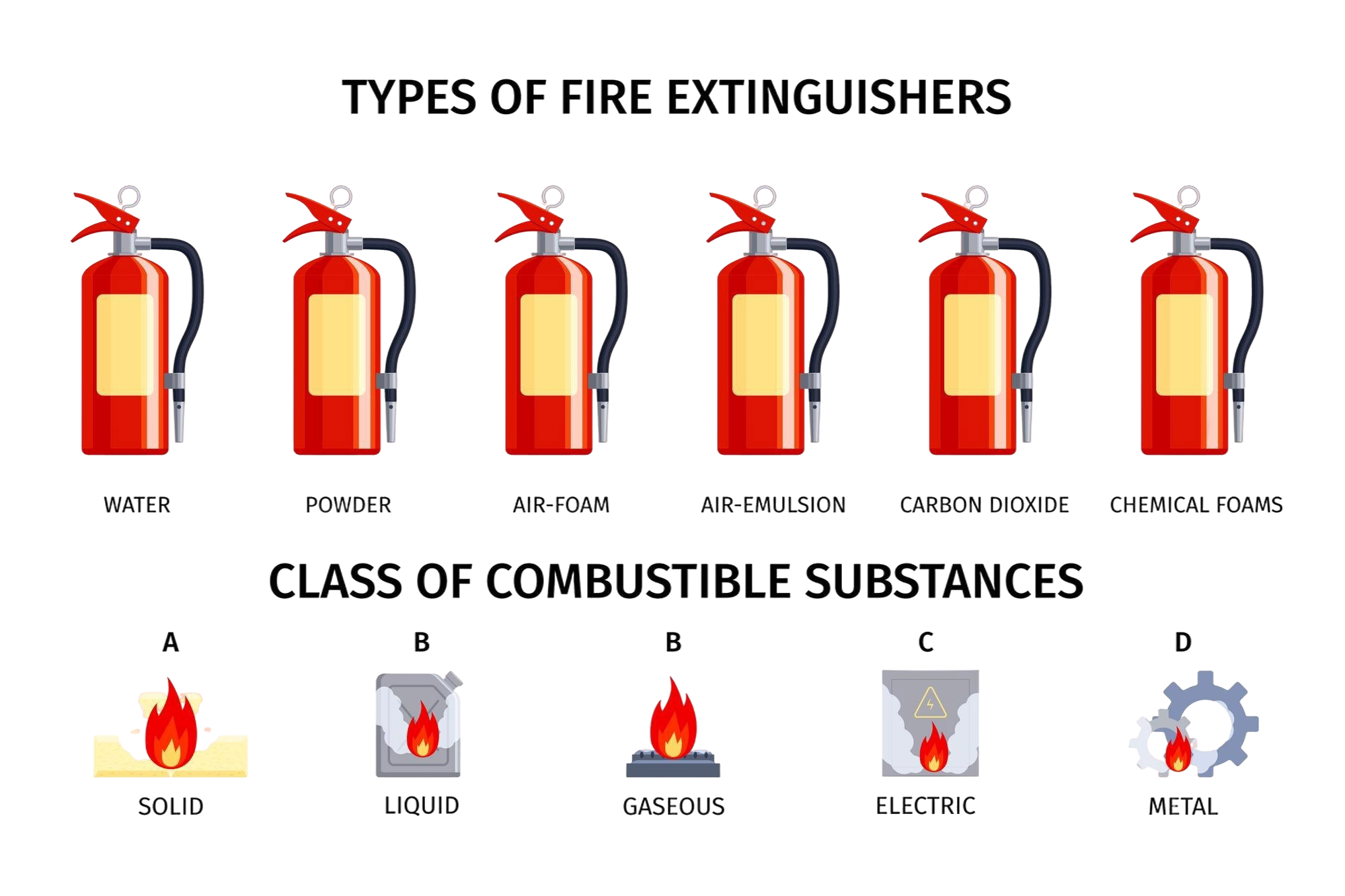
Fire can spread within minutes and cause serious damage to people, property, and business operations. While installing advanced fire protection systems is important, having the right fire extinguisher available can often stop a small fire before it becomes a major emergency.
Many people own a fire extinguisher but are unsure which type they have or when to use it. Using the wrong extinguisher can make certain fires worse and increase the risk of injury. Understanding the different types of fire extinguishers and their uses is an essential part of workplace and home fire safety.
This guide explains the main types of fire extinguishers, the fire classes they are designed to tackle, and how to choose the right one for different environments.
Why Choosing the Right Fire Extinguisher Matters
Not every fire burns the same way. Fires involving wood, paper, cooking oil, electrical equipment, or flammable liquids all require different extinguishing methods. A fire extinguisher contains a specific extinguishing agent that works effectively only on certain classes of fire.
Using the wrong extinguisher can:
- Spread burning liquids
- Increase electrical hazards
- Cause explosions in certain situations
- Delay emergency response
- Put lives at greater risk
Knowing which extinguisher to use helps reduce damage and improves overall fire safety.
Understanding Fire Classes
Before selecting a fire extinguisher, it is important to understand fire classifications.
Class A Fires
These involve ordinary combustible materials such as:
- Wood
- Paper
- Cardboard
- Cloth
- Rubber
- Plastic
These are among the most common fires in homes, schools, and offices.
Class B Fires
These involve flammable liquids, including:
- Petrol
- Diesel
- Paint
- Alcohol
- Solvents
- Kerosene
They are common in industrial facilities, workshops, and fuel storage areas.
Class C Fires
These involve flammable gases such as:
- LPG
- Propane
- Butane
- Natural gas
These fires require careful handling due to explosion risks.
Class D Fires
These involve combustible metals, including:
- Magnesium
- Sodium
- Titanium
- Lithium
These are generally found in specialized manufacturing and industrial environments.
Electrical Fires
Electrical fires involve energized electrical equipment, including:
- Electrical panels
- Servers
- Switchboards
- Computers
- Machinery
Special extinguishing agents are required because water conducts electricity.
Class F (Kitchen Fires)
These fires involve cooking oils and fats used in:
- Restaurants
- Hotels
- Commercial kitchens
- Food processing units
They burn at extremely high temperatures and require dedicated extinguishing solutions.
1. Water Fire Extinguishers
Water extinguishers are one of the most widely used types of fire extinguishers.
Best For
- Class A fires
Suitable Materials
- Paper
- Wood
- Textiles
- Cardboard
Water cools the burning material below its ignition temperature, stopping combustion.
Advantages
- Affordable
- Easy to operate
- Environmentally friendly
- Highly effective for ordinary combustibles
Do Not Use On
- Electrical fires
- Flammable liquids
- Cooking oil fires
- Gas fires
2. Foam Fire Extinguishers
Foam extinguishers contain water mixed with foam-forming agents.
The foam creates a blanket over burning liquids, cutting off the oxygen supply while also cooling the fuel.
Best For
- Class A fires
- Class B fires
Common Applications
- Offices
- Warehouses
- Fuel storage areas
- Workshops
- Commercial buildings
Advantages
- Effective on both solids and liquids
- Prevents reignition
- Quick suppression
Avoid Using On
- Electrical equipment unless specifically rated
- Cooking oil fires
3. Dry Powder Fire Extinguishers
Dry powder extinguishers are highly versatile and commonly used in industrial facilities.
They interrupt the chemical reaction that keeps the fire burning.
Best For
- Class A
- Class B
- Class C
- Electrical fires
Some specialist powders are designed for Class D metal fires.
Common Locations
- Factories
- Chemical plants
- Petrol stations
- Construction sites
- Manufacturing facilities
Benefits
- Multi-purpose
- Fast suppression
- Effective outdoors
- Suitable for gas fires
Limitations
Dry powder leaves residue that can damage sensitive electronics and reduce visibility during discharge.
4. Carbon Dioxide (CO₂) Fire Extinguishers
CO₂ extinguishers are widely used where electrical equipment is present.
Instead of cooling the fire significantly, carbon dioxide removes oxygen around the flames.
Best For
- Electrical fires
- Class B fires
Ideal Locations
- Server rooms
- Data centers
- Offices
- Laboratories
- Electrical control rooms
Advantages
- No residue
- Safe for electronics
- Quick operation
- Easy cleanup
Not Suitable For
- Deep-seated Class A fires because reignition is possible.
5. Wet Chemical Fire Extinguishers
Wet chemical extinguishers are specially designed for commercial kitchens.
They react with hot cooking oils to create a cooling soap-like layer over the surface.
Best For
- Class F fires
- Some Class A fires
Common Locations
- Restaurants
- Hotels
- Food courts
- Catering kitchens
- Industrial kitchens
Advantages
- Specifically designed for cooking oil fires
- Prevents reignition
- Provides rapid cooling
Never use a standard water extinguisher on burning cooking oil, as it can cause dangerous fireballs.
6. Clean Agent Fire Extinguishers
Clean agent extinguishers use gaseous extinguishing agents that leave no residue.
These are commonly installed where sensitive equipment requires protection.
Suitable For
- Electrical equipment
- Data centers
- Museums
- Medical laboratories
- Telecommunications rooms
Benefits
- No cleanup
- Safe for expensive equipment
- Non-conductive
- Environmentally improved modern formulations
7. Metal Fire Extinguishers (Class D)
Metal fires behave differently from ordinary fires.
Water or foam can react violently with burning metals.
Special dry powders are used to smother these fires safely.
Common Industries
- Aerospace
- Metal manufacturing
- Defence
- Battery manufacturing
- Research laboratories
How to Choose the Right Fire Extinguisher
Selecting the correct extinguisher depends on several factors.
Consider:
- Type of fire risk
- Building occupancy
- Industry requirements
- Fire safety regulations
- Equipment present
- Ease of accessibility
- Employee training
For example:
| Location | Recommended Fire Extinguisher |
|---|---|
| Home | Water, Foam, Dry Powder |
| Office | Water, CO₂ |
| Commercial Kitchen | Wet Chemical |
| Warehouse | Foam, Dry Powder |
| Data Center | CO₂, Clean Agent |
| Chemical Plant | Dry Powder |
| Fuel Station | Foam, Dry Powder |
| Manufacturing Plant | Dry Powder, Foam |
Fire Extinguisher Maintenance Tips
A fire extinguisher is only useful if it works during an emergency.
Regular maintenance should include:
- Monthly visual inspections
- Checking pressure gauges
- Inspecting safety seals
- Looking for corrosion or damage
- Ensuring easy accessibility
- Annual servicing by qualified professionals
- Timely refilling or replacement after use
Routine maintenance helps ensure compliance with fire safety standards and improves emergency preparedness.
Common Mistakes to Avoid
Many fire incidents become worse because of avoidable mistakes.
Avoid:
- Using water on electrical fires
- Using water on burning oil
- Blocking access to extinguishers
- Ignoring expired extinguishers
- Skipping maintenance inspections
- Failing to train employees
- Choosing extinguishers based only on cost
Employee awareness and regular fire drills are equally important.
Fire Safety Training Is Just as Important
Even the best fire extinguisher is ineffective if people do not know how to use it. Organizations should provide practical fire safety training so employees understand different fire classes, extinguisher operation, evacuation procedures, and emergency reporting. Regular mock drills help build confidence and improve response times during real emergencies.
Businesses can also stay informed about the latest fire protection technologies, equipment, and industry best practices by attending leading industry events such as the Fire & Security India Expo. These events bring together manufacturers, safety experts, consultants, and facility managers to showcase innovative fire safety solutions. Exploring exhibitions like the Fire Safety Expo India also provides valuable insights into emerging trends, regulatory updates, and smart fire protection systems that can enhance workplace safety.
Conclusion
Understanding the different types of fire extinguishers and their uses is one of the simplest yet most effective ways to improve fire safety. Every environment has unique fire risks, and selecting the appropriate extinguisher can significantly reduce injuries, property damage, and business disruption.
Whether it is a home, office, factory, warehouse, hospital, or commercial kitchen, matching the extinguisher to the correct fire class is essential. Along with installing the right equipment, regular maintenance, employee training, and adherence to fire safety regulations ensure that organizations are prepared to respond effectively when emergencies occur.
As fire safety technologies continue to evolve, staying informed through industry resources and professional events such as the Fire & Security India Expo can help businesses adopt the latest solutions and strengthen their overall fire protection strategy.