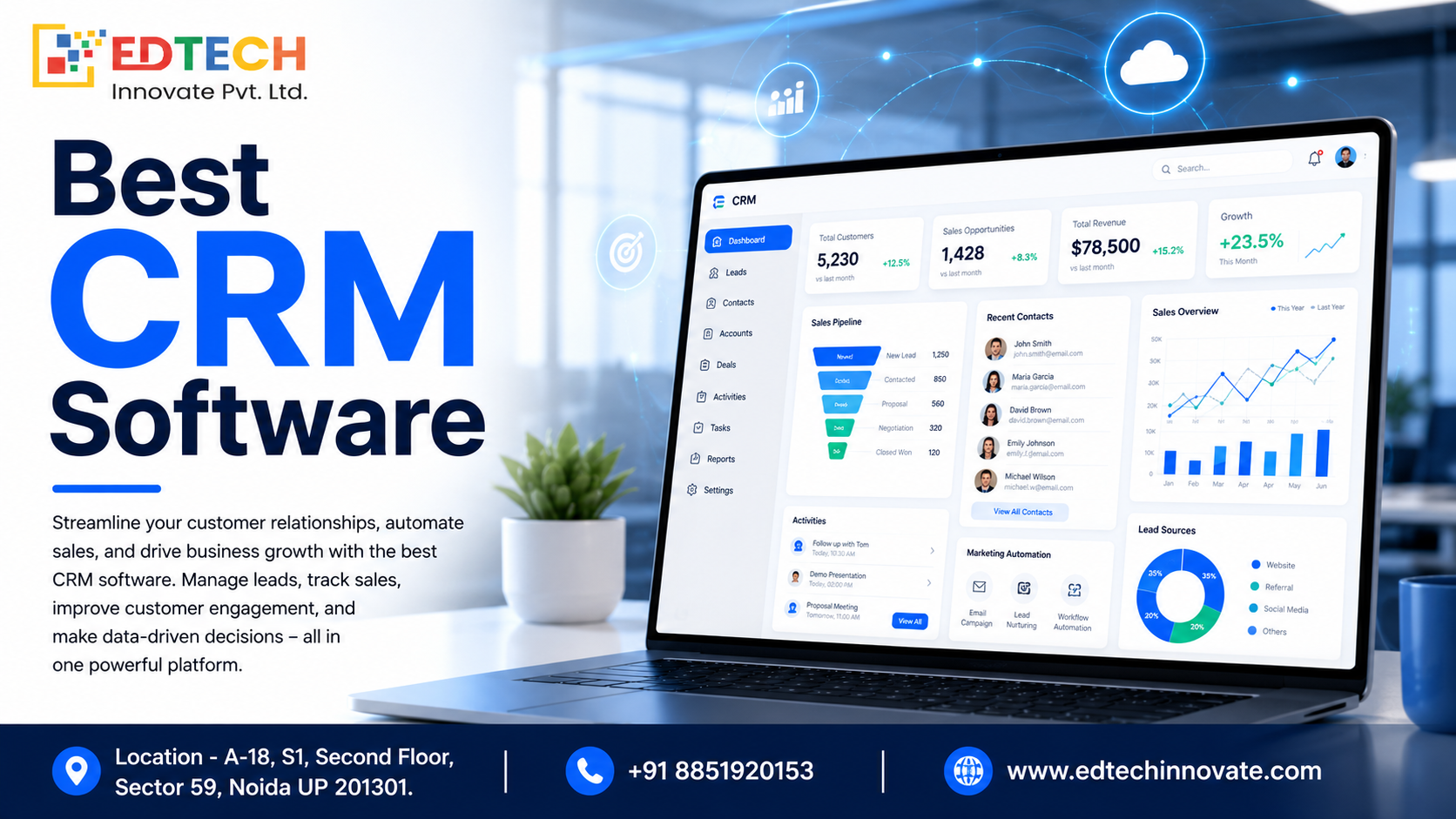
In today’s competitive business landscape, building strong customer relationships is no longer optional—it’s essential. This is where What Is CRM Software becomes an important question for businesses of every size. Whether you’re a startup, a growing company, or an established enterprise, Customer Relationship Management Software helps you manage customer interactions, streamline sales processes, and improve customer satisfaction.
If you’ve ever wondered what is CRM software and why is it important, this guide will explain everything you need to know, including its features, benefits, and how it helps businesses grow.
What Is CRM Software?
What Is CRM Software? CRM (Customer Relationship Management) Software is a digital solution that helps businesses organize, track, and manage interactions with current and potential customers. Instead of storing customer information across spreadsheets, emails, and notebooks, a CRM system centralizes all customer data in one secure platform.
The primary purpose of Customer Relationship Management Software is to improve customer experiences while making sales, marketing, and customer support more efficient.
A modern CRM platform allows businesses to:
- Store customer contact information
- Track communication history
- Manage sales pipelines
- Automate repetitive tasks
- Monitor customer interactions
- Improve collaboration across teams
Regardless of industry, businesses can use CRM software to build stronger customer relationships and increase long-term profitability.
Why Is CRM Software Important for Business?
Understanding what is CRM software and why is it important starts with recognizing the challenges businesses face every day. Without a centralized system, customer information becomes scattered, follow-ups are missed, and sales opportunities can easily slip away.
The Importance of CRM Software lies in its ability to organize customer information and create a better experience throughout the customer journey.
Businesses using a CRM system can:
- Respond to customer inquiries faster
- Improve sales performance
- Deliver personalized experiences
- Strengthen customer retention
- Increase team productivity
- Make informed business decisions using data
As customer expectations continue to rise, CRM software helps businesses remain competitive by keeping customer relationships at the center of every interaction.
What Is CRM Software Used For?
Many business owners ask, what is CRM software used for? The answer goes far beyond storing customer details.
A modern CRM platform supports multiple business functions, including:
Customer Data Management
A CRM keeps all customer information in one centralized location, including:
- Contact details
- Purchase history
- Emails
- Phone conversations
- Support requests
- Meeting notes
Effective customer data management ensures that every department has access to accurate and up-to-date information.
Sales Pipeline Management
Sales teams use Sales CRM software to monitor leads throughout the sales journey.
Key capabilities include:
- Lead tracking
- Opportunity management
- Deal forecasting
- Follow-up reminders
- Sales reporting
This improves conversion rates and helps sales representatives focus on high-value opportunities.
Marketing Automation
CRM tools help marketing teams:
- Segment audiences
- Run targeted campaigns
- Track campaign performance
- Measure customer engagement
- Generate qualified leads
Marketing becomes more personalized and data-driven.
Customer Support
Support teams can quickly access customer history to resolve issues faster.
Benefits include:
- Faster response times
- Better issue tracking
- Improved customer satisfaction
- Consistent service experiences
Top CRM Software Benefits
One of the biggest reasons businesses invest in CRM solutions is the wide range of CRM Software Benefits they provide.
1. Better Customer Relationships
A CRM helps businesses understand customer preferences and communication history, making every interaction more personalized.
2. Increased Sales
By tracking leads and automating follow-ups, businesses close more deals with less manual effort.
3. Improved Productivity
Routine administrative tasks like scheduling emails, updating records, and assigning leads can be automated, allowing employees to focus on strategic work.
4. Centralized Information
Instead of searching through multiple systems, all customer information is stored in one secure CRM system.
5. Better Decision-Making
CRM platforms provide dashboards and reports that help managers understand customer behavior, sales trends, and business performance.
6. Stronger Team Collaboration
Sales, marketing, and customer support teams can work together using shared customer information, reducing communication gaps.
7. Higher Customer Retention
Satisfied customers are more likely to return. CRM software helps businesses nurture long-term relationships through consistent communication and timely follow-ups.
Cloud CRM Software vs Traditional CRM
Today’s businesses increasingly prefer Cloud CRM software because of its flexibility and accessibility.
| Feature | Cloud CRM Software | Traditional CRM |
| Installation | Web-based | On-premise |
| Accessibility | Anywhere with internet | Office network |
| Updates | Automatic | Manual |
| Scalability | Easy | Limited |
| Maintenance | Provider manages | Business manages |
Cloud-based CRM solutions allow teams to work remotely while keeping customer data secure and synchronized across devices.
CRM for Small Business
Many small business owners believe CRM software is only for large corporations. In reality, CRM for small business is one of the fastest-growing software categories.
Small businesses benefit by:
- Organizing customer information
- Tracking leads effectively
- Managing sales activities
- Improving customer service
- Automating repetitive tasks
- Growing without hiring large teams
As businesses expand, CRM systems scale alongside them, making them a smart long-term investment.
Key Features of Modern CRM Tools
Most businesses choose CRM solutions based on their features. Popular CRM tools typically include:
- Contact management
- Lead management
- Sales automation
- Email integration
- Calendar and task management
- Workflow automation
- Customer segmentation
- Reporting and analytics
- Mobile access
- Third-party integrations
These features simplify business relationship management while improving operational efficiency.
Read More – CRM for Small Business: Benefits, Top Tools, and How to Choose
How to Choose the Right CRM Platform
Before selecting a CRM solution, consider the following factors:
- Ease of use
- Scalability
- Cloud accessibility
- Customization options
- Automation capabilities
- Integration with existing software
- Data security
- Reporting features
- Customer support
- Pricing
Choosing the right CRM platform ensures long-term value and better adoption across your organization.
The Future of Customer Relationship Management Software
CRM technology continues to evolve with artificial intelligence, predictive analytics, workflow automation, and deeper customer insights.
Modern Customer Relationship Management Software now helps businesses:
- Predict customer behavior
- Automate customer engagement
- Personalize communication
- Improve forecasting
- Enhance customer experiences
- Increase operational efficiency
Organizations that invest in advanced CRM platforms today are better prepared for future growth.
Conclusion
Understanding What Is CRM Software is the first step toward building stronger customer relationships and improving business performance. From managing customer information and automating sales processes to enhancing customer support and increasing productivity, CRM software has become an essential tool for businesses of all sizes.
If your organization is looking to streamline operations, improve customer engagement, and drive sustainable growth, investing in a reliable CRM solution is a smart decision. ControlHippo offers a powerful and user-friendly CRM platform designed to help businesses manage customer relationships efficiently, boost team productivity, and achieve long-term success.
Frequently Asked Questions (FAQs)
1. What is CRM software?
CRM software, or Customer Relationship Management Software, is a platform that helps businesses manage customer interactions, organize customer data, automate workflows, and improve sales and customer service.
2. What is CRM software used for?
CRM software is used for customer data management, lead tracking, sales automation, marketing campaigns, customer support, reporting, and business relationship management.
3. Why is CRM software important for business?
The Importance of CRM Software lies in helping businesses improve customer relationships, increase sales, enhance productivity, and make better decisions through centralized customer information.
4. What are the main CRM software benefits?
Some of the top CRM Software Benefits include improved customer service, better sales management, centralized customer data, workflow automation, enhanced collaboration, and increased customer retention.
5. Is Cloud CRM software suitable for small businesses?
Yes. Cloud CRM software is ideal for small businesses because it is affordable, scalable, accessible from anywhere, and requires minimal IT maintenance.
6. How does a CRM system improve customer data management?
A CRM system stores all customer information in one place, making it easier for teams to access accurate records, track interactions, personalize communication, and provide better customer service.