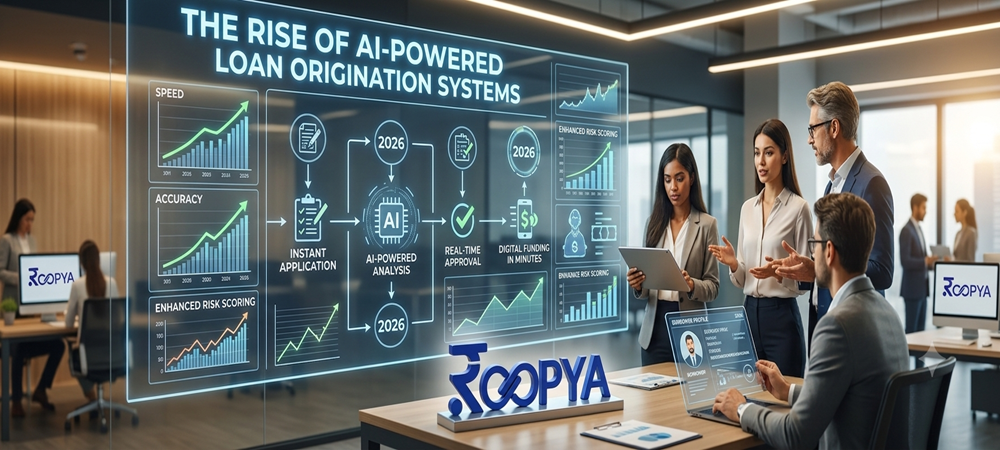
The lending industry is experiencing one of the most significant transformations in its history. Traditional lending models that relied heavily on manual paperwork, lengthy verification processes, and human-intensive underwriting are rapidly being replaced by intelligent, AI-powered lending ecosystems.
In 2026, Artificial Intelligence (AI) is no longer an experimental technology in financial services. It has become a core component of modern lending operations. From customer onboarding and document verification to credit assessment and loan disbursement, AI-powered Loan Origination Systems (LOS) are helping banks, NBFCs, fintech companies, microfinance institutions, and digital lenders automate and optimize every stage of the lending journey.
As customer expectations continue to evolve, lenders are under immense pressure to provide instant approvals, personalized loan products, improved borrower experiences, and stronger risk management. AI-driven loan origination software is enabling financial institutions to meet these demands while reducing operational costs and maintaining regulatory compliance.
According to industry trends, AI-enabled lending platforms are increasingly being adopted because they can automate document processing, improve credit risk assessment, accelerate approvals, and create scalable digital lending infrastructures. Modern platforms also leverage machine learning, OCR, predictive analytics, and business rule engines to make lending decisions faster and more accurately.
What Is an AI-Powered Loan Origination System?
A Loan Origination System (LOS) is a software platform that manages the complete lifecycle of a loan application from lead generation and borrower onboarding to underwriting, approval, and disbursement.
An AI-powered LOS enhances traditional loan origination by incorporating artificial intelligence, machine learning algorithms, predictive analytics, and intelligent automation.
Modern AI loan origination platforms can:
• Automate borrower onboarding
• Verify customer identity instantly
• Process documents using OCR technology
• Analyze creditworthiness using multiple data sources
• Detect fraud patterns automatically
• Generate risk scores in real time
• Recommend lending decisions
• Improve compliance monitoring
• Streamline underwriting workflows
• Accelerate loan approvals
Platforms such as Roopya’s Loan Origination Software leverage AI-driven analytics, automated decision-making, and intelligent workflows to help lenders process applications significantly faster while improving accuracy.
Why Traditional Lending Models Are Struggling
Before AI adoption, most lending institutions relied on:
- Manual document collection
- Physical verification processes
- Human underwriting reviews
- Spreadsheet-based risk assessments
- Multiple disconnected systems
- Lengthy approval cycles
These processes often created challenges such as:
Slow Processing Times
Loan approvals could take several days or even weeks.
High Operational Costs
Manual processing required large teams and increased administrative expenses.
Inconsistent Decisions
Human judgment sometimes resulted in inconsistent underwriting outcomes.
Fraud Risks
Traditional verification methods struggled to identify sophisticated fraud patterns.
Poor Customer Experience
Borrowers expected instant digital services but often faced delays and paperwork.
AI-powered lending platforms address these challenges through intelligent automation and real-time decision-making.
The Rise of AI in Lending
The financial industry has embraced AI because it enables lenders to process large volumes of applications while maintaining high levels of accuracy.
Modern AI-powered loan origination systems use:
- Machine Learning
- Natural Language Processing (NLP)
- Optical Character Recognition (OCR)
- Predictive Analytics
- Automated Decision Engines
- Behavioral Analytics
- Fraud Detection Algorithms
Together, these technologies create a seamless lending experience for both lenders and borrowers.
Key Ways AI-Powered LOS Is Transforming Lending in 2026
1. Intelligent Borrower Onboarding
Customer onboarding is often the first interaction borrowers have with lenders.
AI-powered onboarding systems simplify this process by enabling:
- Digital applications
- Aadhaar verification
- PAN validation
- Video KYC
- Face matching
- Identity verification
- Automated form filling
Borrowers can complete applications from mobile devices within minutes.
This significantly reduces drop-offs and improves customer satisfaction.
2. Automated Document Processing
Traditional lending teams spend countless hours reviewing:
- Bank statements
- Salary slips
- Tax returns
- GST documents
- Identity proofs
- Address proofs
AI-powered OCR systems automatically extract and validate data from documents.
Roopya’s AI-enabled document processing can analyze financial documents with extremely high accuracy while dramatically reducing processing time.
Benefits include:
- Faster document verification
- Reduced human errors
- Improved operational efficiency
- Lower processing costs
3. AI-Based Credit Risk Assessment
Traditional credit scoring relies primarily on bureau data.
AI underwriting models evaluate:
- Banking behavior
- Income trends
- Cash flow patterns
- Transaction history
- GST records
- Alternative data sources
- Behavioral indicators
This creates a more complete borrower profile and enables lenders to make smarter credit decisions.
4. Real-Time Loan Decisioning
Customers no longer want to wait days for approvals.
AI-driven Business Rule Engines (BRE) can evaluate applications instantly based on predefined lending criteria.
Benefits include:
- Instant eligibility checks
- Automated approvals
- Reduced turnaround time
- Higher operational efficiency
Many lenders can now approve loans within minutes rather than days.
5. Advanced Fraud Detection
Fraud remains one of the biggest challenges in digital lending.
AI systems continuously analyze patterns to detect:
- Synthetic identities
- Fake documents
- Identity theft
- Duplicate applications
- Suspicious transactions
Machine learning models become smarter over time, improving fraud prevention accuracy.
6. Personalized Lending Experiences
AI helps lenders offer customized loan products by analyzing:
- Borrower behavior
- Financial history
- Spending patterns
- Repayment capacity
This allows institutions to create:
- Personalized loan offers
- Dynamic interest rates
- Customized repayment schedules
Personalization increases conversion rates and customer loyalty.
7. Predictive Analytics for Portfolio Management
Modern lenders are moving from reactive to predictive lending.
AI systems can forecast:
- Default probabilities
- Delinquency risks
- Portfolio performance
- Customer lifetime value
This enables proactive risk management and strategic decision-making.
8. Regulatory Compliance Automation
Compliance requirements continue to increase across the financial sector.
AI-powered LOS platforms automate:
- KYC validation
- AML screening
- Audit trails
- Risk reporting
- Regulatory monitoring
This reduces compliance risks and improves governance.
9. Cloud-Based Scalability
Modern lending operations require scalable infrastructure.
Cloud-native AI loan origination platforms provide:
- Real-time access
- Enhanced security
- Business continuity
- Faster deployments
- Multi-location support
Roopya’s cloud-based architecture allows lenders to scale rapidly without investing heavily in infrastructure.
10. Enhanced Borrower Experience
Customer experience is now a major competitive advantage.
AI-powered platforms provide:
- Faster approvals
- Real-time application tracking
- Automated notifications
- Digital document uploads
- Seamless communication
Borrowers enjoy a frictionless digital lending journey.
AI Trends Shaping Lending in 2026
Several trends are accelerating AI adoption across the lending industry.
Hyper-Personalized Lending
AI enables lenders to offer highly customized products tailored to individual borrower profiles.
Embedded Finance
Loan origination capabilities are increasingly integrated directly into digital platforms and marketplaces.
Explainable AI
Regulators demand transparency in automated lending decisions.
Modern AI systems provide explainable recommendations to improve trust and compliance.
AI Agents for Lending Operations
AI agents are emerging as digital assistants that handle document collection, verification, borrower communication, and workflow management. Industry discussions increasingly highlight AI agents as a major productivity driver while emphasizing the need for human oversight in complex lending decisions.
Alternative Credit Scoring
AI helps lenders serve underserved borrowers by evaluating alternative data beyond traditional credit scores.
Challenges of AI in Lending
Despite its advantages, AI implementation requires careful planning.
Common challenges include:
Data Privacy
Lenders must protect sensitive customer information.
Regulatory Compliance
AI models must align with regulatory standards.
Model Transparency
Decisions should be explainable and auditable.
Human Oversight
AI should assist decision-making rather than completely replace experienced underwriters.
Industry professionals frequently note that AI performs best when combined with human expertise, especially for complex lending scenarios.
Why NBFCs and Fintechs Are Investing in AI-Powered LOS
The benefits are substantial:
- Up to 50% lower operational costs
- Faster loan approvals
- Reduced manual workloads
- Improved portfolio quality
- Better borrower experiences
- Stronger compliance management
- Increased scalability
These advantages make AI-powered loan origination software a strategic investment rather than just a technology upgrade.
Why Choose Roopya for AI-Powered Loan Origination?
Roopya provides an end-to-end digital lending ecosystem designed specifically for modern lenders.
Key capabilities include:
- Digital borrower onboarding
- AI-driven underwriting
- Automated KYC
- Multi-bureau integrations
- Business Rule Engine (BRE)
- Document OCR
- Workflow automation
- Risk analytics
- Loan disbursement management
- Cloud-native architecture
Whether you are an NBFC, bank, fintech startup, cooperative bank, or microfinance institution, Roopya enables you to digitize and scale your lending operations efficiently.
The future of lending is intelligent, automated, and data-driven. AI-powered loan origination systems are fundamentally transforming how financial institutions acquire customers, assess risk, process applications, and manage lending operations.
In 2026, lenders that embrace AI gain a significant competitive advantage through faster approvals, lower costs, enhanced compliance, and superior borrower experiences.
As lending becomes increasingly digital, platforms like Roopya are helping financial institutions build scalable, secure, and intelligent lending ecosystems capable of meeting the demands of the next generation of borrowers.
Organizations that invest in AI-powered loan origination today will be best positioned to lead the future of lending tomorrow.
FAQ Section
Q1. What is an AI-powered Loan Origination System?
An AI-powered Loan Origination System (LOS) is software that automates borrower onboarding, document verification, underwriting, credit assessment, approval workflows, and loan disbursement using artificial intelligence.
Q2. How does AI improve loan approval speed?
AI automates document processing, credit scoring, risk assessment, and decision-making, reducing approval times from days to minutes.
Q3. Can AI reduce lending risks?
Yes. AI analyzes multiple data points, detects fraud patterns, predicts defaults, and improves underwriting accuracy.
Q4. Is AI-powered lending suitable for NBFCs?
Absolutely. NBFCs benefit from faster processing, lower operational costs, improved compliance, and scalable lending operations.
Q5. How does Roopya use AI in lending?
Roopya uses AI for underwriting, OCR-based document processing, business rule automation, risk analysis, fraud detection, and borrower onboarding.
Q6. What are the major benefits of AI-powered loan origination software?
Key benefits include faster approvals, reduced costs, enhanced customer experience, fraud prevention, and improved portfolio quality.