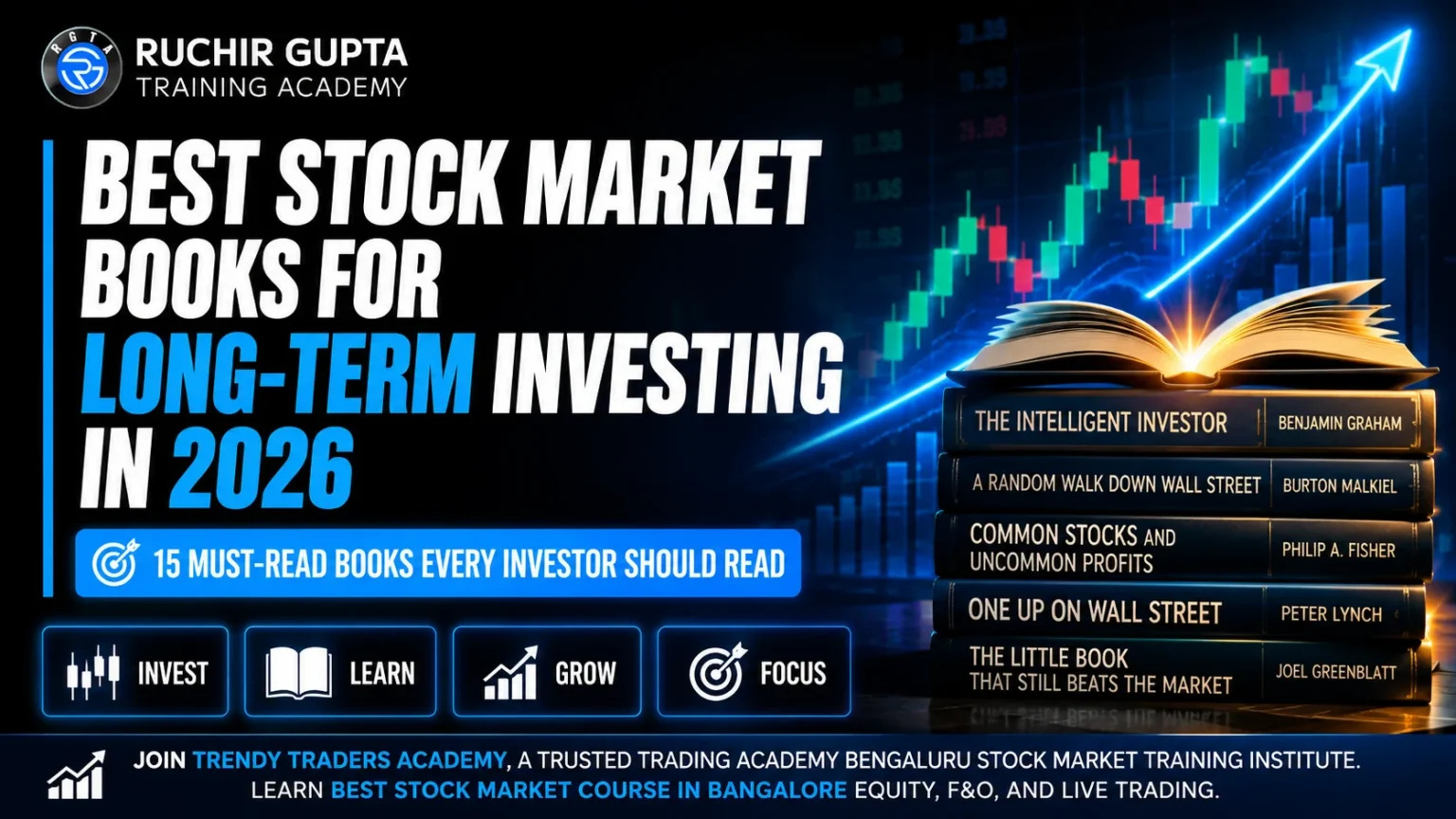
Best Stock Market Books: The Ultimate Guide for Beginners and Smart Investors | Ruchir Gupta
Introduction
Have you ever wondered why some investors seem to make smart decisions while others struggle to earn consistent returns? The answer often lies in knowledge. Just like a pilot studies before flying an aircraft, successful investors spend time learning before investing their money.
One of the easiest and most affordable ways to build that knowledge is by reading the best stock market books. These books teach timeless principles, practical strategies, and the mindset needed to navigate the ups and downs of the market. Whether you’re buying your first stock or refining your investing skills, the right book can become your personal mentor.
However, reading alone isn’t always enough. Combining great books with stock market courses online gives you both theory and practical learning. Books explain the concepts, while structured courses show you how to apply them in real market situations.
In this guide, you’ll discover the best stock market books for beginners, learn what each book offers, and understand how to combine reading with online learning to accelerate your investment journey.
Discover the best stock market books, best stock market books for beginners, and how stock market courses online can help you become a confident investor.
Why Reading Stock Market Books Matters
The stock market can feel overwhelming at first. With thousands of companies, constant news updates, and changing prices, it’s easy to become confused. That’s exactly why experienced investors recommend starting with books.
Books provide structured knowledge instead of random tips from social media. They teach you how markets work, why prices move, and how successful investors make decisions based on research rather than emotions.
Think of investing like building a house. A strong foundation keeps the house standing during storms. Similarly, reading the best stock market books builds a solid foundation that helps you stay confident even when markets become volatile.
Some major benefits of reading stock market books include:
- Understanding investing fundamentals
- Learning risk management
- Improving financial discipline
- Avoiding common beginner mistakes
- Developing long-term wealth-building habits
- Learning from legendary investors
Instead of chasing quick profits, books help you develop patience—one of the most valuable qualities in investing.
How to Choose the Right Stock Market Book
Not every investing book is suitable for beginners. Some focus on advanced trading strategies, while others explain basic investing concepts in simple language.
Before choosing a book, ask yourself a few questions:
- Are you interested in long-term investing or short-term trading?
- Do you prefer simple explanations or detailed financial analysis?
- Are you looking for mindset improvement or practical strategies?
The best stock market books for beginners usually have these qualities:
Easy-to-Understand Language
A beginner-friendly book explains complex concepts using everyday examples rather than technical terms.
Timeless Investing Principles
Markets evolve, but the fundamentals of disciplined investing remain the same. Choose books that focus on principles instead of short-lived trends.
Practical Examples
Real-life case studies make learning more engaging and easier to remember.
Credible Authors
Books written by experienced investors, successful fund managers, or respected financial educators are generally more reliable than books promising overnight riches.
Best Stock Market Books for Beginners
If you’re just starting your investment journey, these books are excellent choices.
1. The Intelligent Investor
Often called the “Bible of Investing,” this classic introduces value investing and teaches readers how to think like disciplined investors.
You’ll learn:
- Margin of safety
- Long-term investing
- Emotional discipline
- Risk management
- Portfolio allocation
Although some chapters are detailed, the lessons remain relevant decades after publication.
2. Rich Dad Poor Dad
While not entirely focused on the stock market, this bestseller changes the way readers think about money.
It teaches:
- Financial literacy
- Building assets
- Passive income
- Wealth creation
- Smart investing habits
For many beginners, this book becomes the first step toward understanding investments.
3. One Up On Wall Street
Written by legendary investor Peter Lynch, this book encourages ordinary people to identify investment opportunities in their everyday lives.
Some valuable lessons include:
- Spotting growing businesses
- Understanding company fundamentals
- Investing in familiar brands
- Avoiding unnecessary complexity
Peter Lynch proves that successful investing doesn’t always require sophisticated financial models.
The Intelligent Investor: Why It Remains a Classic
Among all the best stock market books, The Intelligent Investor continues to be the gold standard for long-term investing.
One of its biggest lessons is that the stock market behaves like a business partner with changing moods. Some days it offers attractive prices, while on other days it becomes irrational. Successful investors don’t react emotionally—they evaluate opportunities logically.
The book also explains why preserving capital is just as important as earning returns. Instead of chasing every trending stock, investors should focus on quality companies, reasonable valuations, and patience.
Even experienced professionals revisit this book throughout their careers because its principles never become outdated.
In today’s fast-moving financial world, where social media often promotes quick profits, the timeless lessons from The Intelligent Investor remind readers that sustainable wealth is built through discipline, knowledge, and consistency—not speculation.
Rich Dad Poor Dad: Building the Right Money Mindset
While Rich Dad Poor Dad is not exclusively about investing in stocks, it is one of the best stock market books for beginners because it transforms the way people think about money. Robert Kiyosaki emphasizes the importance of making your money work for you instead of working only for money.
One of the key lessons from the book is understanding the difference between assets and liabilities. Assets generate income or appreciate in value, while liabilities take money out of your pocket. Stocks of fundamentally strong companies can become valuable assets when chosen wisely.
Some valuable takeaways include:
- Develop financial literacy before investing.
- Focus on long-term wealth creation.
- Learn the importance of cash flow.
- Build multiple income sources.
- Invest consistently instead of relying on a single paycheck.
For beginners, this book lays the foundation for a healthy financial mindset before diving deeper into the stock market.
Common Stocks and Uncommon Profits
Written by Philip Fisher, this classic book teaches investors how to identify high-quality companies with long-term growth potential.
Instead of looking only at financial statements, Fisher encourages readers to study a company’s management, innovation, competitive advantage, and future growth prospects.
What You’ll Learn
- How to evaluate business quality.
- Importance of strong leadership.
- Long-term investment strategies.
- Identifying companies with sustainable growth.
- Looking beyond short-term price movements.
Many successful investors, including Warren Buffett, have praised Fisher’s investment philosophy because it combines qualitative analysis with long-term thinking.
Market Wizards
If you’ve ever wondered how professional traders think, Market Wizards offers fascinating insights.
The book is a collection of interviews with some of the world’s most successful traders. Although each trader follows a different strategy, they all share common qualities.
Common Lessons from Market Wizards
- Protect your capital first.
- Never stop learning.
- Follow a trading plan.
- Accept losses as part of investing.
- Manage emotions effectively.
One interesting observation is that no two successful traders use exactly the same strategy. This teaches readers that success comes from discipline and consistency rather than copying someone else’s trades.
Technical Analysis Explained
Many beginners eventually become curious about reading stock charts. Books focused on technical analysis help investors understand price trends, market psychology, and trading opportunities.
A good technical analysis book explains:
- Support and resistance.
- Trend lines.
- Candlestick patterns.
- Moving averages.
- RSI and MACD indicators.
- Volume analysis.
- Risk management techniques.
While technical analysis is useful, it works best when combined with fundamental analysis. Strong investing decisions often come from understanding both a company’s business and its price behavior.
Why Stock Market Courses Online Complement Books
Reading books gives you knowledge, but applying that knowledge in real markets requires practice. That’s where stock market courses online become valuable.
Books explain concepts such as value investing, portfolio diversification, and risk management. Online courses, on the other hand, demonstrate how to use these concepts with live market examples.
Think of it like learning to drive. You can read the driving manual from cover to cover, but you won’t become a confident driver until you get behind the wheel. Similarly, books provide the theory, while courses provide the practical experience.
Benefits of Stock Market Courses Online
- Structured learning paths.
- Live market demonstrations.
- Expert guidance.
- Practical assignments.
- Recorded sessions for revision.
- Updated content based on current market conditions.
- Community discussions with fellow learners.
For beginners, combining the best stock market books with stock market courses online creates a balanced learning experience.
How to Build a Reading Habit for Investing Success
Many people buy investing books but never finish them. Building a reading habit can dramatically improve your understanding over time.
Here are a few simple tips:
Set a Daily Reading Goal
Reading just 20–30 minutes every day can help you finish several books each year.
Take Notes
Write down important lessons, investing principles, and interesting examples. Reviewing your notes later reinforces your learning.
Apply What You Learn
Open a watchlist, analyze companies, or create a paper portfolio based on the concepts you read. Practical application helps convert knowledge into skill.
Revisit Great Books
The best stock market books for beginners often reveal new insights each time you read them. As your experience grows, you’ll understand concepts more deeply.
Common Mistakes Beginners Make
Every investor makes mistakes, but many can be avoided with proper education.
Following Stock Tips Blindly
Many beginners buy stocks simply because someone recommended them. Always do your own research before investing.
Ignoring Risk Management
Protecting your capital is more important than chasing high returns. Never invest money you cannot afford to lose.
Trying to Get Rich Quickly
Successful investing is usually a marathon, not a sprint. Patience and consistency often outperform impulsive decisions.
Skipping Fundamental Learning
Jumping into trading without understanding market basics is like sailing without a compass. Learning from the best stock market books and quality stock market courses online helps you avoid costly mistakes.
Investing Emotionally
Fear and greed often lead to poor decisions. Successful investors rely on research and discipline rather than emotions.
How to Choose the Right Stock Market Course
Once you’ve built a strong foundation through reading, selecting the right online course can accelerate your progress.
Look for courses that offer:
- Beginner-friendly lessons.
- Practical trading examples.
- Coverage of both technical and fundamental analysis.
- Risk management techniques.
- Portfolio-building strategies.
- Lifetime access to learning materials.
- Experienced mentors.
- Regular updates based on market trends.
A well-designed course should help you apply what you’ve learned from books rather than simply repeating theoretical concepts.
Building Your Stock Market Learning Plan
Learning about the stock market is not something you accomplish in a weekend. It is a continuous journey that rewards patience, curiosity, and discipline. The good news is that you don’t need to become an expert overnight. By following a structured learning plan, you can steadily build the confidence and skills needed to become a successful investor.
Step 1: Start with Beginner-Friendly Books
Begin your journey with the best stock market books for beginners. These books introduce essential concepts such as investing, risk management, diversification, and financial planning in simple language.
Recommended starting order:
- Rich Dad Poor Dad – Develop the right financial mindset.
- The Intelligent Investor – Learn value investing and long-term strategies.
- One Up On Wall Street – Discover how to identify promising companies.
- Common Stocks and Uncommon Profits – Understand business quality and growth investing.
- Market Wizards – Learn from the experiences of successful traders.
Each book offers a unique perspective, helping you build a well-rounded understanding of the stock market.
Step 2: Practice Before Investing Real Money
Knowledge becomes valuable only when you apply it. Before investing your hard-earned savings, practice analyzing companies, reading charts, and tracking market movements.
You can:
- Create a watchlist of quality companies.
- Monitor stock prices daily.
- Compare company financial statements.
- Follow quarterly earnings reports.
- Maintain an investment journal to record your observations.
This practice builds confidence without exposing you to unnecessary financial risk.
Step 3: Enroll in Stock Market Courses Online
Once you’ve completed a few books, consider joining stock market courses online to strengthen your practical skills.
A structured course can help you:
- Understand live market analysis.
- Learn technical and fundamental analysis.
- Practice portfolio construction.
- Improve risk management.
- Develop disciplined trading and investing habits.
Books provide timeless knowledge, while online courses demonstrate how to apply that knowledge in today’s markets.
Step 4: Stay Updated
The stock market evolves constantly. Continue learning by reading business news, company reports, and market analysis. Revisiting your favorite investing books every few years can also reveal new insights as your experience grows.
Why Reading Never Stops for Successful Investors
One common trait among successful investors is their commitment to lifelong learning. Even experienced professionals continue reading books, annual reports, and research papers to improve their decision-making.
The stock market rewards informed investors. Every new concept you learn helps you make better investment choices, avoid costly mistakes, and remain calm during periods of market volatility.
Think of investing as planting a tree. The more care and patience you invest today, the stronger and more fruitful it becomes in the years ahead. Likewise, every book you read and every lesson you apply contributes to your long-term financial growth.
Final Thoughts
There is no single book that guarantees investment success. Instead, success comes from combining knowledge, discipline, patience, and continuous learning.
The best stock market books provide timeless lessons from legendary investors who have successfully navigated different market cycles. They teach you how to evaluate businesses, manage risk, control emotions, and make informed decisions.
For beginners, starting with the best stock market books for beginners creates a solid foundation before investing real money. As your understanding grows, complement your reading with stock market courses online that provide practical experience, live market examples, and expert guidance.
Remember, investing is not about finding shortcuts or chasing quick profits. It is about making informed decisions consistently over time. The knowledge you gain today can benefit you throughout your investing journey and help you achieve your long-term financial goals.
Whether your dream is financial independence, retirement planning, or creating wealth for your family, the journey begins with education. Pick up a great book, keep learning, stay patient, and let every page move you one step closer to becoming a smarter investor.
Conclusion
The stock market offers tremendous opportunities, but success depends on preparation rather than luck. Reading the best stock market books equips you with proven investing principles, while the best stock market books for beginners simplify complex concepts into practical lessons that anyone can understand.
To maximize your learning, combine these books with stock market courses online, where you can gain hands-on experience, interact with experts, and practice real-world investing techniques.
Remember that every successful investor started as a beginner. By committing to continuous learning, disciplined investing, and thoughtful decision-making, you can build the confidence needed to navigate the markets successfully and work toward achieving your financial goals.
Frequently Asked Questions (FAQs)
1. Which are the best stock market books for beginners?
Some of the best beginner-friendly books include The Intelligent Investor, Rich Dad Poor Dad, One Up On Wall Street, Common Stocks and Uncommon Profits, and Market Wizards. These books cover investing fundamentals, financial mindset, and practical strategies.
2. Can I learn investing only by reading books?
Books provide an excellent foundation, but combining them with practical experience and stock market courses online helps you understand how to apply investing concepts in real market conditions.
3. How many stock market books should a beginner read?
Reading five to ten high-quality books is usually enough to build a strong foundation. Focus on understanding and applying the concepts rather than reading a large number of books quickly.
4. Are stock market courses online worth it?
Yes. Reputable online courses offer structured lessons, live market examples, expert guidance, and practical exercises that complement the knowledge gained from books.
5. What is the best way to become successful in the stock market?
Success comes from continuous learning, disciplined investing, proper risk management, patience, and consistent practice. Reading the best stock market books, enrolling in quality stock market courses online, and gaining real-world experience are some of the most effective ways to improve your investing skills.