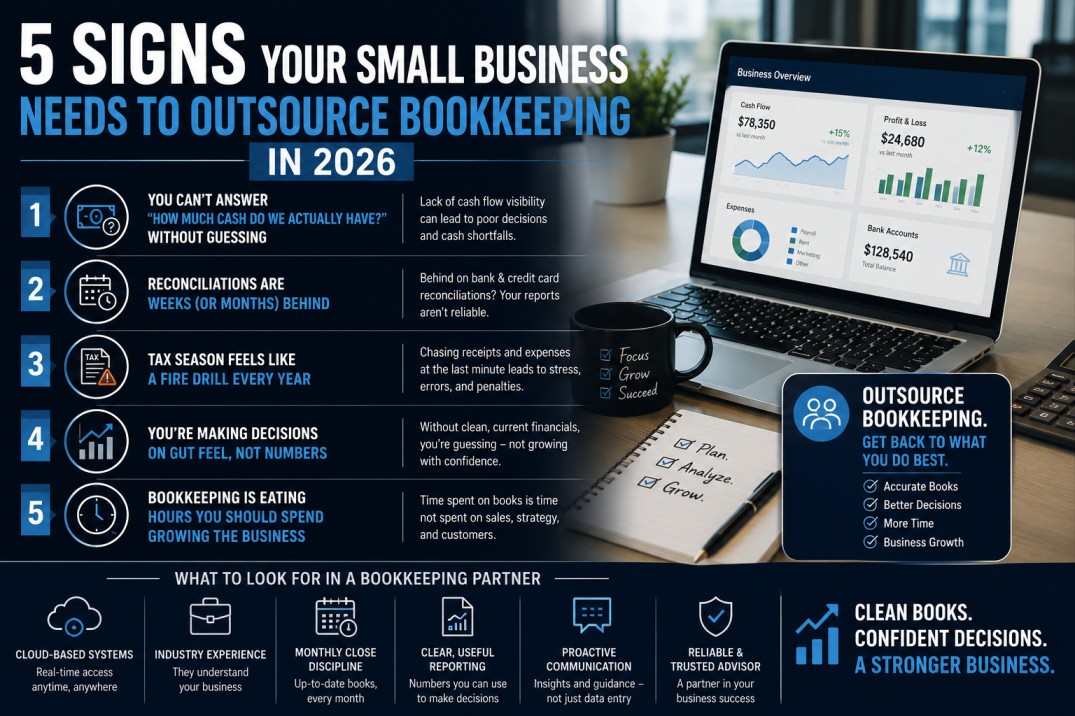
Managing business finances requires accuracy, consistency, and efficiency. As organizations grow, manually entering transactions into accounting records can become increasingly time-consuming and prone to errors. This is why QuickBooks Online Bank Feeds have become a valuable feature for businesses seeking a more streamlined approach to bookkeeping. By automatically importing financial transactions into accounting records, companies can reduce administrative effort, improve financial visibility, and maintain better control over their daily operations. Understanding how this feature works can help organizations create more efficient financial processes and make better-informed business decisions.
Why Is Automated Transaction Importing Important?
Bookkeeping forms the foundation of every successful business. Accurate financial records help organizations track expenses, monitor revenue, and evaluate overall performance.
Manual transaction entry can create several challenges:
Increased Administrative Work
Entering transactions individually requires significant time and effort, particularly for businesses with high transaction volumes.
Greater Risk of Errors
Human mistakes can occur during data entry, leading to inaccurate financial records and reporting issues.
Delayed Financial Insights
When bookkeeping falls behind, decision-makers may not have access to current financial information.
Reduced Operational Efficiency
Administrative tasks can consume resources that could otherwise be devoted to growth-oriented activities.
Automated transaction importing helps address these challenges by simplifying the bookkeeping process.
What Are Bank Feeds and How Do They Function?
Bank feeds create a direct connection between a financial institution and an accounting platform. Once connected, transaction information can be imported automatically into accounting records.
Rather than entering each transaction manually, users can review imported activity, verify details, and assign appropriate categories. This process reduces repetitive tasks while improving bookkeeping efficiency.
Businesses benefit from having more current financial information available without the need for extensive manual effort.
What Advantages Do Automated Financial Connections Offer?
Organizations that adopt automated transaction management often experience a variety of operational benefits.
Improved Accuracy
Automated imports reduce the likelihood of typing mistakes and missing transactions.
Time Savings
Less time spent entering data allows employees to focus on analysis, planning, and customer service.
Better Organization
Imported transactions can help maintain more structured and consistent financial records.
Enhanced Financial Visibility
Current transaction data provides a clearer understanding of account balances and spending activity.
Faster Decision-Making
Business leaders can make informed decisions when accurate financial information is readily available.
How Does Transaction Matching Improve Efficiency?
Transaction matching is one of the most beneficial aspects of automated bookkeeping.
When imported transactions correspond with existing accounting records, the system can suggest matches for review.
Customer Receipts
Incoming payments can often be connected to previously recorded sales transactions.
Vendor Payments
Expenses may be associated with existing vendor records or purchase transactions.
Internal Transfers
Movements between financial accounts can be categorized more accurately.
Recurring Activity
Frequently occurring transactions can often follow established categorization patterns.
This functionality helps maintain consistency while reducing manual review requirements.
Why Is Accurate Categorization Important?
Financial reports rely on properly categorized transactions. Incorrect classifications can affect budgeting, forecasting, and financial analysis.
Better Expense Tracking
Businesses gain a clearer understanding of spending patterns when expenses are categorized correctly.
Improved Reporting Accuracy
Accurate categorization contributes to reliable financial statements and management reports.
Easier Tax Preparation
Organized financial records help simplify tax-related activities and documentation requirements.
Stronger Business Insights
Well-structured financial information supports more effective strategic planning.
What Challenges Can Businesses Encounter?
Although automated banking connections provide many benefits, occasional challenges may arise.
Duplicate Transactions
Records entered manually before import may create duplication concerns.
Categorization Errors
Some imported transactions may require adjustment to ensure accurate classification.
Connection Interruptions
Temporary communication issues can delay transaction updates.
Unfamiliar Transactions
New vendors or unusual financial activity may require additional review.
Most of these situations can be addressed through routine monitoring and effective bookkeeping practices.
How Can Businesses Maximize the Benefits of Automation?
Organizations can improve results by combining automation with consistent oversight.
Review Transactions Regularly
Routine reviews help identify discrepancies and maintain data accuracy.
Establish Clear Categories
Well-defined account structures support reliable reporting and analysis.
Perform Consistent Reconciliations
Comparing accounting records with financial statements helps confirm accuracy.
Monitor Cash Flow Trends
Transaction data provides valuable insights into revenue and spending behavior.
Protect Financial Information
Strong security procedures help safeguard sensitive accounting data.
Why Does Financial Visibility Matter?
Business success often depends on understanding financial performance. Timely access to accurate information enables organizations to respond more effectively to opportunities and challenges.
Better Budget Management
Current financial data supports realistic planning and resource allocation.
Stronger Cash Flow Awareness
Organizations can identify trends and potential concerns more quickly.
Improved Strategic Planning
Reliable information helps leaders evaluate growth opportunities and operational priorities.
Increased Confidence
Decision-makers can act with greater certainty when financial records are accurate and current.
How Is Financial Technology Shaping the Future of Bookkeeping?
Accounting technology continues to evolve with automation, artificial intelligence, and enhanced connectivity. Businesses increasingly seek solutions that reduce manual effort while improving financial accuracy.
Automated transaction management represents an important step toward modern bookkeeping practices. Organizations that embrace these capabilities often experience improved efficiency, stronger reporting, and better financial visibility.
As technology continues to advance, automation will remain a key component of effective financial management strategies.
Read Also – Reinstall QuickBooks Desktop
Conclusion
For businesses seeking greater efficiency and accuracy in their bookkeeping processes, QuickBooks Online Bank Feeds offer a practical solution for automating transaction management. By reducing manual data entry, improving financial visibility, and streamlining reconciliation activities, organizations can strengthen their accounting operations and focus more effectively on growth objectives. Businesses interested in additional accounting and bookkeeping insights can visit BizBooksAdvice. For further guidance regarding financial management solutions, call +1-866-408-0444 and explore options designed to simplify bookkeeping and improve operational efficiency.