Running a small business means wearing a dozen hats – sales, operations, hiring, customer service – and somewhere near the bottom of that list sits bookkeeping. It’s easy to let it slide for “just one more week.” But messy books don’t stay small; they compound. Missed reconciliations turn into missed tax deadlines, and missed tax deadlines turn into penalties and sleepless nights.
If you’ve ever opened your accounting software and felt a small wave of dread, this post is for you. Below are five signs that it’s time to hand bookkeeping off to professionals, and what to look for in a provider before you make the switch.
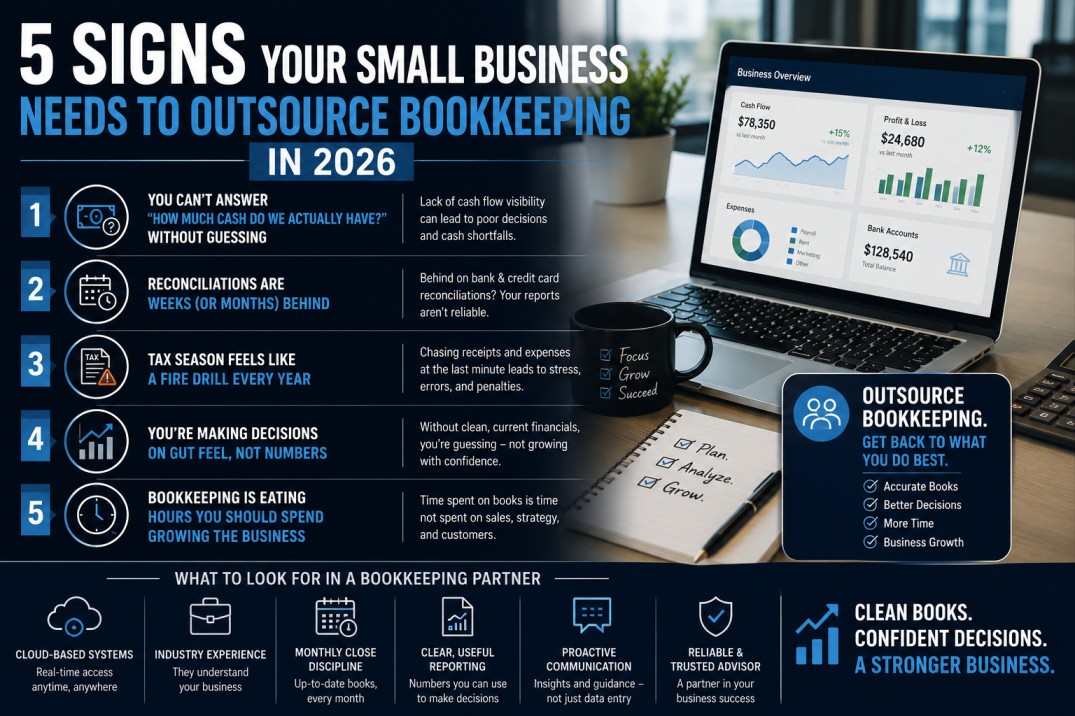
1. You Can’t Answer “How Much Cash Do We Actually Have?” Without Guessing
The problem
When your books are current, this is a five-second question. When they’re not, it becomes a scavenger hunt through bank statements, invoices, and half-remembered payments.
Why it matters
Cash flow visibility isn’t a nice-to-have – it’s the difference between making a confident hiring decision and getting blindsided by a shortfall two weeks later.
2. Reconciliations Are Weeks (or Months) Behind
The problem
Bank and credit card reconciliations are the foundation of accurate books. If yours haven’t been touched since last quarter, every report built on top of them – P&L, balance sheet, tax filings – is unreliable.
Why it matters
Falling behind here almost always signals a bigger issue: nobody owns the process consistently. That’s a structural problem, not a one-time cleanup.
3. Tax Season Feels Like a Fire Drill Every Year
The problem
If your accountant is chasing you for receipts and categorized expenses every March (or with HST filings every quarter), your bookkeeping system is reactive instead of proactive.
Why it matters
A well-run monthly bookkeeping process should make tax time boring – a formality, not a scramble. If it’s still stressful every year, the underlying workflow needs to change.
4. You’re Making Decisions on Gut Feel, Not Numbers
The problem
Should you hire another employee? Can you afford new equipment? Is that new service line actually profitable? Without clean, current financials, these decisions are guesses dressed up as strategy.
Why it matters
Growing businesses need dashboards and reports they can trust in real time – not a spreadsheet reconstructed once a year for the accountant.
5. Bookkeeping Is Eating Hours You Should Spend Growing the Business
The problem
Even if you’re technically capable of doing your own books, every hour spent reconciling transactions is an hour not spent on sales, clients, or strategy.
Why it matters
Outsourcing isn’t just about accuracy – it’s about opportunity cost. For most owners, the value of that reclaimed time far outweighs the cost of professional support.
What to Look for When Choosing a Bookkeeping Partner
Not all bookkeeping services are equal. When evaluating providers, look for:
- Cloud-based systems (like QuickBooks Online) for real-time access to your numbers
- Industry experience relevant to your business type
- Monthly close discipline, not just year-end cleanup
- Clear reporting you can actually use for decisions
- Proactive communication, not just data entry
Firms offering some of the Best Online Bookkeeping Services combine all of the above with advisory-level guidance, so you’re not just getting clean books – you’re getting a partner who helps you understand what those books are telling you.
Final Thoughts
If two or more of the signs above sound familiar, it’s worth having a conversation about outsourcing. Clean books aren’t just about compliance – they’re the foundation for every confident decision you make as your business grows.