Falling behind on your tax obligations is more common than many Australians realize. Whether it happens because of personal circumstances, financial stress, business pressures, or simply losing track of deadlines, having several years of unlodged returns can feel overwhelming.
The good news is that it’s never too late to get back on track. In most cases, the Australian Taxation Office (ATO) encourages taxpayers to voluntarily catch up rather than ignore the problem. Taking action early can help reduce penalties and provide peace of mind.
If you’ve been putting off an Overdue Tax Return, here’s what you need to know about catching up on multiple years of unlodged tax returns.
Why People Fall Behind on Tax Returns
There are many reasons why taxpayers miss one or more years of lodgements. Common causes include:
- Illness or family emergencies.
- Starting a new business.
- Moving overseas.
- Financial difficulties.
- Losing important documents.
- Assuming no income means no tax return is required.
Sometimes, people miss one year and then avoid lodging because the process seems too complicated. Unfortunately, the longer it goes on, the harder it can feel to address.
Can You Lodge Multiple Years at Once?
Yes. – The ATO allows individuals and businesses to lodge several years of outstanding returns together. Whether you’ve missed two years or ten years, it’s usually possible to catch up.
Each year is assessed separately, and the information required may vary depending on your circumstances during that period. The most important step is to start.
What Happens If You Ignore Unlodged Tax Returns?
Many people hope the problem will disappear on its own, but ignoring tax obligations often creates bigger issues.
Potential consequences include:
- Failure-to-lodge penalties.
- Interest charges.
- Estimated tax assessments.
- Debt recovery action.
- Difficulty obtaining loans or finance.
- Increased ATO scrutiny.
The ATO uses sophisticated data-matching systems that can identify income from employers, banks, investments, and government agencies.
Voluntarily catching up is generally viewed more favorably than waiting for the ATO to take action.
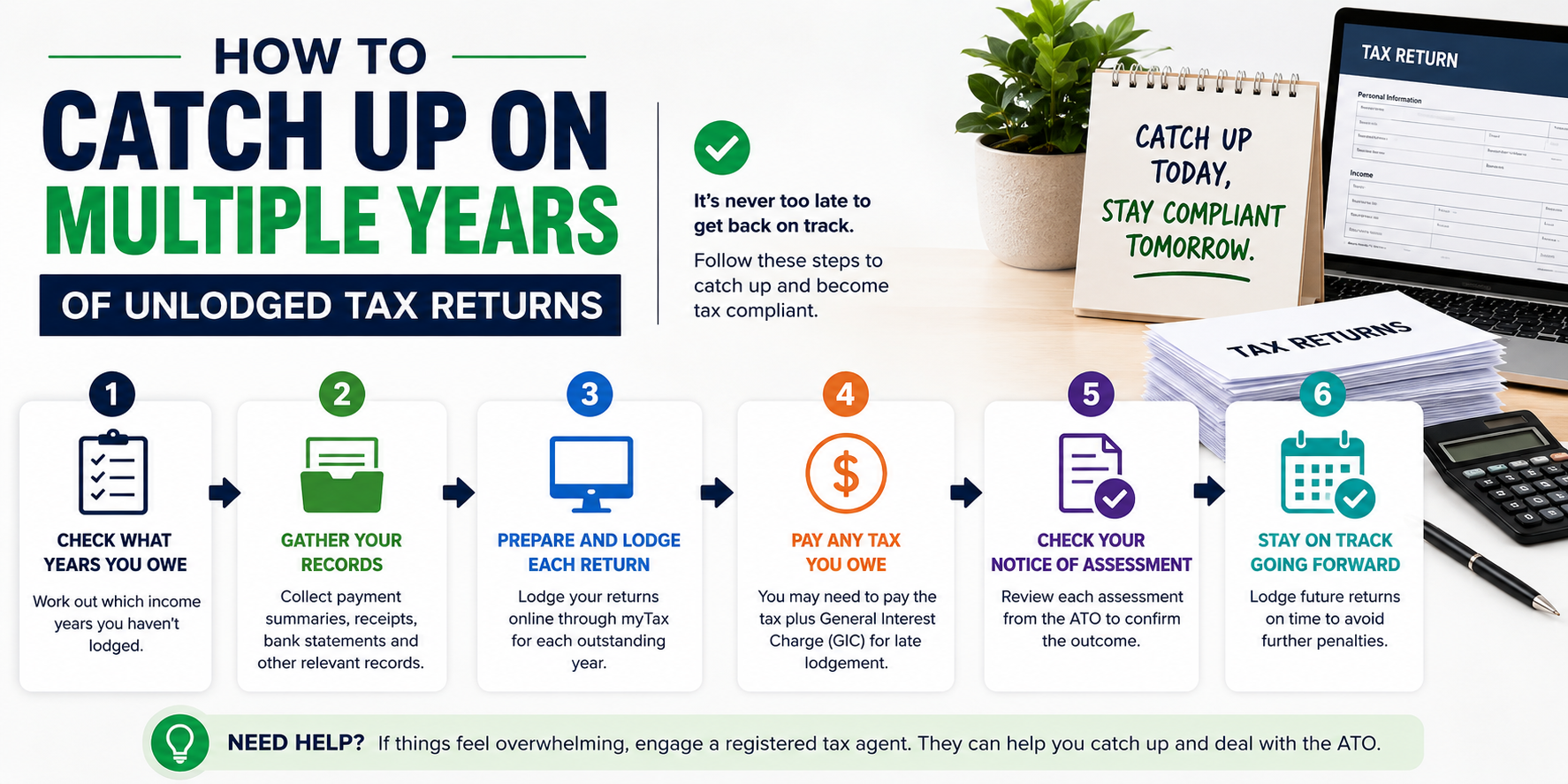
Step 1: Determine Which Years Are Outstanding
Before lodging anything, identify exactly which returns remain outstanding.
You can do this by:
- Logging into MyGov.
- Contacting the ATO directly.
- Reviewing previous records.
- Seeking assistance from a qualified
tax agent perth who can access your tax history. Knowing how many years require attention will help you plan the process more effectively.
Step 2: Gather Your Financial Information
Even if several years have passed, much of the required information can still be obtained.
You may need:
- PAYG summaries.
- Bank statements.
- Dividend statements.
- Rental property records.
- Business income records.
- Investment statements.
- Receipts for deductions.
Many institutions can provide historical records if you’ve misplaced documents. The ATO also holds a significant amount of pre-filled data that may assist with older returns.
Step 3: Lodge Each Return Separately
Each financial year must be lodged individually.
Information such as:
- Income earned.
- Tax withheld.
- Work-related deductions.
- Investment income.
- Capital gains.
- Rental property expenses.
must be reported according to the rules applicable for that particular year. Some years may result in refunds, while others could create tax liabilities. Completing them correctly is essential.
Step 4: Understand Potential Penalties
One of the biggest concerns people have is penalties.
However, the ATO often considers:
- Voluntary disclosure.
- Personal circumstances.
- Serious illness.
- Financial hardship.
- Genuine attempts to comply.
In many cases, penalties may be reduced or remitted. Taking proactive action usually works in your favour.
Can You Still Receive Refunds?
Yes. – Many taxpayers are surprised to discover they are entitled to refunds, even after missing several years. Unclaimed deductions and tax offsets may result in money being owed back to you.
Examples include:
- Work-related expenses.
- Self-education costs.
- Charitable donations.
- Investment expenses.
- Rental property deductions.
An Overdue Tax Return doesn’t always mean you’ll owe money.
Common Mistakes to Avoid
Ignoring ATO Letters
Many people avoid opening letters because they fear bad news. Unfortunately, delaying action often makes the situation more stressful.
- Guessing Income Figures : Using estimates without supporting records can lead to inaccurate returns and future amendments.
- Missing Deductions : Older years still allow legitimate deductions if appropriate evidence exists.
- Waiting for the “Right Time” : There rarely seems to be a perfect time. The sooner you begin, the easier the process becomes.
What If You Haven’t Lodged for Five Years or More?
Long periods of non-compliance are more common than you might think.
The process usually involves:
- Identifying outstanding years.
- Gathering historical information.
- Preparing returns individually.
- Lodging all years.
- Reviewing any debts or refunds.
- Establishing payment arrangements if necessary.
The ATO generally prefers cooperation over enforcement when taxpayers come forward voluntarily.
Payment Plans Are Available
If outstanding returns result in tax debts, payment plans may be available.
These arrangements allow taxpayers to:
- Spread payments over time.
- Avoid immediate financial pressure.
- Manage cash flow more effectively.
The ATO often works with taxpayers who demonstrate a genuine willingness to meet their obligations.
Why Professional Assistance Can Help
Catching up on several years of returns can feel overwhelming, especially if investments, rental properties, or business income are involved.
A qualified tax professional can help:
- Identify missing years.
- Access ATO records.
- Maximize legitimate deductions.
- Correct previous mistakes.
- Negotiate with the ATO if necessary.
- Reduce stress throughout the process.
Many people who delay seeking help discover the process is easier than expected once they start. If you’re worried about a late tax return it is often better to address the issue now rather than wait for further notices or penalties.
Tips to Stay Up to Date Going Forward
Once your outstanding returns are lodged, consider developing better habits moving forward:
- Keep receipts digitally.
- Track expenses regularly.
- Update contact details with the ATO.
- Lodge annually rather than delaying.
- Maintain organized records.
- Seek advice when circumstances change.
Preventing future problems is much easier than catching up years later.
Final Thoughts
Having multiple years of unlodged tax returns can feel intimidating, but it’s a problem that can be fixed. Thousands of Australians catch up on overdue lodgements every year and successfully restore their tax affairs.
The key is to act sooner rather than later. Ignoring the issue rarely makes it disappear, while taking proactive steps can reduce stress, minimize penalties, and potentially uncover refunds you didn’t realize you were entitled to.
If you’re facing an Overdue Tax Return, remember that catching up is entirely possible—and the sooner you start, the easier the process will be.