
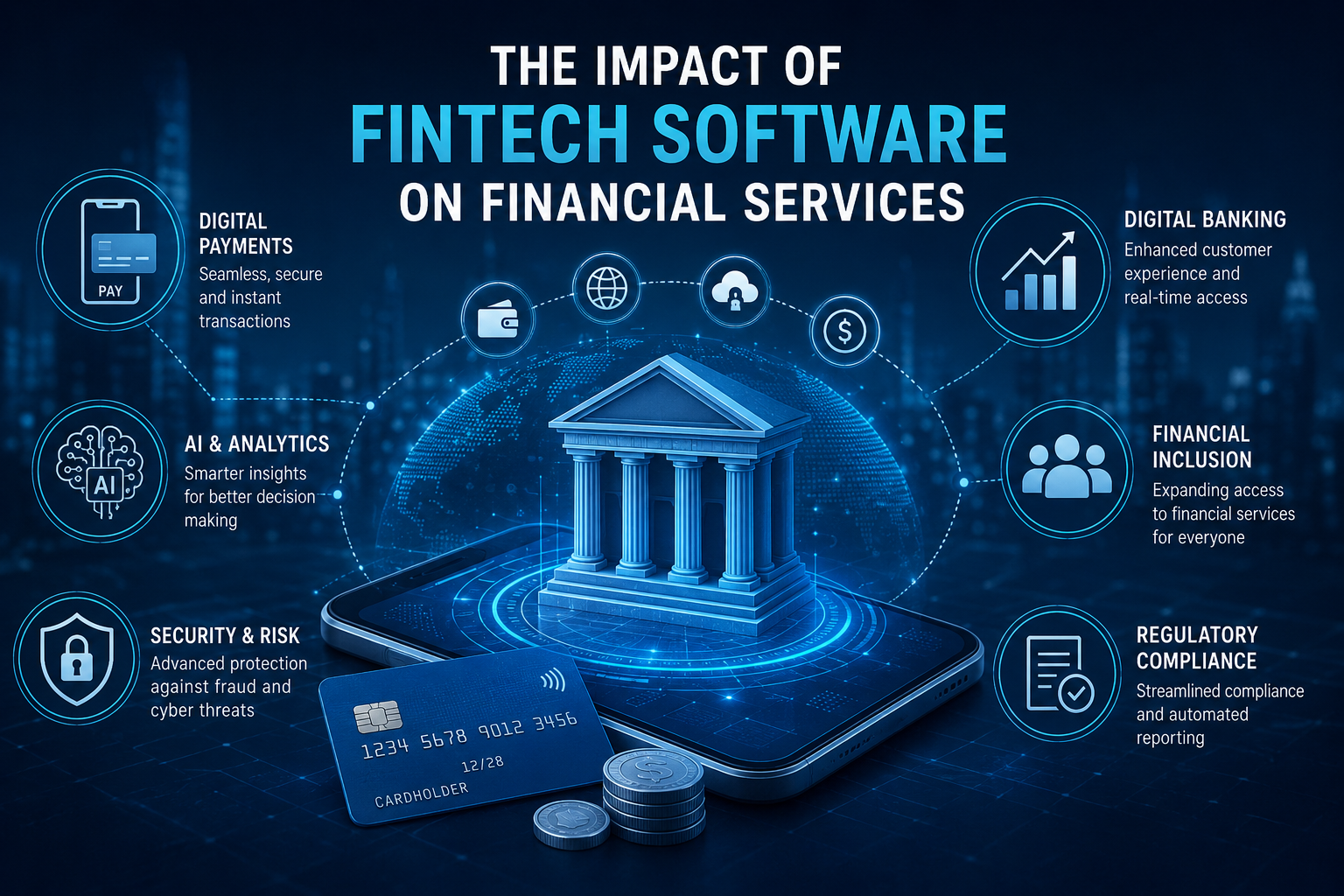
Financial services have undergone a remarkable transformation over the past decade, driven largely by advances in digital technology. Fintech software has emerged as a powerful force that is redefining how individuals, businesses, and institutions manage financial activities. From digital payments and online lending to wealth management and fraud detection, technology-driven solutions are improving efficiency, accessibility, and customer experiences. As financial organizations continue to embrace innovation, the role of a fintech software development company becomes increasingly important in enabling secure, scalable, and future-ready financial ecosystems.
Key Statistics Highlighting Fintech Growth Across Markets
The rapid expansion of fintech is supported by impressive industry data:
- Global fintech revenues continue to grow at a strong pace as digital financial adoption increases worldwide.
- More than two-thirds of consumers now use at least one digital financial service regularly.
- Digital payment transactions account for a significant share of global financial activity.
- Artificial intelligence and machine learning investments in financial services continue to rise annually.
- Mobile banking users are expected to surpass several billion globally within the coming years.
- Financial institutions increasingly allocate larger portions of technology budgets toward digital transformation initiatives.
These statistics demonstrate how software-driven innovation has become a central component of modern financial services.
Digital Banking Platforms Driving Faster Customer Experiences
One of the most visible impacts of fintech software is the transformation of banking services. Traditional banking processes often involved lengthy paperwork, physical branch visits, and slow transaction approvals. Digital banking platforms have streamlined these operations, enabling customers to perform financial tasks from virtually anywhere.
Modern banking applications allow users to transfer funds, open accounts, monitor spending, and manage investments through intuitive interfaces. Advanced automation further reduces processing times for activities such as loan approvals, identity verification, and account management.
Financial institutions benefit as well. Automated workflows reduce operational costs, minimize manual errors, and improve overall efficiency. Data analytics tools provide deeper insights into customer behavior, enabling banks to offer more personalized financial products and services.
As customer expectations continue to evolve, organizations increasingly collaborate with a fintech software development company to build solutions that meet demands for speed, convenience, and security.
Advanced Payment Technologies Transforming Global Transactions
Payment systems represent one of the most significant areas of fintech innovation. Consumers and businesses now expect seamless transactions across multiple channels, including mobile devices, e-commerce platforms, and digital wallets.
Modern payment technologies support:
- Real-time fund transfers
- Contactless payment methods
- Mobile wallet integrations
- Cross-border transaction processing
- Subscription billing automation
- Multi-currency payment capabilities
These capabilities have fundamentally changed how money moves within the global economy. Businesses can process transactions faster while customers enjoy smoother purchasing experiences.
Organizations seeking specialized payment capabilities often invest in payment software development services to create secure and efficient transaction ecosystems. These solutions help improve transaction speed, strengthen security controls, and support compliance with evolving regulatory requirements.
The growing adoption of digital payments also contributes to greater financial inclusion by providing access to financial services for previously underserved populations.
Artificial Intelligence Enhancing Financial Decision Accuracy
Artificial intelligence has become a critical component of modern fintech software. Financial institutions generate vast amounts of data daily, and AI-powered systems help transform this information into actionable insights.
Machine learning algorithms can analyze customer behavior, identify spending patterns, and predict financial trends with remarkable accuracy. These capabilities support a wide range of applications, including:
- Credit risk assessment
- Investment portfolio optimization
- Fraud detection and prevention
- Customer service automation
- Financial forecasting
- Regulatory compliance monitoring
AI-driven chatbots and virtual assistants also improve customer support by providing instant responses to common inquiries. This enhances service quality while reducing operational burdens on financial institutions.
By leveraging intelligent technologies, financial organizations can make faster and more informed decisions while delivering better outcomes for customers.
Strengthening Security Standards Through Intelligent Risk Tools
Security remains one of the most important priorities within financial services. As digital transactions increase, organizations face growing challenges related to cyber threats, fraud, and data breaches.
Fintech software addresses these concerns through sophisticated security mechanisms designed to protect sensitive information and financial assets. Common technologies include:
- Multi-factor authentication
- Biometric verification
- End-to-end encryption
- Behavioral analytics
- Real-time threat monitoring
- Automated fraud detection systems
These technologies work together to identify suspicious activities and prevent unauthorized access. Behavioral analytics, for example, can detect unusual transaction patterns that may indicate fraudulent behavior.
Financial institutions also use predictive risk models to assess potential threats before they escalate into major security incidents. This proactive approach helps reduce losses and strengthens customer confidence in digital financial platforms.
As cybersecurity risks continue to evolve, software innovation remains essential for maintaining trust and resilience within the financial sector.
Expanding Financial Inclusion Through Accessible Digital Tools
Financial inclusion has become a major objective for governments, regulators, and financial institutions around the world. Millions of individuals still face barriers to accessing traditional banking services due to geographic, economic, or infrastructural limitations.
Fintech software plays a vital role in overcoming these challenges by making financial services more accessible through digital channels. Mobile banking applications, digital wallets, and online lending platforms enable users to access essential financial tools without visiting physical branches.
Key benefits include:
- Easier account access in remote locations
- Lower service delivery costs
- Improved access to credit opportunities
- Greater convenience for underserved communities
- Enhanced financial literacy through digital resources
These innovations help bridge gaps within financial systems and create new economic opportunities for individuals and small businesses.
The ability to reach previously underserved populations represents one of the most meaningful contributions of fintech to global economic development.
Regulatory Technology Supporting Compliance and Governance
Regulatory compliance is a complex responsibility for financial institutions operating in highly regulated environments. Organizations must adhere to strict requirements related to customer identification, anti-money laundering measures, data privacy, and transaction monitoring.
Fintech software has given rise to regulatory technology solutions that automate many compliance-related processes. These platforms help organizations manage large volumes of regulatory data while reducing administrative workloads.
Regulatory technology systems support:
- Automated compliance reporting
- Customer due diligence procedures
- Transaction monitoring
- Risk assessment frameworks
- Audit trail management
- Regulatory change tracking
Automation significantly improves accuracy and reduces the likelihood of compliance violations. Financial institutions can also respond more quickly to changing regulations while maintaining operational efficiency.
Many organizations partner with a bespoke software development company when specialized compliance requirements demand highly customized technology solutions tailored to specific regulatory environments.
As regulations continue to evolve, technology-driven compliance management will remain a critical component of financial operations.
Emerging Innovations Shaping the Future of Financial Services
The fintech landscape continues to evolve rapidly, introducing new technologies that have the potential to transform financial services even further. Several emerging trends are expected to shape the industry’s future.
Blockchain technology is enhancing transparency, security, and transaction efficiency across various financial applications. Decentralized finance models are creating alternative approaches to lending, borrowing, and asset management.
Cloud computing is enabling financial institutions to scale operations more efficiently while reducing infrastructure costs. Open banking initiatives are fostering greater collaboration between financial providers and technology companies, leading to more innovative customer experiences.
Additional developments include:
- Embedded finance solutions
- Advanced predictive analytics
- Hyper-personalized financial products
- Real-time financial intelligence
- Enhanced digital identity verification
As these technologies mature, financial organizations will continue to seek support from a fintech software development company to integrate innovative capabilities into their digital ecosystems. The growing complexity of financial technology also encourages collaboration with a fintech software development company capable of delivering scalable and secure solutions. Furthermore, a fintech software development company can help institutions adapt quickly to changing market demands while maintaining operational excellence.
Understanding Long-Term Industry Impact and Future Potential
The influence of fintech software on financial services extends far beyond technological modernization. It is fundamentally changing how financial institutions operate, how customers interact with financial products, and how economies facilitate the movement of capital.
Organizations that successfully embrace digital innovation gain advantages in efficiency, customer engagement, risk management, and scalability. At the same time, consumers benefit from greater convenience, accessibility, transparency, and control over their financial lives.
The continued convergence of artificial intelligence, data analytics, cloud infrastructure, and advanced security technologies will further accelerate innovation throughout the financial sector. Financial institutions that adapt effectively to these changes will be better positioned to meet evolving customer expectations and navigate increasingly competitive markets.
Conclusion
Fintech has become a defining force in the evolution of financial services. Through digital banking, intelligent automation, enhanced security, improved compliance, and greater accessibility, technology continues to reshape the way financial systems function. As innovation progresses, financial institutions must remain adaptable and forward-looking to capitalize on new opportunities while addressing emerging challenges. The ongoing transformation of the industry signals a future where financial services become more efficient, inclusive, secure, and responsive to the needs of businesses and consumers alike.