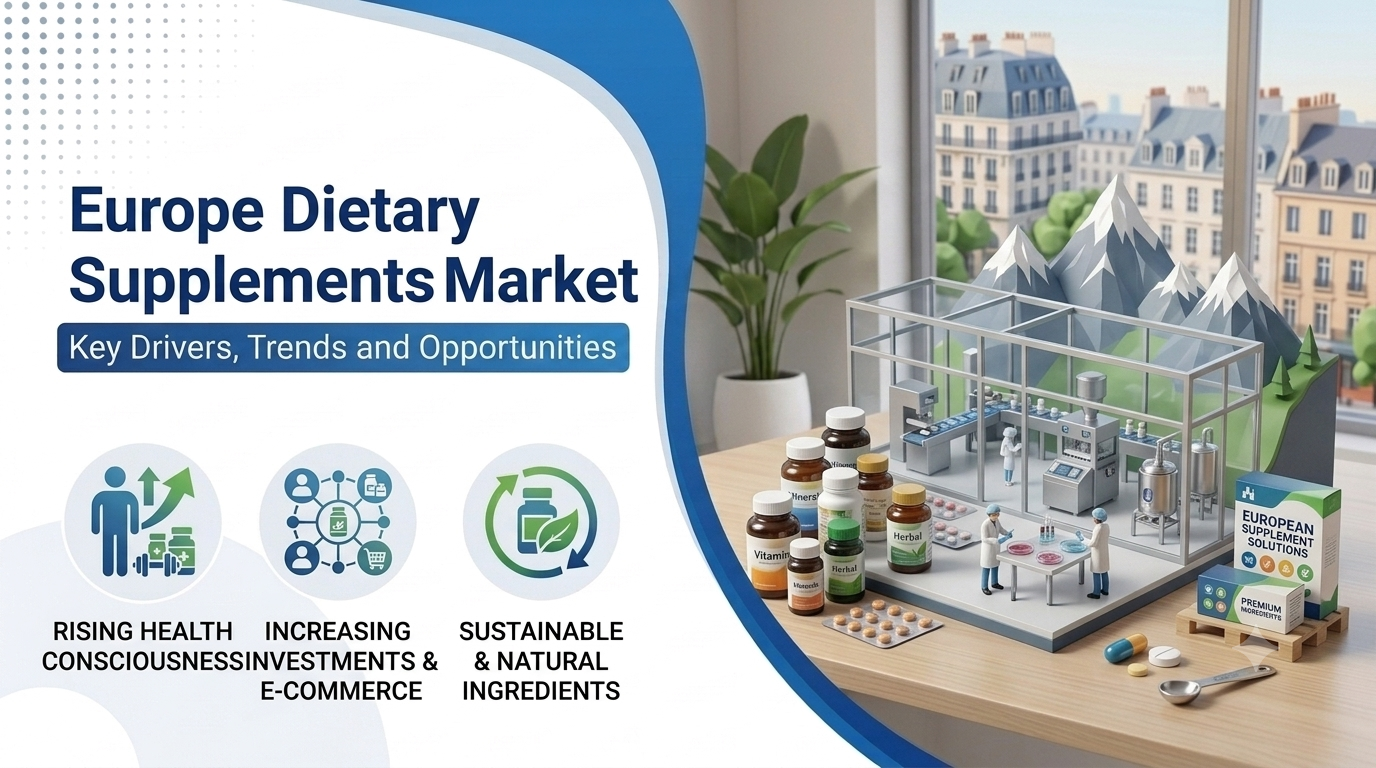
IMARC Group, a leading global market research and management consulting firm trusted by Fortune 500 companies, investors, and government agencies across more than 100 countries, has published its latest report on the Europe dietary supplements market. The market is experiencing strong momentum as consumers increasingly prioritize preventive healthcare, balanced nutrition, and long term wellness. Rising awareness of immunity, healthy aging, sports nutrition, digestive health, and personalized supplementation is encouraging demand across vitamins, minerals, herbal products, probiotics, and functional nutrition. The Europe dietary supplements market reached USD 48.88 Billion in 2025 and is projected to reach USD 106.04 Billion by 2034, growing at a CAGR of 8.99% during 2026-2034.
The growing popularity of clean label formulations, plant based ingredients, sugar free gummies, and scientifically backed supplements is reshaping product innovation across Europe. Expanding online retail, pharmacy chains, subscription based wellness platforms, and personalized nutrition services are further improving product accessibility. Companies are also investing in sustainable packaging, transparent sourcing, and clinical research to strengthen consumer trust and brand loyalty.
How AI is Reshaping the Europe Dietary Supplements Market
AI Powered Personalized Nutrition
Artificial intelligence is helping supplement companies analyze dietary habits, wearable device data, and health assessments to recommend customized vitamin and mineral combinations. Personalized supplement subscriptions are gaining traction across European markets as consumers seek nutrition tailored to their individual health goals.
Smarter Manufacturing and Quality Control
AI enabled production systems monitor ingredient quality, optimize manufacturing efficiency, and reduce production waste. Predictive maintenance and automated quality inspections help manufacturers maintain consistent product standards while complying with strict European food safety regulations.
Intelligent Consumer Engagement
Brands are using AI driven recommendation engines, digital wellness coaches, and customer analytics to improve product discovery and increase repeat purchases across e commerce and pharmacy platforms.
Request Sample For PDF Report: https://www.imarcgroup.com/europe-dietary-supplements-market/requestsample
Europe Dietary Supplements Market Growth Drivers and Emerging Trends
Health consciousness continues to strengthen across Europe as consumers actively seek nutritional products that support immunity, heart health, cognitive function, bone strength, and healthy aging. According to the European Commission, over 448 million people live within the European Union, creating one of the world’s largest consumer markets for preventive healthcare products.
An aging population is significantly increasing supplement consumption. Eurostat reports that approximately 21% of the European Union population is aged 65 years or above, driving demand for calcium, vitamin D, collagen, omega 3, and joint health supplements.
Sports nutrition is becoming increasingly mainstream beyond professional athletes. Millions of Europeans participate in regular fitness activities, boosting sales of protein powders, amino acids, electrolyte supplements, and performance nutrition products.
Digital commerce is also transforming distribution. According to Ecommerce Europe, Europe remains one of the world’s largest ecommerce markets, allowing dietary supplement brands to reach consumers directly through online platforms, subscription services, and digital pharmacies.
Sustainability is another defining trend. Consumers increasingly prefer recyclable packaging, responsibly sourced botanical ingredients, vegan capsules, and products carrying recognized quality certifications.
Government Regulations and Health Initiatives Supporting the Market
European authorities continue to strengthen consumer protection while encouraging responsible nutrition through harmonized regulations and public health initiatives.
Key initiatives include:
- The European Food Safety Authority continues evaluating health claims to ensure scientifically supported labeling for dietary supplements sold across Europe.
- The European Commission maintains harmonized legislation governing vitamins, minerals, ingredient safety, and labeling standards under food supplement regulations.
- National public health agencies across Germany, France, Italy, Spain, and other European countries continue promoting balanced nutrition and healthy lifestyles through public awareness campaigns.
- Ongoing nutrition monitoring programs encourage informed dietary choices while supporting evidence based use of food supplements where appropriate.
These initiatives improve product quality, consumer confidence, and regulatory transparency across the European dietary supplements market.
Europe Dietary Supplements Market Segmentation
Breakup by Ingredient
- Vitamins
- Minerals
- Botanicals
- Amino Acids
- Enzymes
- Others
Vitamins account for a significant market share due to widespread consumer awareness of immune support and daily nutritional supplementation.
Breakup by Form
- Tablets
- Capsules
- Powders
- Soft Gels
- Gummies
- Liquids
Capsules and tablets remain widely preferred because of convenience, longer shelf life, and precise dosage.
Breakup by Application
- General Health
- Bone and Joint Health
- Immunity
- Cardiac Health
- Digestive Health
- Sports Nutrition
- Weight Management
- Others
General wellness and immunity continue to generate strong demand as consumers increasingly adopt preventive healthcare practices.
Breakup by Distribution Channel
- Pharmacies and Drug Stores
- Supermarkets and Hypermarkets
- Online Stores
- Specialty Stores
- Others
Online stores continue expanding rapidly through subscription models, personalized recommendations, and direct to consumer brands.
Breakup by Country
- Germany
- France
- United Kingdom
- Italy
- Spain
- Russia
- Others
Germany represents one of the largest markets due to high healthcare awareness, established pharmacy networks, and strong consumer spending on wellness products.
Competitive Landscape
The report provides detailed profiles of leading companies operating in the Europe dietary supplements market, covering product portfolios, strategic initiatives, innovation activities, mergers, acquisitions, and competitive positioning.
Major companies include:
- Bayer AG
- Haleon plc.
- Procter & Gamble
- Perrigo Company plc
- Amway Corp.
- Reckitt
Recent News and Developments
- May 2026: Nestlé Health Science expanded its personalized nutrition portfolio across several European countries with new science backed supplement solutions focused on healthy aging and metabolic wellness.
- February 2026: Bayer introduced additional digital health features supporting personalized vitamin recommendations through its consumer wellness platforms across Europe.
- October 2025: Haleon announced expanded investment in consumer health innovation, strengthening research into immune support, digestive health, and daily wellness products across European markets.
- June 2025: Herbalife launched new plant based nutritional products for European consumers seeking vegan formulations with clean ingredient labels.
- September 2024: The European Food Safety Authority published updated scientific opinions supporting continued evaluation of novel ingredients and health claims to strengthen consumer confidence in dietary supplements.
Future Outlook
The Europe dietary supplements market is expected to continue evolving as preventive healthcare becomes increasingly integrated into everyday lifestyles. Future growth will be supported by:
- Greater adoption of personalized nutrition powered by digital health technologies
- Continued expansion of plant based, vegan, and clean label supplements
- Higher demand for immunity, cognitive health, and healthy aging products
- Increased investment in scientific research and clinical validation
- Stronger sustainability initiatives across sourcing, manufacturing, and packaging
- Continued growth of direct to consumer and ecommerce distribution channels
As innovation, scientific evidence, and consumer awareness continue to shape purchasing decisions, the Europe dietary supplements market is expected to remain one of the most dynamic wellness sectors, creating significant opportunities for manufacturers, retailers, investors, and healthcare stakeholders.