My grandmother never trusted the shiny plastic bottles lined up on supermarket shelves. “Real oil doesn’t smell like nothing,” she used to say, holding up a jar of thick, golden groundnut oil that her local ghani (wooden press) had extracted just that morning. Back then, I thought she was just being old-fashioned. Today, after reading dozens of food science reports and watching refined oils get linked to everything from inflammation to heart trouble, I understand exactly what she meant.
If you’ve been hearing the term Wooden Cold Pressed Oils a lot lately and wondering whether it’s just a trendy label or something genuinely worth switching to, you’re in the right place. This guide breaks down everything — the process, the benefits, how to buy the real thing, and the mistakes most people make along the way.
What Exactly Are Wooden Cold Pressed Oils?
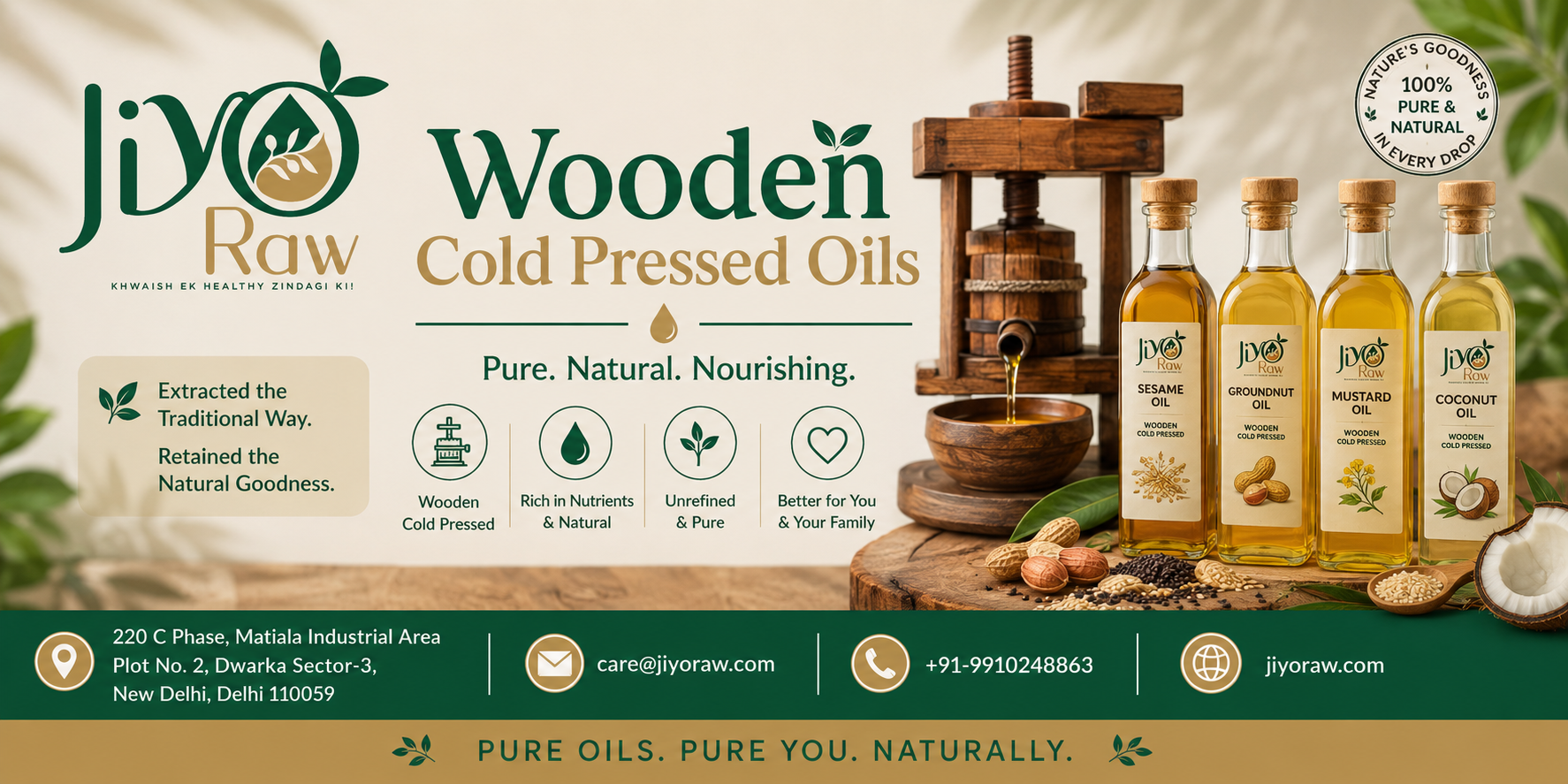
Wooden cold pressed oils are extracted using a traditional wooden churner called a kachi ghani. Seeds like sesame, groundnut, coconut, or mustard are crushed slowly between wooden gears at low speed and low temperature — usually below 40°C. There’s no heat, no chemical solvents, and no refining involved.
Compare that to commercial “refined” oils, which are often extracted using high heat and a chemical solvent called hexane, then bleached, deodorized, and stripped of almost every natural nutrient before being bottled. What you get in the end looks clean, but it’s nutritionally hollow.
With wooden cold pressed oils, the seed’s natural aroma, colour, and nutrients stay intact. That’s why this oil often looks a little cloudy, smells like the seed it came from, and has a richer, more distinct flavour.
Cold Pressed vs Refined vs Wooden Pressed — What’s the Difference?
| Parameter | Wooden Pressed Oil | Cold Pressed (Machine) | Refined Oil |
| Extraction Method | Slow wooden churner | Steel expeller, low heat | Chemical solvent + high heat |
| Nutrient Retention | Very high | Moderate to high | Low |
| Natural Aroma & Colour | Retained | Mostly retained | Removed |
| Chemicals Used | None | None | Hexane, bleaching agents |
| Shelf Life | Shorter, needs proper storage | Moderate | Longer |
Note: Wooden pressed oils have a slightly shorter shelf life simply because nothing artificial has been added to preserve them — that’s actually a sign of purity, not a flaw.
Why Wooden Cold Pressed Oils Are Better for Your Health
The biggest advantage of wooden pressed oils comes down to one simple fact: low heat preserves nutrients. When oil is extracted below 40°C, the natural antioxidants, vitamins, and healthy fatty acids remain active instead of breaking down.
Key Benefits at a Glance
| What It Is | Why It Matters |
| No Chemical Solvents | You avoid trace residues of hexane and other industrial chemicals found in refined oils. |
| Higher Antioxidant Content | Helps fight free radicals and supports overall cellular health. |
| Natural Fatty Acid Balance | Supports heart health without artificially altered fat structures. |
| Rich Aroma & Flavour | Enhances the taste of everyday cooking without needing extra seasoning. |
| Better Digestibility | Many people report easier digestion compared to heavily refined oils. |
| Supports Skin & Hair Health | Oils like coconut and sesame are widely used in traditional skincare and haircare routines. |
This table gives a quick snapshot of why more households are moving toward traditional oil extraction methods.
How Wooden Cold Pressed Oil Is Made — Step by Step
Understanding the process helps you appreciate why this oil costs a bit more — and why that price is justified.
The Traditional Extraction Process
| Step | Process |
| 1. Seed Selection | High-quality, sun-dried seeds are cleaned and sorted to remove impurities. |
| 2. Loading the Ghani | Seeds are added into the wooden churner, traditionally powered by bullocks and now often by slow-speed motors. |
| 3. Slow Crushing | The wooden gears rotate at low speed, crushing seeds gradually so friction stays minimal and temperature stays low. |
| 4. Oil Extraction | Oil oozes out naturally and is collected in containers, separate from the residual seed cake. |
| 5. Filtration | The oil is passed through natural filters to remove sediment, without any chemical treatment. |
| 6. Bottling | The oil is packed fresh, usually in glass or food-grade containers to preserve quality. |
Every step happens at a slow pace on purpose — speed and heat are exactly what strip an oil of its natural goodness.
Tips for Buying and Using Wooden Cold Pressed Oils
- Check the label carefully. Terms like “cold pressed” and “wooden pressed” aren’t always the same — look specifically for “kachi ghani” or “wood pressed” if that’s what you want.
- Buy in smaller quantities. Since there are no preservatives, fresher small batches work better than large bulk containers sitting for months.
- Store away from heat and light. A cool, dark cupboard keeps the oil from turning rancid quickly.
- Expect natural sediment. A little cloudiness or settling at the bottom of the bottle is completely normal and a good sign of authenticity.
- Use the right oil for the right purpose. Sesame and mustard oils suit high-flavour cooking, while groundnut and coconut work well for regular everyday use.
Buying Guide Checklist
| Checklist Point | What to Look For |
| Labeling | Clearly states “wooden pressed” or “kachi ghani” |
| Colour & Texture | Slightly thick, natural colour, may look a little cloudy |
| Smell | Strong, natural aroma of the seed used |
| Packaging | Preferably glass or food-safe containers, not exposed to sunlight |
| Source Transparency | Brand shares details about the seed source and extraction process |
Use this checklist the next time you’re shopping online or at a local store — it takes the guesswork out of picking a genuine product.
Common Mistakes to Avoid
Do’s and Don’ts
| Do’s | Don’ts |
| Store in a cool, dark place | Don’t leave the bottle near a stove or in direct sunlight |
| Use within a few months of opening | Don’t stock up on large quantities expecting a long shelf life |
| Check for a natural aroma before buying | Don’t assume every “cold pressed” label means wooden pressed |
| Match the oil type to your cooking style | Don’t use strong-flavoured oils like mustard for delicate dishes without adjusting quantity |
| Buy from transparent, trusted brands | Don’t fall for unusually cheap pricing — genuine wooden pressed oil takes time and effort to make |
Avoiding these small mistakes ensures you actually get the nutritional and flavour benefits you’re paying for.
Frequently Asked Questions
1. Is wooden cold pressed oil healthier than regular refined oil?
Yes, generally speaking. Since it’s extracted without heat or chemicals, it retains more natural nutrients and antioxidants compared to refined oil.
2. Why does wooden pressed oil look cloudy sometimes?
That cloudiness usually comes from natural sediment left behind after minimal filtration, which is a normal sign of an unrefined product.
3. How long does wooden cold pressed oil last?
Most varieties stay fresh for around 3 to 6 months after opening if stored properly in a cool, dark place away from moisture.
4. Can I use wooden pressed oil for deep frying?
Yes, though it’s best suited for medium-heat cooking. For very high-heat frying, oils with a higher smoke point work more efficiently.
5. Is wooden pressed oil more expensive, and why?
Yes, it typically costs more because the extraction process is slower, yields less oil per batch, and requires more labour and care than mass refining.
6. Which wooden pressed oil is best for daily cooking?
Groundnut and coconut oil are commonly used for everyday cooking, while sesame and mustard oil are popular for flavour-rich regional dishes.
Final Thoughts
Switching to wooden cold pressed oils isn’t just about following a wellness trend — it’s about going back to something our kitchens once trusted by default. The slower extraction process might mean a shorter shelf life and a slightly higher price tag, but what you gain in return is real: natural nutrients, authentic flavour, and the peace of mind that comes from knowing exactly what’s in your bottle.
At Jiyo Raw, we believe good health starts with going back to basics — pure, honest, and unprocessed. If you’re ready to bring that same trust my grandmother had in her kitchen back into yours, it might be time to give wooden cold pressed oils a real try.