Melasma is one of the most stubborn skin concerns to treat. Those brownish-grey patches that appear on the cheeks, forehead, and upper lip don’t respond to quick fixes, and many people spend years cycling through creams that promise fast results but rarely deliver lasting change. If you’ve been searching for a gentler, more sustainable approach, Ayurveda offers a time-tested alternative worth understanding before you buy anything.
This guide answers the questions people most commonly ask about Ayurvedic oil for melasma — what actually works, which herbs matter, and how to use them correctly.
What Causes Melasma, and Why is it So Hard to Treat?
Melasma happens when melanocytes (the cells that produce pigment) become overactive, usually triggered by hormonal shifts, sun exposure, or inflammation. In Ayurveda, this condition is known as Vyanga, and it’s traditionally linked to an aggravation of Pitta dosha, particularly the sub-type called Bhrajaka Pitta, which governs skin tone and complexion.
Because melasma sits deep in the skin and is constantly re-triggered by UV exposure, no single product — Ayurvedic or otherwise — can erase it overnight. The goal of any credible approach, including herbal oils, is to gradually calm pigment-producing activity while protecting the skin from what worsens it further.
Can Ayurvedic Oils Really Help With Melasma?
Yes, but with realistic expectations. Ayurvedic oils (called Taila) work by carrying herbal actives into the skin through an oil base, typically sesame oil, over weeks of consistent night-time use. They aren’t designed to bleach or forcibly strip pigment the way some chemical treatments do. Instead, they support the skin’s natural processes of renewal and tone balance.
The herbs used in classical melasma formulations are chosen for properties Ayurveda has associated with Bhrajaka Pitta pacification and blood purification (Raktashodhana), which is believed to influence how evenly pigment is distributed.
Which Herbs are Traditionally Used for Pigmentation?
If you’re comparing products, look for formulations built around these herbs — they form the backbone of most classical melasma and dark-spot preparations:
Triphala (Amla, Harad, Baheda) This trio is one of Ayurveda’s most respected antioxidant combinations. Amla (Indian gooseberry) is particularly valued for its vitamin C content, which is associated with supporting a brighter, more even-looking complexion over time.
Manjistha (Rubia cordifolia) Often called Ayurveda’s classical blood purifier, Manjistha is a staple in formulations targeting uneven tone. It’s believed to work from within by supporting healthy blood quality, which Ayurveda ties directly to skin clarity.
Haldi (Turmeric) A well-known skin herb across Indian households, turmeric is traditionally used for its calming and tone-supporting properties.
Kesar (Saffron) Saffron’s compounds are heat-sensitive, which is why quality formulations use cold maceration rather than heat-processing to preserve its activity. It has drawn research interest for its potential role in the melanin pathway, making it a prized ingredient in pigmentation-focused Tailas.
Chandan (Sandalwood) and Raktchandan (Red Sandalwood) Both are cooling herbs, traditionally included to soothe reactive or inflamed skin — useful since melasma-prone skin can be sensitive.
Kamal (Lotus) and Palash Soothing, classical additions often used to support overall skin calmness alongside the more active pigment-focused herbs.
What Should You Look for When Choosing an Ayurvedic Oil for Melasma?
Not all “Ayurvedic” products are equal. Here’s what genuinely matters:
- Full ingredient transparency. A credible formulation should list every herb by both its Sanskrit/Hindi and botanical name, not hide behind vague terms like “herbal blend.”
- AYUSH licensing. This confirms the product is manufactured under India’s regulatory framework for Ayurvedic medicines, not just marketed as one.
- Cold-processed saffron. Since saffron’s actives degrade with heat, cold maceration is a meaningful quality marker.
- A sesame oil base. Classical Tailas are made in a sesame oil base, which is considered supportive for penetration and skin nourishment.
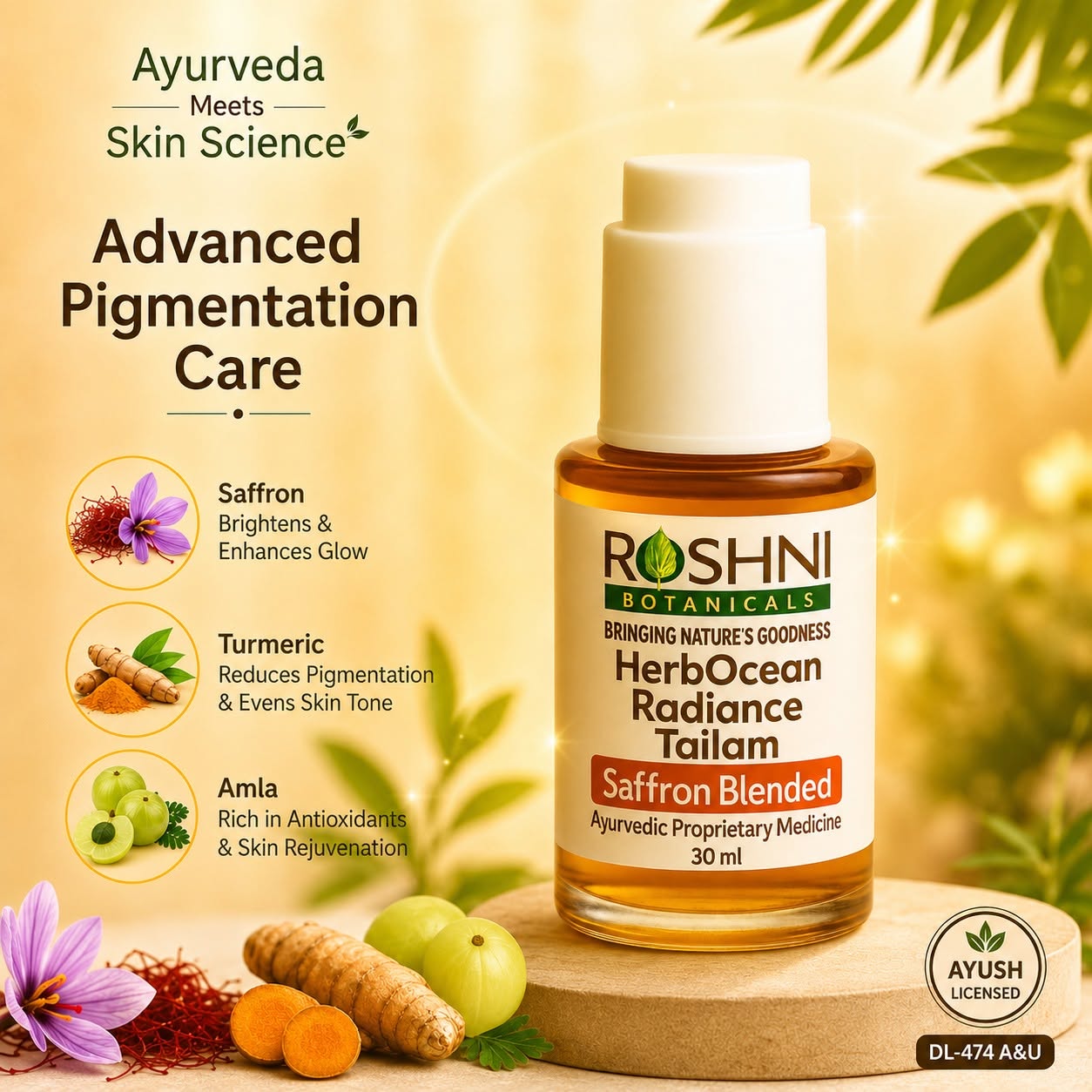
One formulation that reflects these standards is the Radiance Tailam by HerbOcean, a Triphala-led facial oil combined with Manjistha, Haldi, and cold-macerated Kesar in a sesame base. It’s formulated under AYUSH Licence DL-474 A&U and is classically indicated for Vyanga (melasma), along with post-inflammatory hyperpigmentation and general dullness.
How Should You Use Ayurvedic Melasma Oil?
At night: Apply a few drops to clean, dry skin, concentrating on areas of uneven tone. Night-time use allows the oil to work undisturbed while skin is in its natural repair cycle.
During the day: This is non-negotiable — apply a broad-spectrum sunscreen and reapply through the day. Melasma is heavily UV-driven, and skipping daytime sun protection can undo weeks of consistent night-time care. Many people pair a lighter brightening cream under sunscreen for daytime use, saving the medicated oil strictly for nights.
How Long Does it Take to See Results?
Be wary of anything promising fast results. Pigmentation shifts slowly, and most people using a consistent Ayurvedic routine notice gradual changes over several months, not days. The combination of nightly herbal oil application and strict daytime sun protection is what drives visible improvement — neither works well alone.
Is it Safe to Use During Pregnancy?
Pregnancy-related melasma (also called chloasma) is common and usually driven by hormonal changes. While topical saffron at cosmetic levels is generally considered gentle, it’s important to consult your doctor before introducing any new topical product during pregnancy or while breastfeeding. Many cases of pregnancy melasma also settle naturally afterward, so gentle care and sun protection remain the safest first steps.
How is an Ayurvedic Oil Different From a Chemical Brightening Cream?
The difference lies in approach, not superiority. Ayurvedic Tailas are oil-based, herb-led formulations meant for night use, working gradually through traditional herbal activities. Chemical brightening creams are typically water-based and designed for faster, more targeted action, often through specific active ingredients. Neither is inherently “better” — they simply work through different mechanisms, and some people choose to combine approaches under professional guidance.
Final Thoughts
If you’re looking for a gentle, traditional way to support even-toned skin, an Ayurvedic oil built on Triphala, Manjistha, Haldi, and cold-processed saffron is a scientifically-interesting and time-tested place to start. Just remember: no topical treatment — herbal or otherwise — offers a guaranteed, permanent fix for melasma. Consistency, patience, and daily sun protection matter more than any single product.
Before starting any new skincare routine, especially if you’re pregnant, breastfeeding, or have sensitive skin, patch-test the product first and consult a dermatologist or Ayurvedic practitioner for guidance specific to your skin.
Shop Best Ayurvedic Oil for Melasma
Address: Roshni Botanicals, 169 Pocket D, Sector 5, DSIIDC Industrial Area, Bawana, Delhi 110039
Call: +91 98111 13550
Visit: https://roshnibotanicals.com
Business Email – [email protected]