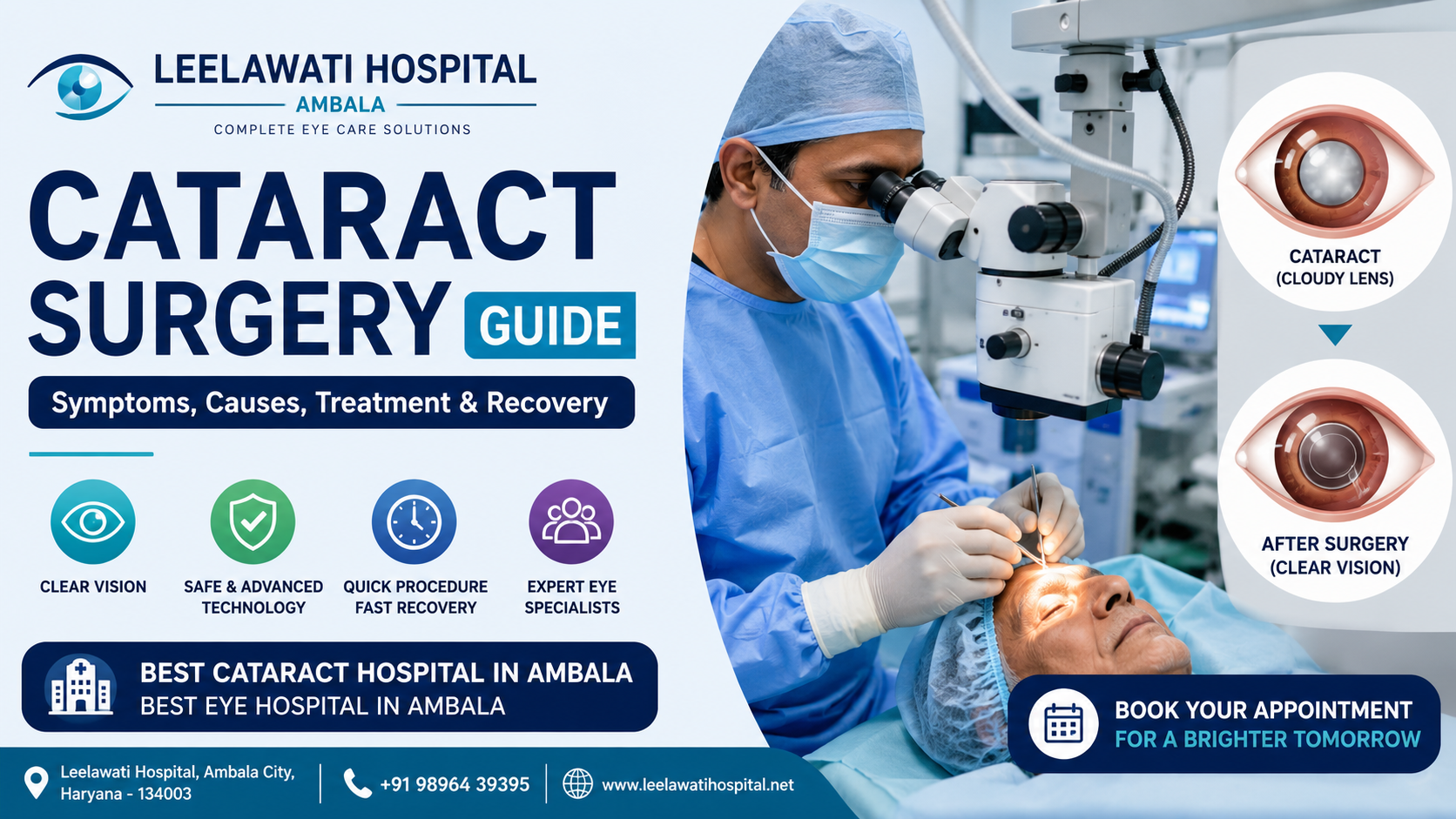
Cataracts are one of the leading causes of vision impairment, especially among older adults. Fortunately, modern cataract surgery is a safe, effective, and quick procedure that restores clear vision for millions of people every year. If you or a loved one is experiencing blurred vision, difficulty seeing at night, or increased sensitivity to light, it may be time to consult the Best Cataract Hospital in Ambala for a comprehensive eye examination.
In this guide, we’ll explain everything you need to know about cataracts, including their symptoms, causes, treatment options, surgery, and recovery process.
What Is a Cataract?
A cataract is a condition in which the natural lens of the eye becomes cloudy, making it difficult for light to pass through clearly. This results in blurry or dim vision that gradually worsens over time. Cataracts usually develop with age but can also occur due to diabetes, eye injuries, long-term steroid use, or genetic factors.
With early diagnosis and timely treatment at the Best Cataract Hospital in Ambala, patients can regain clear vision and improve their quality of life.
Common Symptoms of Cataracts
Cataracts develop gradually, so the symptoms may not be noticeable in the early stages. As the condition progresses, you may experience:
- Blurred or cloudy vision
- Difficulty reading or watching television
- Poor night vision
- Increased sensitivity to sunlight and bright lights
- Seeing halos around lights
- Frequent changes in eyeglass or contact lens prescription
- Faded or yellowish colors
- Double vision in one eye
If you notice any of these symptoms, visit the Best Eye Hospital in Ambala for a detailed eye examination.
Causes of Cataracts
Several factors contribute to cataract formation. The most common causes include:
1. Aging
Natural aging is the primary cause of cataracts. As we grow older, proteins in the eye’s lens begin to break down and clump together, causing cloudiness.
2. Diabetes
People with diabetes have a higher risk of developing cataracts at a younger age due to prolonged high blood sugar levels.
3. Eye Injuries
Trauma or injury to the eye can damage the lens and lead to cataract formation.
4. Long-Term Steroid Use
Prolonged use of corticosteroid medications may increase the risk of cataracts.
5. UV Radiation
Excessive exposure to ultraviolet (UV) rays without proper eye protection can accelerate cataract development.
6. Smoking and Alcohol
Smoking and heavy alcohol consumption increase oxidative stress in the eye, contributing to cataract formation.
7. Family History
A genetic predisposition can make some individuals more likely to develop cataracts.
Types of Cataracts
Different types of cataracts affect different parts of the lens:
- Nuclear Cataracts: Develop in the center of the lens and are commonly age-related.
- Cortical Cataracts: Form around the edges of the lens and gradually extend inward.
- Posterior Subcapsular Cataracts: Develop at the back of the lens and often progress rapidly.
- Congenital Cataracts: Present at birth or develop during childhood due to genetic or developmental factors.
How Are Cataracts Diagnosed?
An eye specialist performs a comprehensive eye examination to diagnose cataracts. The evaluation may include:
- Visual acuity test
- Slit-lamp examination
- Retinal examination after pupil dilation
- Intraocular pressure measurement
Early diagnosis allows timely treatment and helps prevent severe vision loss.
Cataract Treatment Options
In the early stages, stronger glasses, anti-glare lenses, and brighter lighting may temporarily improve vision. However, cataracts cannot be cured with medicines or eye drops.
When cataracts begin affecting daily activities such as reading, driving, or recognizing faces, surgery becomes the most effective treatment.
Consulting the Best Cataract Hospital in Ambala ensures accurate diagnosis and personalized treatment planning.
Cataract Surgery Procedure
Modern cataract surgery is one of the safest and most successful eye procedures available.
Step 1: Pre-Surgical Assessment
The eye surgeon measures your eye and selects the most suitable intraocular lens (IOL).
Step 2: Local Anesthesia
The procedure is performed under local anesthesia using eye drops, ensuring minimal discomfort.
Step 3: Removal of the Cloudy Lens
A tiny incision is made in the eye. Using advanced phacoemulsification technology, the cloudy lens is broken into small pieces and gently removed.
Step 4: Lens Implantation
A clear artificial intraocular lens (IOL) is implanted to restore vision.
The entire procedure usually takes 15–30 minutes, and most patients return home the same day.
Recovery After Cataract Surgery
Recovery is generally quick, with many patients noticing improved vision within a few days.
To ensure smooth healing:
- Use prescribed eye drops regularly.
- Avoid rubbing your eyes.
- Wear protective sunglasses outdoors.
- Avoid heavy lifting and strenuous exercise for a few weeks.
- Keep water, dust, and soap away from the operated eye.
- Attend all scheduled follow-up appointments.
Complete healing typically occurs within 4–6 weeks.
Benefits of Modern Cataract Surgery
Modern cataract surgery offers numerous advantages:
- Restores clear vision
- Improves quality of life
- Reduces dependence on glasses in many cases
- Safe, painless, and minimally invasive
- Quick recovery
- High success rate
- Better color perception
- Enhanced night vision
Choosing an experienced eye surgeon at the Best Eye Hospital in Ambala helps ensure excellent surgical outcomes.
Can Cataracts Be Prevented?
Although age-related cataracts cannot always be prevented, you can reduce your risk by:
- Wearing UV-protective sunglasses
- Managing diabetes effectively
- Eating a healthy diet rich in leafy vegetables and fruits
- Quitting smoking
- Limiting alcohol intake
- Maintaining regular eye checkups
- Protecting your eyes from injury
Regular eye examinations are especially important after the age of 40.
When Should You See an Eye Specialist?
Schedule an eye examination if you experience:
- Persistent blurred vision
- Difficulty driving at night
- Glare from headlights
- Frequent changes in glasses
- Double vision in one eye
- Colors appearing faded
Early diagnosis allows timely treatment before vision problems become severe.
Why Choose Leelawati Hospital?
If you’re looking for the Best Cataract Hospital in Ambala, Leelawati Hospital is committed to providing comprehensive eye care using advanced diagnostic equipment and modern surgical techniques. Our experienced ophthalmologists offer personalized treatment plans tailored to every patient’s needs, ensuring safe procedures, faster recovery, and excellent visual outcomes.
Recognized by many patients as a trusted Best Eye Hospital in Ambala, Leelawati Hospital focuses on compassionate care, advanced technology, and patient satisfaction. Whether you need a routine eye examination or advanced cataract surgery, our dedicated team is here to help you restore clear vision and improve your quality of life.
Book your appointment at Leelawati Hospital today and take the first step toward clearer, healthier vision with expert cataract care from one of the most trusted eye hospitals in Ambala.