A tooth can become too weak for another filling even when much of it is still worth saving. Cracks, large restorations, decay, wear and root canal treatment may leave the remaining structure vulnerable during chewing. Understanding the dental crown procedure helps patients know why preparation is needed, what happens at each visit and when a same-day option may be appropriate. Profile Dental provides crown treatment in Elk Grove using digital planning and several restorative materials.
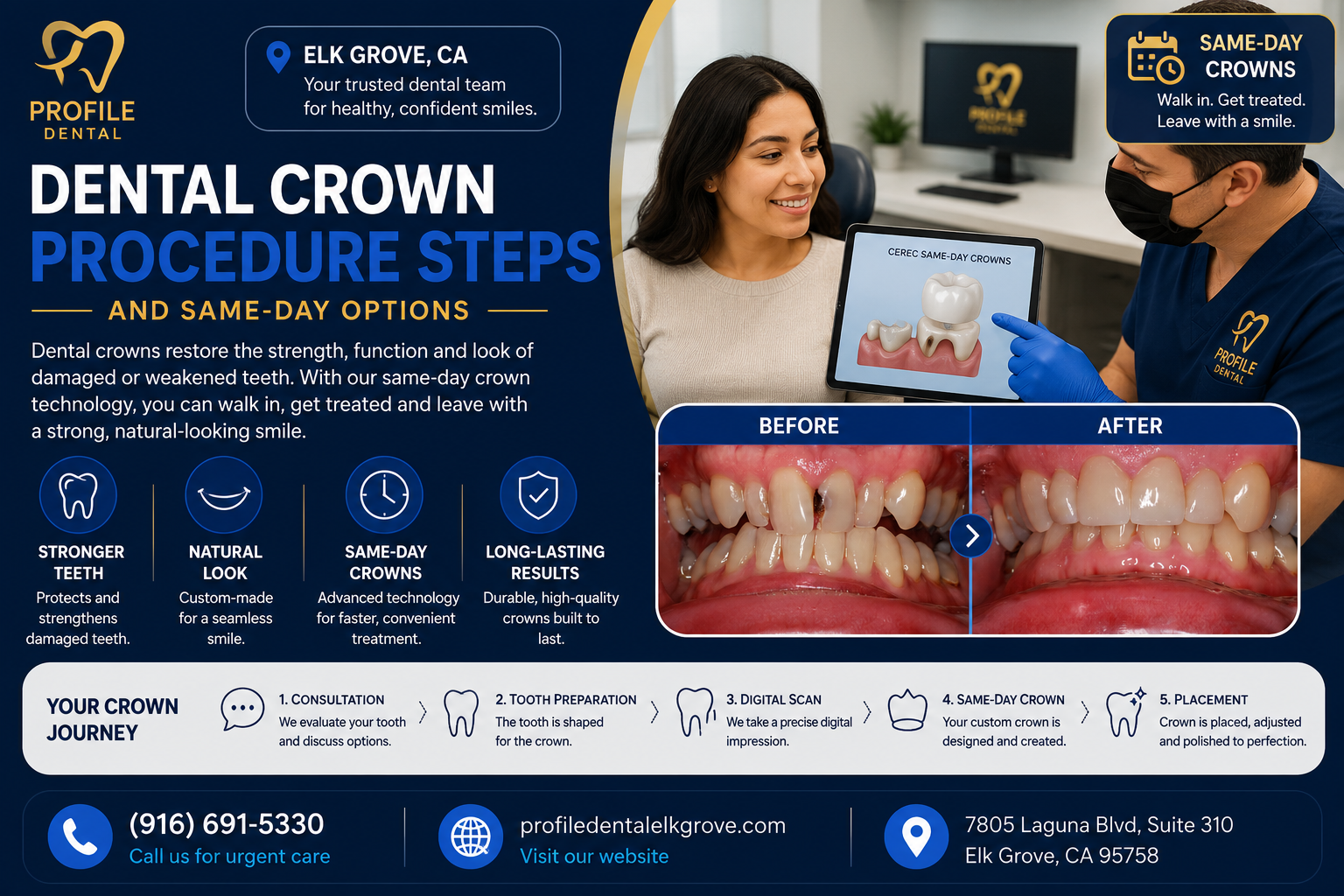
A dental crown is a custom restoration that covers the visible part of a prepared tooth. The procedure usually includes examination, removal of damaged material, tooth preparation, an impression or digital scan, fabrication, fit checking and final bonding. Traditional crowns often require two visits, while eligible same-day cases may be designed and milled during one appointment.
When Is a Dental Crown Recommended
Crowns are commonly considered when a tooth has lost enough structure that a filling may not provide predictable support. The Journal of the American Dental Association explains that crowns can repair teeth that are damaged, misshapen or weakened by large fillings or root canal treatment. They may also restore an implant or support a bridge.
A crown is not automatically necessary for every crack or cavity. The dentist evaluates how much healthy tooth remains, where the damage is located, the patient’s bite and whether a more conservative restoration could work. This clinical judgment is more important than choosing a material from an online list.
Dental Crown Procedure Step by Step
Examination and Diagnosis
The dentist first reviews symptoms, dental history and X-rays when indicated. The tooth is checked for decay, fractures, infection, gum condition and bite pressure. If the nerve is infected or severely inflamed, root canal treatment may be needed before the crown is completed.
Profile Dental describes using advanced imaging and digital impressions for crown planning. These tools support diagnosis and design, but they do not replace the dentist’s examination.
Numbing and Tooth Preparation
Local anesthetic is commonly used to keep the area comfortable. The dentist removes decay, weak material and any failing restoration. The tooth is then shaped so the crown can cover it with adequate thickness while maintaining a stable margin.
Sometimes a core buildup is required when substantial structure is missing. The goal is to create enough support for the crown without removing unnecessary healthy tissue.
Impression or Digital Scan
A traditional impression uses dental material to record the prepared tooth and surrounding bite. A digital scanner creates a three-dimensional model on a computer. Digital scanning may reduce the need for impression trays and can be used with computer-aided crown design.
The scan must capture the margin clearly because crown fit depends on precise information. Gum condition and moisture control can influence scan quality.
Temporary Crown for Traditional Treatment
When the final crown is made by an outside laboratory, a temporary crown protects the tooth between appointments. Patients should avoid sticky foods and hard chewing on that side because temporary cement is designed for removal. Floss may need to be slid out from the side rather than pulled upward.
A temporary crown is not as strong or precisely fitted as the final restoration. If it loosens, the patient should contact the dental office rather than leaving the tooth exposed.
Crown Fabrication
The crown is made from a material selected for the tooth’s location, appearance needs, available space and bite forces. The American Dental Association notes that indirect restorative materials differ in composition, mechanical properties, processing methods and clinical indications. Ceramic, zirconia and porcelain-fused-to-metal options therefore should not be treated as interchangeable.
For same-day dental crowns, computer-aided design and manufacturing may allow the restoration to be milled in the office. Profile Dental lists CEREC and digital crown technology for eligible patients.
Fit Check and Bonding
Before final bonding, the dentist checks contact with neighboring teeth, bite, margins, shape and shade. Adjustments may be needed even when the crown was digitally designed. The tooth and crown are then cleaned and bonded or cemented according to the material and clinical situation.
A crown should feel stable, but the bite can take time to evaluate after numbness wears off. Persistent high contact, pain or discomfort should be reported.
Same Day Dental Crowns Compared With Traditional Crowns
Same day dental crowns can reduce treatment to one appointment and may avoid a temporary restoration. They can be especially convenient for a patient with work, caregiving or travel constraints. Digital scanning also gives the dentist and patient a visual model of the restoration.
Traditional laboratory crowns may remain appropriate when a case requires a material, characterization or design not produced in the office. Complex cosmetic work, certain implant restorations and difficult bite conditions may benefit from laboratory collaboration.
The choice should be based on clinical suitability, not speed alone. Profile Dental states that same-day crowns are available, but eligibility depends on the tooth and treatment requirements.
What Affects the Cost of Dental Crown Treatment
The cost of dental crown treatment depends on the material, tooth location, remaining structure, need for a core buildup, root canal treatment, imaging, laboratory work and insurance terms. A single online fee cannot represent every case accurately.
Patients should ask whether the estimate includes examination, X-rays, temporary crown, buildup, final crown and follow-up adjustments. Dental insurance may cover part of a crown considered necessary to restore a damaged tooth, but deductibles, waiting periods, annual maximums and network status affect benefits.
Profile Dental’s website states that it accepts major PPO plans and offers financing options. Coverage and financing approval require verification before treatment.
How Long Can a Crown Last
Crown longevity varies according to material, fit, oral hygiene, gum health, bite forces and habits. A crown can develop decay at its margin even though the restorative material itself cannot get a cavity. Grinding, ice chewing and using teeth as tools can increase damage risk.
Daily brushing, cleaning between teeth and professional examinations protect the supporting tooth and gums. A night guard may be recommended for a patient who clenches or grinds.
What to Do When a Crown Breaks or Falls Off
A loose or missing crown should be evaluated promptly. Keep the crown if it comes out, avoid chewing on the tooth and do not use household glue. Pain, swelling, fever, trauma or sharp edges may increase urgency.
Profile Dental’s emergency page provides guidance for urgent dental problems in Elk Grove. Same-day availability depends on operating hours and appointment capacity.
Choosing Dental Crowns in Elk Grove
Patients comparing dental crowns elk grove, CA services should ask how the tooth is diagnosed, what material is recommended, why that material fits the case and whether the crown will be made in-office or by a laboratory. They should also ask who handles follow-up adjustments and what maintenance is expected.
Searches such as dental crown elk grove, CA or dental crowns elk grove ca may return many promotional claims. A better decision relies on a licensed dentist’s examination, transparent explanation of alternatives and a written estimate. Profile Dental’s crown page explains its digital process, material options and same-day availability.
Patients can also review emergency dental care for broken restorations, use teeth cleaning and preventive care to protect supporting teeth and gums, and read about the Profile Dental team.
Frequently Asked Questions
Is the dental crown procedure painful
Local anesthetic is commonly used during tooth preparation, so patients should not feel sharp procedural pain. Mild gum tenderness or temperature sensitivity may occur afterward. Significant or worsening pain should be reported because it may indicate a bite problem, nerve inflammation or another issue requiring evaluation.
Are same-day dental crowns as strong as laboratory crowns
A same-day crown can be durable when the selected material and design suit the tooth. Strength depends on material properties, preparation, bonding, bite forces and care. Laboratory fabrication may still be preferred for some complex or highly customized cases.
Can a filling be used instead of a crown
A filling may work when enough healthy tooth remains to support it. A crown may be considered when a large portion of the tooth is missing, cracked or weakened. The dentist should explain why a conservative restoration is or is not predictable.
How long does a same-day appointment take
The visit includes examination, preparation, scanning, digital design, milling, finishing and bonding. Timing varies by case and office workflow. Patients should not assume every crown can be completed within a fixed number of hours.
Does insurance cover a crown
Many plans provide partial benefits when a crown is medically necessary, but coverage varies. The patient may still owe a deductible, coinsurance or costs above the plan allowance. Verification is not a guarantee of payment.
Restore the Tooth With a Plan You Understand
A well-explained dental crown procedure should show why the tooth needs coverage, what material is suitable, how the restoration will be made and what the patient can do to protect it. Same-day technology can improve convenience, but clinical fit and long-term function remain the priorities.
Review Profile Dental’s crown service and request a crown evaluation for a diagnosis and written treatment plan. This article is general education and does not replace an examination by a licensed dentist.