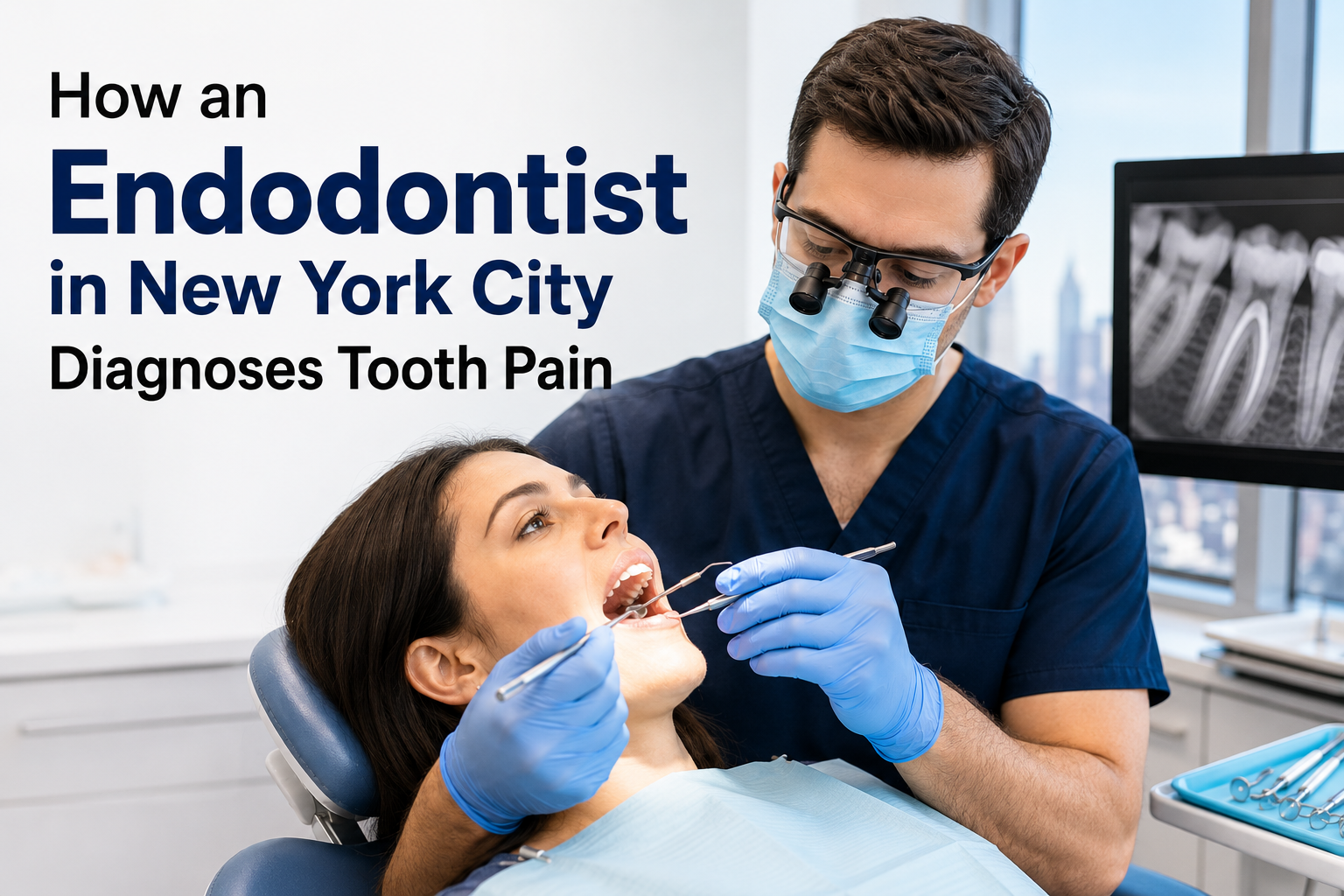
Tooth pain has a way of making everything else harder to focus on. Sometimes it’s a sharp jolt when you bite into something. Other times it’s a dull ache that lingers for hours or a sensitivity that seems to come and go without any obvious reason.
What surprises many people is that two toothaches can feel almost identical while having completely different causes. That’s why diagnosing persistent tooth pain isn’t simply about asking where it hurts. An endodontist takes a much closer look to identify exactly what’s causing the discomfort before recommending any treatment.
Understanding that process can make a referral feel much less intimidating.
Tooth Pain Doesn’t Always Mean the Same Thing
It’s easy to assume that pain automatically means you need a root canal.
In reality, tooth pain can be caused by a variety of conditions, including:
- Deep tooth decay
- A cracked tooth
- An infection
- Gum disease
- Teeth grinding
- Problems affecting nearby teeth
Pain can even travel, making it seem as though the wrong tooth is causing the problem.
That’s why experienced endodontists focus on finding the source—not just treating the symptoms.
It Starts With a Conversation
Before examining your teeth, an endodontist will usually ask several detailed questions.
You may be asked:
- When did the pain begin?
- Is it constant or does it come and go?
- Does it hurt when you bite?
- Are hot or cold foods making it worse?
- Does the pain wake you up at night?
- Have you had previous treatment on the tooth?
These questions might seem simple, but the answers often provide valuable clues about what’s happening inside the tooth.
A Clinical Examination Helps Narrow Things Down
After discussing your symptoms, the examination becomes more focused.
Your endodontist may:
- Gently tap on the affected tooth
- Check how your teeth come together when you bite
- Examine your gums
- Perform hot or cold sensitivity tests
- Compare the response with nearby teeth
Some of these tests may briefly recreate your discomfort, but they provide important information about whether the tooth’s pulp—the soft tissue containing nerves and blood vessels—is healthy, inflamed, or infected.
X-Rays Reveal What Can’t Be Seen
Not every dental problem is visible during a routine examination.
Dental X-rays—and sometimes advanced 3D imaging—allow an endodontist to evaluate areas beneath the surface, including:
- The roots of the tooth
- Surrounding bone
- Hidden infections
- Previous root canal treatment
- Bone loss
- Fractures that aren’t visible externally
These images help confirm whether the tooth itself is responsible for the pain or whether another structure may be involved.
Cracked Teeth Can Be Surprisingly Difficult to Find
One of the more challenging diagnoses involves cracked teeth.
Some cracks are so small they can’t easily be seen, yet they can cause sharp pain whenever you bite or release pressure.
To identify these problems, an endodontist may combine clinical testing, magnification, digital imaging, and your symptom history. Catching a crack early often improves the chances of saving the tooth.
Sometimes the Tooth Isn’t the Problem
One of the biggest surprises for many patients is learning that their tooth may actually be healthy.
Conditions such as sinus infections, jaw joint disorders (TMJ), muscle tension, and certain nerve conditions can all create pain that feels remarkably similar to a toothache.
Part of an endodontist’s expertise is recognizing when the symptoms don’t match a typical dental condition. If that’s the case, they may recommend further evaluation or refer you to another healthcare professional.
Why the Right Diagnosis Matters
When you’re in pain, it’s natural to want treatment as quickly as possible.
But treating the wrong tooth—or performing a root canal before confirming the diagnosis—won’t solve the real problem.
A careful diagnosis helps determine whether you need:
- Root canal treatment
- Another dental procedure
- Continued monitoring
- Evaluation for a non-dental condition
Taking the time to identify the exact cause often leads to better long-term results and helps avoid unnecessary treatment.
Questions Worth Asking During Your Appointment
A consultation is also your chance to better understand what’s happening.
Some helpful questions include:
- What’s causing my pain?
- Do I actually need a root canal?
- Are there alternative treatment options?
- Can the tooth be saved?
- What happens if I delay treatment?
- What should I expect during recovery?
A good specialist will welcome these questions and explain your options in a way that’s easy to understand.
Finding the Right Endodontist in New York City
If your dentist recommends seeing an endodontist, it’s worth taking a little time to compare your options.
Look for a specialist who takes a thorough diagnostic approach, explains findings clearly, and develops a treatment plan based on evidence rather than assumptions.
Many patients also use Dental.me to compare an endodontist in new york city, explore local specialists, and review available services before scheduling a consultation.
Feeling confident in your provider can make the entire experience much less stressful.
The Right Treatment Always Starts With the Right Diagnosis
Persistent tooth pain can be frustrating, especially when the cause isn’t immediately obvious.
Fortunately, modern diagnostic techniques allow endodontists to investigate problems with remarkable precision. Instead of guessing, they carefully combine your symptoms, clinical examination, and imaging to understand exactly what’s happening.
Once the true cause is identified, choosing the right treatment becomes much simpler—and that’s the first step toward lasting pain relief and protecting your natural smile for years to come.