When Feelings Take the Driver’s Seat
We live in a world that moves fast, reacts quickly, and often expects people to “stay positive” regardless of what they are going through. In this rush, emotions are frequently misunderstood. Anger is labelled as aggression, sadness is mistaken for weakness, and anxiety is seen as overthinking. Somewhere between suppressing emotions and being overwhelmed by them, many people lose touch with what emotional regulation truly means.
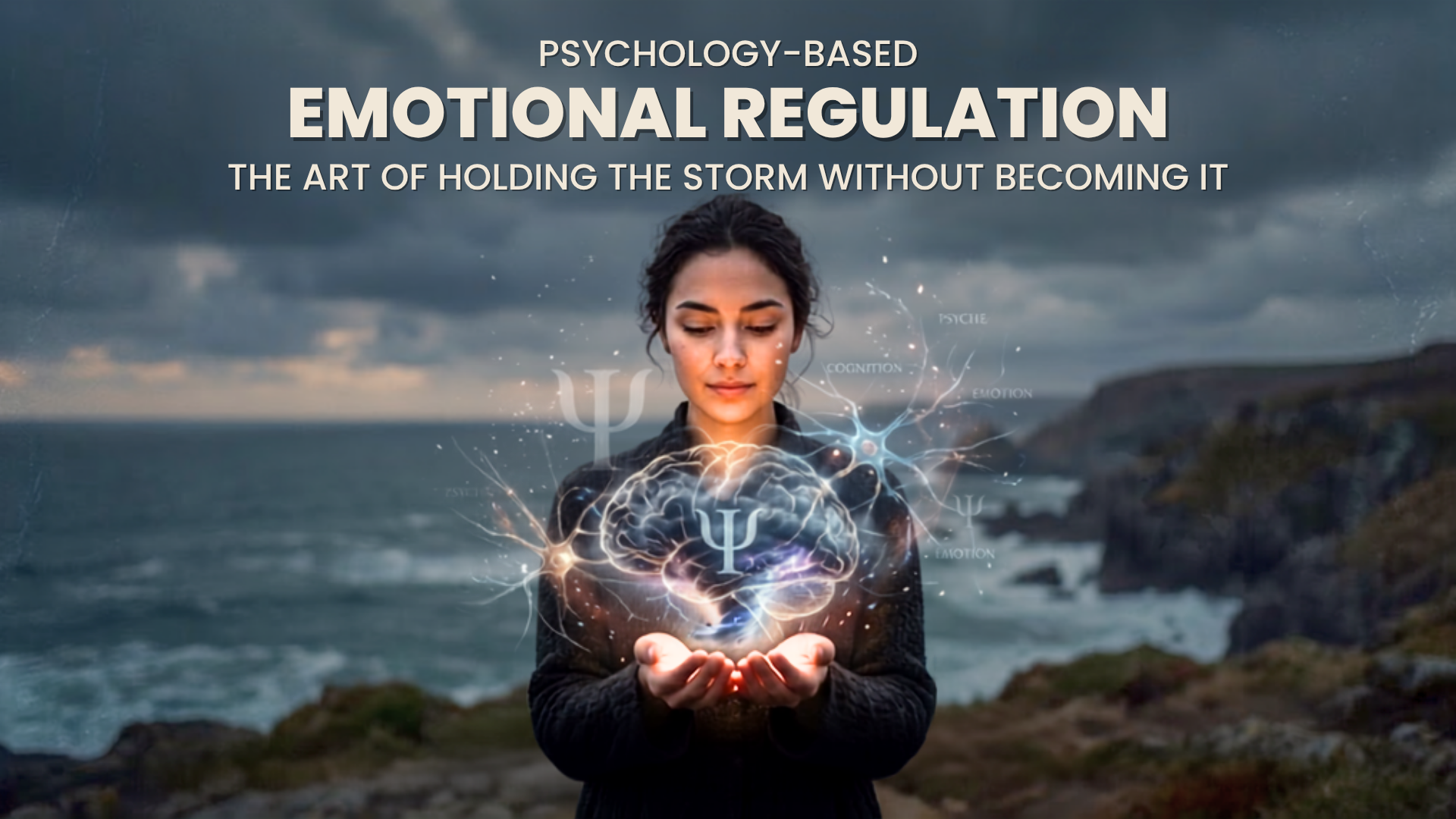
Emotional regulation is not about becoming emotionless. It is about learning how to experience emotions without allowing them to completely take control of our thoughts, behaviors, and relationships. It is the difference between feeling anger and becoming anger, between experiencing fear and letting fear dictate every decision.
The Myth of Being “Always Okay”
One of the biggest misconceptions surrounding emotional well-being is the belief that emotionally regulated people are calm all the time. They are not.
Emotionally regulated individuals still feel hurt when they are rejected, disappointed when things do not go as planned, and anxious when facing uncertainty. The difference lies in how they respond to these experiences. They recognize their emotions without allowing those emotions to define their identity or control their actions.
Emotional regulation is not the absence of emotional pain. It is the ability to move through emotional pain with awareness rather than impulsivity.
Emotions Are Messengers, Not Enemies
Many people spend years fighting their emotions. They try to avoid sadness, suppress anger, or distract themselves from fear. Yet emotions are not problems to be solved; they are signals to be understood.
Every emotion carries information. Anxiety may point toward uncertainty. Anger may highlight a violated boundary. Guilt may draw attention to a value that feels compromised. Sadness may signal loss or unmet needs. When emotions are ignored, they often become louder. When they are acknowledged, they become easier to understand. Emotional regulation begins not with control, but with curiosity.
Why Emotional Regulation Matters More Than Ever
Modern life constantly stimulates our emotional system. Notifications demand immediate attention. Social media encourages comparison. News cycles expose us to distressing information around the clock. Relationships, careers, finances, and personal expectations create additional layers of pressure.
In such an environment, emotional regulation becomes more than a psychological skill; it becomes a foundation for mental well-being.
Our ability to navigate emotions influences how we communicate, make decisions, handle conflict, maintain relationships, and respond to life’s challenges. Often, the quality of our life is shaped not by what happens to us, but by how we process what happens to us.
What Emotional Regulation Is Not
Emotional regulation is often confused with emotional suppression, but the two are very different.
It is not pretending everything is fine when it is not.
It is not forcing yourself to be positive.
It is not ignoring difficult feelings.
It is not avoiding vulnerability.
It is not having perfect emotional control.
True emotional regulation allows room for discomfort, uncertainty, grief, frustration, and fear. It creates space for emotions to exist without letting them dominate every aspect of life.
The Hidden Cost of Emotional Suppression
When emotions are repeatedly dismissed or buried, they do not disappear. Instead, they often find alternative ways to surface. Chronic stress, emotional exhaustion, irritability, burnout, relationship conflicts, and feelings of disconnection can sometimes emerge when emotions remain unprocessed for long periods.
Many people learn early in life that certain emotions are unacceptable. They may hear messages like “don’t cry,” “stop being sensitive,” or “be strong.” Over time, these beliefs can create a disconnect between what people feel and what they allow themselves to express.
Emotional regulation is not about building walls around emotions. It is about developing a healthy relationship with them.
The Space Between Feeling and Reacting
One of the most powerful aspects of emotional regulation is the ability to create a pause between an emotional trigger and a behavioral response.
Without awareness, emotions can lead to impulsive reactions or words spoken in anger, decisions made in fear, or actions driven by insecurity. With emotional regulation, there is room to reflect before reacting.
That pause may only last a few seconds, but it often changes the outcome of conversations, relationships, and decisions.
Emotional Regulation Is a Lifelong Journey
Emotional regulation is not a destination that people reach once and for all. It evolves throughout life. Different stages, experiences, losses, transitions, and relationships challenge us in new ways.
There will be moments when emotions feel manageable and moments when they feel overwhelming. Neither experience determines a person’s emotional strength. What matters is the willingness to remain aware, compassionate, and connected to one’s inner world.
Emotional regulation is less about perfection and more about practice.
Beyond Control: Learning to Understand Ourselves
At its core, emotional regulation is not merely about managing emotions; it is about understanding ourselves more deeply. Every feeling tells a story. Every emotional response reflects a need, belief, memory, or experience.
When people learn to listen to their emotions rather than fear them, they develop greater self-awareness, resilience, and emotional freedom.
The goal is not to silence the storm within. The goal is to learn how to navigate it without losing yourself in the process.