A fashion label can have a sharp logo, polished photography, and a strong social media presence, but customers eventually judge it by the product in their hands. They notice the weight of a jacket, the feel of the leather, the strength of the stitching, and the way the garment fits after months of wear.
That is why manufacturing decisions shape far more than production costs. They affect customer reviews, repeat purchases, pricing power, and the reputation attached to every new collection. A well-made leather product gives buyers a reason to trust the label behind it.
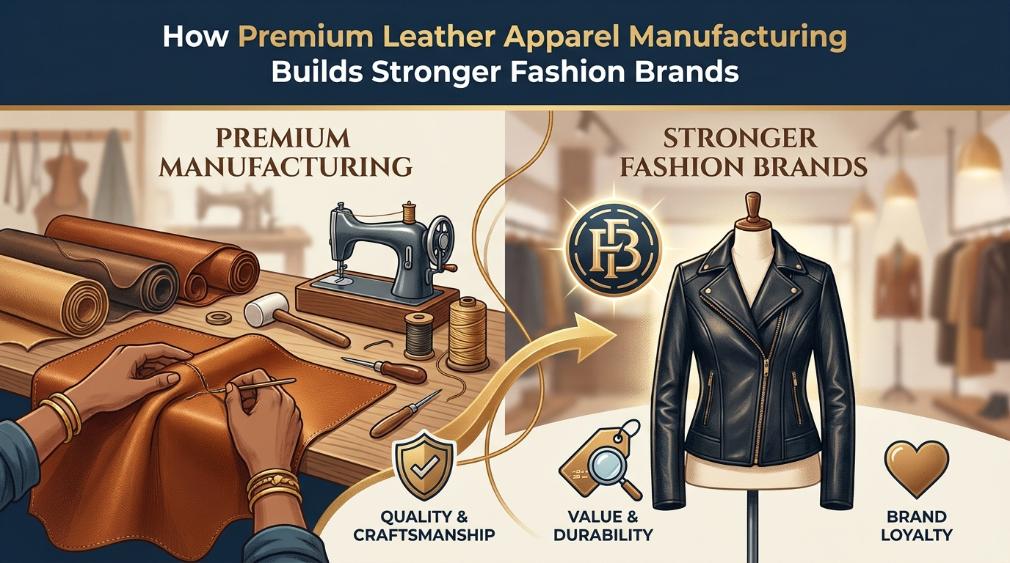
Premium leather apparel manufacturing helps fashion brands turn creative concepts into dependable products. It connects design, material selection, construction, quality control, and delivery. When those parts work together, a brand can build a clear identity instead of releasing products that feel unrelated from one season to the next.
Product quality becomes part of the brand identity
Customers may discover a label through an advertisement, but the product determines what they remember. A leather jacket with a clean finish and balanced fit supports the image shown in the campaign. Poor lining, weak hardware, or uneven panels can undo that image in minutes.
Premium leather apparel manufacturing gives fashion brands greater control over those details. The production team can assess hide thickness, grain, softness, color consistency, and finishing before cutting begins. This reduces the chance of visible differences between products from the same collection.
Quality also affects how people describe a brand to others. Buyers rarely recommend a product because its advertising looked expensive. They recommend it because it felt good, lasted well, and matched the expectations created by the brand.
Material selection sets the standard early
Not every type of leather suits every design. A structured motorcycle jacket needs a different weight and temper than a soft overshirt or fitted skirt. Choosing leather only by price can result in products that look acceptable in photographs but feel stiff, thin, or uncomfortable in daily use.
Experienced production teams consider the purpose of the item before selecting the material. They look at movement, drape, durability, climate, finish, and the intended retail price. That early decision influences nearly every stage that follows.
Strong material selection also helps brands explain their value. Instead of relying on vague claims about luxury, they can discuss the leather type, finish, construction method, and practical benefits of the product.
Consistency creates customer trust
A customer who orders the same jacket in two colors expects the fit and construction to remain consistent. Retail partners have similar expectations. They need products that match approved samples and arrive without major differences between batches.
Premium leather apparel manufacturing supports that consistency through patterns, measurement charts, approved materials, construction notes, and inspection checkpoints. These systems reduce dependence on memory or guesswork during production.
Consistency matters even more as fashion brands grow. A small variation may go unnoticed in a ten-piece order, but the same issue becomes expensive across hundreds of units. Clear specifications help prevent sizing disputes, returns, repairs, and delayed deliveries.
Brands searching for experienced leather clothing manufacturers should examine how the factory records approved samples, checks measurements, manages materials, and handles quality concerns. A reliable production system is usually more valuable than the lowest quotation.
Accurate patterns protect fit and comfort
Leather does not behave exactly like woven fabric. It has natural variation, limited stretch in certain directions, and different thicknesses across a hide. A pattern that works for cotton may need changes before it works well in leather.
Good manufacturers test movement around the shoulders, elbows, chest, waist, and hips. They also account for lining, padding, seam allowance, and hardware placement. These adjustments help the finished garment look structured without feeling restrictive.
Fit consistency reduces returns and gives customers more confidence when ordering online. Once buyers understand how a brand fits, they are more likely to purchase another item without worrying about unexpected sizing.
Construction details protect the customer experience
Small details often decide whether a leather item feels refined or unfinished. Stitch length, seam placement, zipper alignment, edge finishing, lining attachment, pocket depth, and reinforcement all affect the final result.
Premium leather apparel manufacturing treats these details as part of the design rather than last-minute production choices. The manufacturer and brand can agree on thread color, hardware finish, seam type, label placement, and interior construction before bulk production starts.
This level of planning reduces visual inconsistencies. It also prevents practical problems such as pockets that are too shallow, zippers that catch the lining, or stress points that begin to separate after limited use.
Customers may not know the technical name of every construction method, but they can feel the difference. A product that opens smoothly, hangs correctly, and feels secure communicates care without needing a long explanation.
Product development gives brands a distinct point of view
Many new labels begin with reference images. That can help explain a direction, but a strong product needs more than a copied silhouette. Proportions, materials, trims, color, fit, and construction should reflect the audience the brand wants to serve.
Premium leather apparel manufacturing gives designers room to test those choices before placing a large order. Sampling can reveal that a collar is too wide, a pocket sits too low, or a selected hide does not create the intended shape.
A capable factory can suggest practical changes without taking control away from the designer. It may recommend a different leather weight, reinforce a high-stress seam, adjust a pattern, or replace hardware that does not perform well.
That exchange helps fashion brands develop recognizable products. The goal is not to add unnecessary decoration. It is to make deliberate choices that customers can associate with the label.
Leather accessories can extend the brand story
Apparel may establish a label’s visual identity, while accessories give customers more ways to enter the brand. A buyer who is not ready to purchase a leather coat may begin with a bag, purse, or wallet.
Accessories also allow brands to repeat recognizable elements across several categories. The same leather finish, lining color, hardware, embossing, or stitch detail can connect a jacket collection with smaller goods.
Duffle bags support travel and lifestyle collections
A leather duffle bag can carry the same design language as an apparel line while serving a different purpose. It gives lifestyle brands a practical product for travel, work, weekends, and gifting.
Businesses sourcing wholesale Leather duffle bags should look beyond the exterior shape. Handle reinforcement, shoulder-strap attachment, zipper quality, interior pockets, base support, and lining strength all influence how the bag performs after repeated use.
A duffle bag also gives a brand more surface area for custom details. Embossed marks, branded hardware, contrast stitching, luggage tags, and custom interiors can make the product recognizable without covering it in logos.
Purses help brands reach new buying occasions
Purses can support everyday collections, occasion wear, gifting campaigns, and seasonal releases. Their smaller size makes material choice and finishing especially visible. Uneven edges or poorly placed hardware are difficult to hide on a compact product.
Brands ordering custom Leather purses wholesale can develop shapes, colors, straps, compartments, closures, and branding that fit a specific customer group. A thoughtful internal layout can be as important as the outside design.
Custom development also helps fashion brands avoid generic catalog products. Even modest adjustments to dimensions, strap length, edge color, or hardware can make a purse feel connected to the rest of the collection.
Wallets offer an accessible first purchase
Wallets usually require less commitment from the buyer than a leather jacket or large travel bag. That makes them useful as entry-level products, gifts, add-on purchases, and corporate merchandise.
Ordering bulk leather wallets allows a brand to maintain a consistent look across larger quantities. Card-slot size, fold thickness, edge finishing, lining, stitching, and logo placement should still be checked carefully before approval.
A well-made wallet stays in regular use, often for years. Every time the customer handles it, the product reinforces an impression of the brand. That repeated contact gives small leather goods more branding value than their size might suggest.
Reliable production supports responsible growth
Growth can expose weaknesses that were easy to manage during small orders. More styles, larger quantities, tighter launch schedules, and multiple sales channels all place pressure on the production process.
Premium leather apparel manufacturing helps brands scale through documented specifications and repeatable checks. Approved samples, material records, graded patterns, packaging instructions, and production timelines give everyone a shared reference.
This structure does not remove the need for communication. It makes communication clearer. Instead of discussing broad expectations, the brand and factory can review specific measurements, materials, deadlines, or inspection results.
Reliable production also helps brands plan sales more confidently. When delivery dates and output are more predictable, marketing teams can schedule campaigns, retailers can prepare launches, and customer-service teams can provide accurate information.
Quality control protects margins as well as reputation
Quality control is often treated as a final inspection, but the strongest process begins earlier. Leather should be checked before cutting. Components should be reviewed before assembly. Measurements and construction should be monitored during production, not only after every item is complete.
This approach catches problems while they are still easier to correct. Finding the wrong zipper before installation costs less than replacing it across a completed order. Correcting a pattern during sampling is less expensive than managing returns after launch.
Premium leather apparel manufacturing can improve margins by reducing avoidable waste, rework, replacements, and refunds. It also protects the time spent by customer-service and operations teams resolving preventable complaints.
A strict inspection process does not mean natural leather must look perfectly uniform. Leather has grain and surface variation. The goal is to define what variation is acceptable and make sure the finished products still match the brand’s quality standard.
Better products support stronger pricing
Premium pricing needs visible and practical support. Customers are more likely to accept a higher price when the product feels substantial, fits well, uses dependable hardware, and shows careful construction.
Premium leather apparel manufacturing gives fashion brands specific value points they can communicate. Product pages can explain material, lining, fit, finish, hardware, care, and construction instead of relying on empty luxury language.
These details also help sales teams and retail partners answer questions. A clear explanation of why a product costs more is stronger than simply calling it exclusive.
Better production does not guarantee that every customer will pay a premium. Branding, design, service, and market positioning still matter. Manufacturing gives those efforts a product that can support the promise being made.
Manufacturing choices affect brand reputation
Online reviews have made product problems highly visible. A buyer can photograph uneven stitching, damaged hardware, or incorrect sizing and share the issue before the brand has time to respond.
The opposite is also true. Customers share products that feel better than expected. They mention the softness of the leather, secure packaging, accurate fit, useful pockets, and careful finishing.
Premium leather apparel manufacturing cannot prevent every complaint, but it lowers the number of problems created by rushed development or inconsistent production. It also makes defects easier to trace because materials, specifications, and approval stages are documented.
A brand that handles the occasional problem fairly can still maintain trust. A brand that repeatedly ships preventable defects will struggle to protect its reputation, regardless of how polished its marketing appears.
Ethical production needs clear communication
Buyers increasingly ask where products come from, what materials are used, and how factories operate. Brands need accurate answers rather than broad claims that cannot be supported.
Premium leather apparel manufacturing should include direct conversations about sourcing, workplace expectations, chemical use, waste handling, packaging, and production records. The exact requirements will depend on the brand, market, and product category.
Manufacturers should be able to explain what they control and provide relevant documentation when available. Brands also need to avoid making claims that go beyond the evidence supplied by their production partners.
Transparency works best when it is specific. Naming a material, process, certification, or packaging change gives customers useful information. General statements about responsibility carry less weight when no details follow.
Choosing the right manufacturing partner
The lowest unit price can be attractive, especially for a new label working with a limited budget. It should not be the only deciding factor. A cheaper order can become expensive after delays, inconsistent sizing, poor finishing, or rejected inventory.
Premium leather apparel manufacturing depends on communication as much as machinery. A strong partner asks questions, confirms specifications, explains limitations, and provides realistic production timelines.
Before approving a bulk order, brands should review samples under normal use. Try the zippers repeatedly. Fill the pockets. Move in the garment. Check the lining, seams, labels, hardware, packaging, measurements, and overall balance.
The sampling stage also reveals how the manufacturer responds to feedback. A partner who records revisions clearly and applies them accurately is easier to work with over multiple collections.
Common production mistakes weaken promising labels
One common mistake is ordering bulk production before the sample is fully approved. Small concerns that seem easy to fix later often become repeated defects across the full quantity.
Another mistake is changing several details without updating the technical information. A new zipper, leather thickness, lining, or pattern adjustment can affect construction. Every approved change should appear in the final production specification.
Some brands also focus heavily on the outside of the product and overlook the interior. Customers notice loose lining, exposed edges, shallow pockets, rough seams, and labels that irritate the skin.
Finally, unrealistic timelines create unnecessary risk. Leather sourcing, color matching, sampling, pattern correction, hardware production, assembly, inspection, and shipping all require time. A practical schedule protects quality and gives the brand room to correct issues before launch.
Build a leather brand customers remember
A strong fashion label is built through repeated proof. Each product must support the story told through the website, campaign, packaging, and customer service.
Premium leather apparel manufacturing gives that story a physical form. It turns sketches into products with consistent fit, careful construction, useful details, and a finish customers can recognize.
Rays Creations works with businesses that want to develop leather apparel and accessories around their own design direction. From early sampling to larger production runs, the focus remains on translating brand requirements into products made for real use.
Start planning your next leather collection with a manufacturing partner that understands product development, customization, and consistent production. A better-made collection gives customers a stronger reason to buy, return, and recommend the brand.
Frequently Asked Questions
Why does manufacturing quality matter for a fashion brand?
Manufacturing quality affects how a product looks, fits, feels, and performs. These factors influence customer reviews, return rates, repeat purchases, and the price customers are willing to pay.
A well-made product supports the promises made through branding and marketing. A poorly made product creates a gap between the advertised image and the customer experience.
What should a brand check before approving leather production?
The brand should review material, measurements, fit, stitching, lining, hardware, pockets, labels, edge finishing, color, packaging, and movement. The approved sample should also match the written specifications.
Testing the product under normal use can reveal issues that are not obvious when it is simply placed on a table or mannequin.
Can a small fashion label order custom leather products?
Many manufacturers work with growing labels, although minimum order quantities, development fees, material availability, and customization options vary. A clear design brief helps the factory assess what is practical.
New brands should budget for sampling and revisions before bulk production. That investment can prevent much larger costs later.
How do leather accessories help an apparel brand grow?
Accessories give customers more price points and buying occasions. Bags, purses, and wallets can introduce new buyers to the brand while repeating design elements from the main apparel collection.
They can also support gifting campaigns, seasonal releases, corporate orders, and product bundles.
How long does custom leather product development take?
The timeline depends on design complexity, material sourcing, hardware, sample revisions, order size, and shipping method. Simple products may move faster, while custom patterns and specially produced components require more development time.
Brands should request a written schedule covering sampling, approval, material preparation, production, inspection, and dispatch.
What makes a leather manufacturer suitable for long-term growth?
A suitable partner provides consistent workmanship, clear communication, accurate sampling, dependable quality checks, realistic timelines, and records of approved specifications.
The manufacturer should also be honest about production limits. Clear expectations are more useful than promises that cannot be met.