
Most men’s wardrobes fail the same way. Not through laziness, but through accumulation. A rust-orange polo shirts bought two winters ago because it felt different. A patterned one that made sense in the store. A pale blue that goes with the right trousers, if you can find them. Each purchase was reasonable. Collectively, none of it works.
The advice you’ll usually get is to edit, clear out what you haven’t worn, and start fresh. Fine, but it misses the point. The wardrobe doesn’t need fewer pieces. It needs a logic that was never given. Something to build toward, rather than just away from.
That logic, for my money, is five colors. Navy, cream, taupe, charcoal, white. That’s it.
Why Fewer Colors Actually Works
Here’s what nobody says directly: color coordination is genuinely hard, and most people aren’t good at it yet. That’s not an insult; it takes trial and error to understand why two colors that look fine individually create something off when they share an outfit. The associations clash. The warmth levels fight. Something feels slightly wrong, and you can’t name it.
The neutral palette just… removes that problem. Navy and cream don’t fight. Taupe and charcoal don’t fight. You stop spending mental energy on whether things match because they always do. Tuesday morning, you’re assembling rather than deciding. That’s worth more than it sounds.
There’s a visual upside too. When an outfit has no color contrast, the fabric has to. The texture of a ribbed knit against loose linen. The faint sheen of good Supima cotton in daylight. These things register in ways they simply don’t when a bold color is doing the heavy lifting. Tonal dressing asks more of your clothes. Good clothes tend to answer.
Four Combinations Worth Actually Trying

Navy on Navy
Deep navy polo, charcoal or navy trousers, dark brown suede loafers. The loafers are the whole outfit, really; that warm brown leather sitting against cool blue is enough contrast for the entire look. Everything else stays quiet. Wear this once if the concept still sounds theoretical. It stops being theoretical.
Taupe and Cream
Two pale neutrals, no drama, nothing to anchor the eye, and it works better than it has any right to. The reason is texture. A ribbed knit polo against loose linen-blend trousers gives the eye something to move across without being directed. The interest is in the surface, not the color. White leather sneakers. Nothing else is needed.
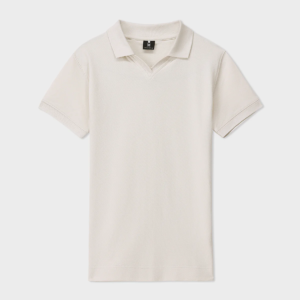
The White Polo
White is genuinely the most useful color in the palette because it doesn’t read as a choice. It reads as a starting point, which makes everything paired with it easier. Stone chinos, chocolate suede desert boots, you’re covered for most of the day. Add an unstructured blazer in grey, and you’re in rooms that would have needed a dress shirt not long ago.
Evening Fabric
Same silhouette as the rest, completely different register. Charcoal silk-blend polo, mid-grey trousers, black Chelsea boots. The silk blend changes the drape and weight of the whole thing without changing the shape at all. Smart casual isn’t really a dress code; it’s a material question. This outfit answers it correctly.
What the Palette Can’t Do Alone
Sort the colors, and half the work is done. The other half is about what the clothes are actually made of, which matters more in a neutral wardrobe than anywhere else.
When there’s no pattern and no color in visual work, the fabric is the outfit.
A Supima cotton polo has a softness and a faint natural sheen that standard cotton doesn’t come close to, and in a tonal look, that sheen is the detail that separates considered from flat. Linen blends bring texture for warmer months.
Silk blends shift the occasion range upward. These aren’t small differences. Two navy polos at different price points produce genuinely different results, and without color to distract from it, that gap is obvious.
The collar gets overlooked more than it should. It frames the face, determines how the shirt sits under a blazer, and once it loses its structure after a few washes, a bit of wear it pulls the whole look down. If you’re shopping for polo shirts online, check the collar construction before the color.
Fit: shoulder seam on the shoulder, hem just below the waistband, fabric that moves rather than pulls. There’s nothing else to say about it except that nothing else matters if this is wrong.
Where to Start
Pick the combination that matches what you already own and try it once. If you have navy trousers, start there. Wear it on a day that doesn’t matter much, see how the morning feels, see how the outfit holds through the afternoon.
The goal was never a more interesting wardrobe. It was a more reliable one, fewer decisions, better outcomes, nothing sitting in a drawer that goes with nothing. That’s achievable with five colors and a bit of patience. Explore the polo range of wewear when you’re ready, and find the pieces that make it click.